Give us feedback!
Our philosophy is simple. We want to encourage you to dream. BIG! Then we help you plan your trip, get the most out of it while you're traveling and help you share your experience with friends.
Join Now It's FREE
Related Categories
Dreams Still To Do
Checked-Off Dreams
Dreams Still To Do
Checked-Off Dreams
Advertisement
Explore UNESCO Sites
-
Explore Hortobágy National Park, Hungary (UNESCO site)
Hortobágy is both the name of a village in Hajdú-Bihar county and an 800 km² national park in Eastern Hungary, rich with folklore and cultural history. The park, a part of the Alföld (Great Plain), was designated as a national park in 1973 (the first in Hungary), and elected among the World Heritage sites in 1999. The Hortobágy is Hungar... -
See Hōryū-ji Temple, Hōryū-ji, Japan (UNESCO site)
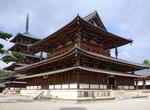
Hōryū-jiis a Buddhist temple in Ikaruga, Nara Prefecture, Japan. Its full name isHōryū Gakumonji, or Learning Temple of the Flourishing Law, the complex serving as seminary and monastery both. The temple's pagoda is widely acknowledged to be one of the oldest wooden buildings existing in the world, underscoring Hōryū-ji's place as one of the most celebrated temples i... -
See Hōryū-ji Temples, Japan (UNESCO sites)
The UNESCO World Heritage Site Buddhist Monuments in the Hōryū-ji Area includes a variety of buildings found in Hōryū-ji and Hokki-ji in Nara Prefecture, Japan. They were designated in 1993 along with the surrounding landscape, under several criteria. The structures inscribed are some of the oldest extant wooden buildings in the world, dating from the 7th to 8th centu... -
See Hosios Loukas Monastery, Greece (UNESCO site)
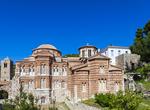
Hosios Loukas is an historic walled monastery situated near the town of Distomo, in Boeotia, Greece. It is one of the most important monuments of Middle Byzantine architecture and art, and has been listed on UNESCO's World Heritage Sites, along with the monasteries of Nea Moni and Daphnion. The Church of the Theotokos, the oldest in the complex, is the only church kno... -
Visit Hősök tere (Heroes' Square), Budapest, Hungary (UNESCO site)
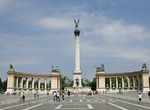
Hősök tere (Heroes' Square), is one of the major squares in Budapest, Hungary, noted for its iconic Millennium Monument with statues featuring the Seven chieftains of the Magyars and other important Hungarian national leaders, as well as the Memorial Stone of Heroes, often erroneously referred as the Tomb of the Unknown Soldier. The square lies at the outbound en... -
See Hospicio Cabañas, Guadalajara, Mexico (UNESCO site)
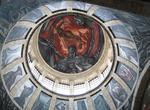
The Hospicio Cabañas in Guadalajara, Jalisco, Mexico, a World Heritage Site, is one of the oldest and largest hospital complexes in Spanish America. The complex was founded in 1791 by the Bishop of Guadalajara in order to combine the functions of a workhouse, hospital, orphanage, and almshouse. It owes its name to Juan Ruiz de Cabañas who was appointed t... -
See Hospital de Sant Pau, Barcelona, Spain
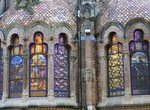
The present Hospital de la Santa Creu i Sant Pau (Catalan for Hospital of the Holy Cross and Saint Paul) in the neighborhood of El Guinardó, Barcelona, Catalonia (Spain), is a complex built between 1901 and 1930, designed by the Catalan modernist architect Lluís Domènech i Montaner. Together with Palau de la Música Catalana, it is a UNESCO ... -
Visit Hospital San Juan de Dios, Santa Cruz de Mompox, Colombia
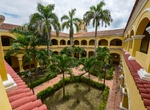
San Juan de Dios Hospital was founded in 1550. In 1663 La Orden de todos los Hermanos Hospitalarios (Order of the Hospital Brothers) took over its management. It depended on the donations of the powerful families in the region and the royal tax charged on shipping along the Magdalena River for its maintenance and operation. San Juan de Dios is considered to be the old... -
Visit House of Loreius Tiburtinus, Pompeii, Italy
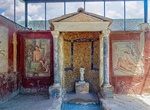
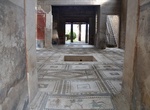
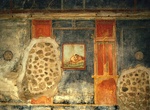
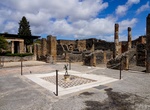
The House of Loreius Tiburtinus (more correctly the House of Octavius Quartio after its true owner) is renowned for well-preserved art, mainly in wall-paintings as well as its large gardens. It is in the Roman city of Pompeii and with the rest of Pompeii was preserved by the volcanic eruption of Mount Vesuvius in or after October 79 AD. Its Pompeian street address is ... -
Visit House of Menander, Pompeii, Italy
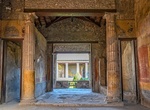
The House of Menander (Italian: Casa del Menandro) is one of the richest and most magnificent houses in ancient Pompeii in terms of architecture, decoration and contents, and covers a large area of about 1,800 square metres (19,000 sq ft) occupying most of itsinsula. Its quality means the owner must have been an aristocrat involved in politics, with great taste for ar... -
Visit House of Paquius Proculus, Pompeii, Italy
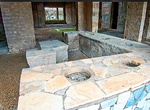
The House of Paquius Proculus lies on the south side of the Via dell'Abbondanza. It was excavated in 1911 and again between 1923 and 1926. It has fabulous flooring of this abode, one of the most beautiful in Pompei depicting different animals. -
Visit House of Sallust, Pompeii, Italy
The House of Sallust (also known in earlier excavation reports as theHouse of Actaeon) was an elite residence (domus) in the ancient Roman city of Pompeii and among the most sumptuous of the city. The oldest parts of the house have been dated to the 4th century BCE, but the main expansions were built in the 2nd century BCE during the Roman period. The long history of ... -
Visit House of the Blackheads, Riga, Latvia
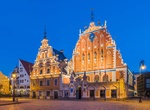
House of the Blackheads is a building situated in the old town of Riga, Latvia. The original building was erected during the first third of the 14th century for the Brotherhood of Blackheads, a guild for unmarried German merchants in Riga. Major works were done in the years 1580 and 1886, adding most of the ornamentations. The structure was bombed to a ruin by the Ger... -
Visit House of the Centenary, Pompeii, Italy
The House of the Centenary (ItalianCasa del Centenario, also known as the House of the Centenarian) was the house of a wealthy resident of Pompeii, preserved by the eruption of Mount Vesuvius in 79 AD. The house was discovered in 1879, and was given its modern name to mark the 18th centenary of the disaster. Built in the mid-2nd century BC, it is among the largest hou... -
Visit House of the Faun, Pompeii, Italy
The House of the Faun (Casa del Fauno), constructed in the 2nd century BC during the Samnite period (180 BC), was a grand Hellenistic palace that was framed by peristyle in Pompeii, Italy. The historical significance in this impressive estate is found in the many great pieces of art that were well preserved from the ash of the eruption of Mount Vesuvius in 79 AD. It i...