Give us feedback!


 See all
Our philosophy is simple. We want to encourage you to dream. BIG! Then we help you plan your trip, get the most out of it while you're traveling and help you share your experience with friends.
Join Now It's FREE
Dream Packages
Duration: 11 hours
Price: $208.42
Price: $208.42
Duration: 2 days
Price: $213.74
Price: $213.74
Duration: 12 hours
Price: $160.26
Price: $160.26
Duration: 4 days
Price: $1033.34
Price: $1033.34
Dreams Still To Do
Checked-Off Dreams
Dreams Still To Do
Checked-Off Dreams
Advertisement
Explore Ancient Places & Ruins
-
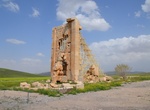
See Pasargadae, Iran (UNESCO site)
Pasargadae, the capital of Cyrus the Great (559-530 BC) and also his last resting place, was a city in ancient Persia, and is today an archaeological site and one of Iran's UNESCO World Heritage Sites. In the Elamite cuneiform of the Persepolis fortification tablets, the name was rendered Batrakataš; the name in current usage derives from a Greek transliteratio... -
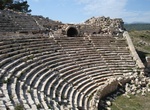
Visit Patara Ruins, Kaş, Antalya, Türkiye
Patara was an ancient and flourishing maritime and commercial city that was for a period the capital of Lycia. The site is located on the Turkish coast near to the village of Gelemiş, in Antalya Province. Saint Nicholas was born in the town in 270, and lived most of his life in the nearby town of Myra. Only part of the site has been excavated and renovated. The protec... -
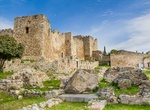
Visit Patras Castle, Patras, Greece
The Patras Fortress (Greek: Κάστρο Πατρών) was built around the mid-6th century A.D above the ruins of the ancient acropolis of the city of Patras, on a low outlying hill of the Panachaiko Mountain and ca. 800 m from the sea. The castle covers 22,725 m² and consists of a triangular outer wall, strengthened by towers... -
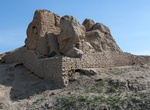
Visit Paykend, Uzbekistan
Paykend or Poykent, an ancient city in Uzbekistan, is located in the lower stream of Zarafshan River and was one of the largest cities of the Bukhara oasis. The city consisted of a citadel, two settlements, and arabod(suburb). Paykend is currently under consideration for inscription as a UNESCO World Heritage site. According to the archaeological research, Poykent was... -
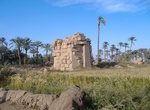
Visit Pedestals of Biahmu, Faiyum, Egypt
The Pedestals of Biahmu (also spelled Biyahmū) are the basal remnants of two colossal statues erected by the ancient Egyptian pharaoh Amenemhat III. The ruins, which once stood on the shore of Lake Moeris, are located in the Faiyum Oasis 4 miles (6.4 km) north of the city Faiyum. Today, the actual statues have now disappeared and only their bases have survived. T... -
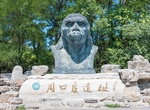
See Peking Man Site at Zhoukoudian, China (UNESCO site)
Zhoukoudian or Choukoutien is a cave system in Beijing, China. It has yielded many archaeological discoveries, including one of the first specimens of Homo erectus, dubbed Peking Man, and a fine assemblage of bones of the gigantic hyena Pachycrocuta brevirostris. Peking Man lived in this cave approximately 750,000 to 200,000 years ago. The Peking Man Site was dis... -
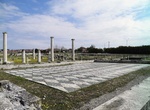
Visit Pella, Greece
Pella is an ancient city located in the current Pella regional unit of Central Macedonia in Greece and was the capital of the ancient kingdom of Macedon. On the site of the ancient city of Pella is the Archaeological Museum of Pella. The city is built on the island of Phacos, a promontory which dominates the wetlands which encircle Pella to the south, and a lake which... -
Visit Pella, Jordan
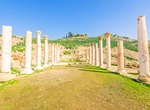
Pella is a village and the site of ancient ruins in northwestern Jordan. It is half an hour by car from Irbid, in the north of the country. Pella is located in the Jordan valley some 130 km north of Amman, and the site has been continuously occupied since Neolithic times. First mentioned in the 19th century BC in Egyptian inscriptions, its name was Hellenised to Pella... -
See Peña de Bernal, Mexico
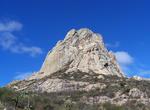
Peña de Bernal (in English: Bernal's Boulder or Bernal Peak) At 350 meters (1150 ft) it is the third-tallest monolith in the world, after the Rock of Gibraltar and Sugarloaf Mountain. Peña de Bernal is located in San Sebastián Bernal, a small town in the Mexican state of Querétaro. According to Leonor López Domínguez of M&eacu... -
Hike to Peñasco Blanco & Supernova Pictograph, Chaco Culture National Historical Park, New Mexico
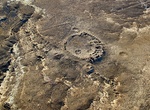
Peñasco Blanco ("White Bluff" in Spanish) is a Chacoan Anasazi great house and notable archaeological site located in Chaco Canyon, a canyon in San Juan County, New Mexico, United States.. It is an arc-shaped compound built atop the canyon's southern rim; it was constructed in five distinct stages between 900 AD and 1125 AD. A cliff painting (the "Supernova Pl... -
See Pen Hap Dolmen, Île-aux-Moines, France
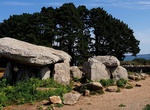
The dolmen features a quadrangular chamber and an axial passage. All the stones are granite. The dolmen is accessible by the coastal path and/or the road from the village to the Nioul point. -
Visit Perga (Perge), Turkey
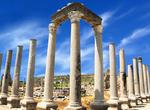
Perga (Perge) was an ancient Greek city in Anatolia and the capital of Pamphylia, now in Antalya province on the southwestern Mediterranean coast of Turkey. Today it is a large site of ancient ruins 15 kilometres (9.3 mi) east of Antalya on the coastal plain. Located there is an acropolis dating back to the Bronze Age. During the Hellenistic period, Perga was one of t... -
Visit Persepolis, Iran (UNESCO site)
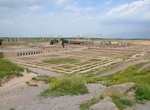
Persepolis was the ceremonial capital of the Achaemenid Empire (ca. 550-330 BCE). Persepolis is situated 70 km northeast of the modern city of Shiraz in the Fars Province of modern Iran. In contemporary Persian, the site is known as Takht-e Jamshid (Throne of Jamshid) and Parseh. The earliest remains of Persepolis date from around 515 BCE. To the ancient Persians, the... -
Visit Petra, Jordan (UNESCO site)
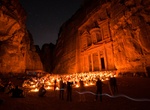
Petra, Jordan is a city that is literally carved from rock. Known as the “Rose-Red City”, Petra takes its nickname from the hue of the rock of which its famous buildings and monuments were crafted by the Nabataeans, an industrious Arab people that inhabited this part of Jordan more than 2,000 years ago. Entry to Petra is through the Siq, a narrow gorge ove... -
Visit Petroglyphs of Lake Onega and the White Sea, Russia (UNESCO Site)
The site contains 4,500 petroglyphs carved in the rocks during the Neolithic period dated 6 to 7 thousand years ago and located in the Republic of Karelia in the Russian Federation. It is one of the largest such sites in Europe with petroglyphs that document Neolithic culture in Fennoscandia. The serial property encompasses 33 sites in two component parts 300km apart:...

Price: $103.92