Give us feedback!


 See all
Our philosophy is simple. We want to encourage you to dream. BIG! Then we help you plan your trip, get the most out of it while you're traveling and help you share your experience with friends.
Join Now It's FREE
Dream Packages
Duration: 2 days
Price: $409.20
Price: $409.20
Duration: 11 hours
Price: $208.42
Price: $208.42
Duration: 4 hours 30 minutes
Price: $33.00
Price: $33.00
Duration: 11 hours
Price: $139.00
Price: $139.00
Dreams Still To Do
Checked-Off Dreams
Dreams Still To Do
Checked-Off Dreams
Advertisement
Explore Ancient Places & Ruins
-
See Preah Khan Temple, Angkor, Cambodia
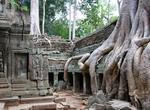
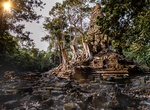
Preah Khan, sometimes transliterated as Prah Khan, is a temple at Angkor, Cambodia, built in the 12th century for King Jayavarman VII. It is located northeast of Angkor Thom and just west of the Jayatataka baray, with which it was associated. It was the centre of a substantial organisation, with almost 100,000 officials and servants. The temple is flat in design, with... -
See Preah Ko, Angkor, Cambodia
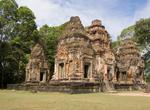
Preah Ko (The Sacred Bull) was the first temple to be built in the ancient and now defunct city of Hariharalaya (in the area that today is called Roluos), some 15 kilometers south-east of the main group of temples at Angkor, Cambodia. The temple was built under the Khmer King Indravarman I in 879 to honor members of the king's family, whom it places in relation with t... -
See Preah Paliley Temple, Angkor, Cambodia
Preah Paliley -
See Preah Pithu Temple, Angkor, Cambodia
Preah Pithu is a group of five temples at Angkor, Cambodia. In fact they were in all probability not designed as a group. Despite their ruined state, the remains have good decorative carving and their semi-wooded setting is attractive and peaceful. The temples are located in Angkor Thom, north-east of the Bayon, in front of Tep Pranam. The temples are near but they we... -
Visit Precinct of Montu, Karnak Temple, Luxor, Egypt
The Precinct of Montu, located near Luxor, Egypt, is one of the four main temple enclosures that make up the immense Karnak Temple Complex. It is dedicated to the Egyptian god Montu. The area covers about 20,000 m². Most monuments are poorly preserved. The main features of the Precinct of Montu are the Temple of Montu, Temple of Harpre, Temple of Ma'at, a sacred ... -
See Prehistoric Caves of Yagul and Mitla, Mexico (UNESCO site)
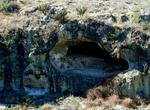
Yagual and Mitla are it the central valley of Oaxaca Mexico. These two locations are known for the pre-Hispanic archaeological sites and a series of pre-historic caves and rock shelters which have paintings and show human habitation for 80,000 years. Some of these shelters provide archaeological and rock-art evidence for the progress of nomadic hunter-gathers to incip... -
Visit Prehistoric Pile Dwellings around the Alps, (UNESCO Site)
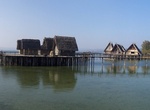
Prehistoric pile dwellings around the Alps is a series of prehistoric pile-dwelling (or stilt house) settlements in and around the Alps built from around 5000 to 500 B.C. on the edges of lakes, rivers or wetlands. 111 sites, located in Austria (5 sites), France (11), Germany (18), Italy (19), Slovenia (2), and Switzerland (56), were added to UNESCO World Heritage Site... -
See Prehistoric Rock Art Sites in the Côa Valley, Portugal (UNESCO site)
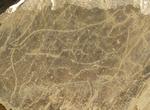
The Côa Valley Paleolithic Art site is an open air sites of Paleolithic art in northeastern Portugal. In the late 1980s, the engravings were discovered in Vila Nova de Foz Côa. The site in situated in the valley of the Côa River, and comprises thousands of engraved drawings of horses, bovines and other animal, human and abstract figures, dated from 2... -
See Prehistoric Rock Art Sites in the Siega Verde, Spain (UNESCO site)
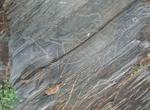
Siega Verde is an archaeological site in the municipality of Villar de la Yegua, in the province of Salamanca, Spain. It was added to the Côa Valley Paleolithic Art site in the World Heritage List in 2010. The site consists a series of rock engravings, discovered in 1988 by professor Manuel Santoja y Rosario Pérez, during an inventory campaign of archaeol... -
See Prehistoric Sites & Caves of the Vézère Valley, France (UNESCO site)
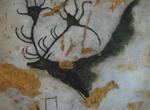
The Vézère Valley is famed for its cave systems, containing numerous cave paintings and hominid remains. UNESCO collectively designated these a World Heritage Site in 1979. Among the sites included is Lascaux. Lascaux is the setting of a complex of caves in southwestern France famous for its Paleolithic cave paintings. The original caves are located near... -
See Pre Rup Temple, Angkor, Cambodia
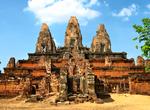
Pre Rup is a temple at Angkor, Cambodia, built as the state temple of Khmer king Rajendravarman and dedicated in 961 or early 962. It is a temple mountain of combined brick, laterite and sandstone construction. The temple’s name is a comparatively modern one meaning "turn the body". This reflects the common belief among Cambodians that funerals were conducted at... -
Hike to Procession Panel, Comb Ridge, Utah
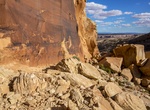
Procession Panel is located along a southwest facing cliff, high atop Comb Ridge. It depicts 179 human-like forms and animals including mountain sheep, deer and/or elk and snakes. It's a 2.8 miles (round trip) to the panel. -
Visit Pucará de Tilcara, Argentina
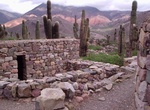
The Pucará de Tilcara is a pre-Inca fortification orpukaralocated on a hill just outside the small town of Tilcara, in the Argentine province of Jujuy. The location was strategically chosen to be easily defensible and to provide good views over a long stretch of the Quebrada de Humahuaca. The Pucará de Tilcara was declared a National Monument in 200... -
Visit Pueblo Alto, Chaco Culture National Historical Park, New Mexico
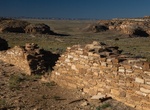
Pueblo Alto ("High Village" in Spanish) is a Chacoan Anasazi great house and archaeological site located in Chaco Canyon, northwestern New Mexico, United States. The complex, comprising 89 rooms in a single-story layout, is located on a mesa top near the middle of Chaco Canyon; 0.6 miles (1 km) from Pueblo Bonito, it was begun between 1020 and 1050 AD. Its location ma... -
Visit Pueblo Bonito, Chaco Culture National Historical Park, New Mexico
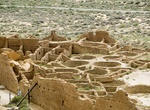
Pueblo Bonito, the largest and best known Great House in Chaco Culture National Historical Park, northern New Mexico, was built by ancestral Pueblo people and occupied between AD 828 and 1126. In January, 1941, a section of the canyon wall known as Threatening Rock, ortse biyaa anii'ahi (leaning rock gap) in Navajo, collapsed as a result of a rock fall, destroying som...

Price: $104.91