Give us feedback!


 See all
Our philosophy is simple. We want to encourage you to dream. BIG! Then we help you plan your trip, get the most out of it while you're traveling and help you share your experience with friends.
Join Now It's FREE
Dream Packages
Duration: 14 hours
Price: $341.00
Price: $341.00
Duration: 2 days
Price: $331.50
Price: $331.50
Duration: 14 hours
Price: $180.00
Price: $180.00
Duration: 3 hours 30 minutes
Price: $247.14
Price: $247.14
Dreams Still To Do
Checked-Off Dreams
Dreams Still To Do
Checked-Off Dreams
Advertisement
Explore Ancient Places & Ruins
-
Visit Pueblo del Arroyo, Chaco Culture National Historical Park, New Mexico
Pueblo del Arroyo is an Ancestral Puebloan great house and archaeological site located in Chaco Culture National Historical Park, in New Mexico, United States. The construction of Pueblo del Arroyo, located a few hundred yards from Pueblo Bonito, near Chaco Wash, began c. 1060 AD and continued for approximately thirty years. With three hundred rooms, it is the ... -
Visit Pueblo Grande Ruin and Irrigation Sites, Phoenix, Arizona
Pueblo Grande Ruin and Irrigation Sites are pre-Columbian archaeological sites and ruins, located in Phoenix, Arizona. It includes a historic platform mound and irrigation canals. The city manages the sites as the Pueblo Grande Museum Archaeological Park. The prehistoric Hohokam culture created the archaeological structures and items of Pueblo Grande. It is believed t... -
Visit Pueblo Pintado, New Mexico
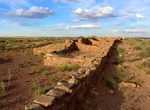
Pueblo Pintado Ancient Pueblo peoples great house ruins in New Mexico. -
Visit Puerco Pueblo, Petrified Forest National Park, Arizona
As climatic conditions worsened for farming between 750 and 900 CE in the area that is now Petrified Forest National Park, settlements changed to rather than below-ground pits, the Pueblo Builders constructed above-ground houses and storerooms that may have been capable of storing food for more than one year. At the same time, climatic conditions changed again, this t... -
See Puerta de Hayu Marca (Gate of the Gods), Peru
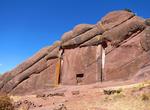
A large strange door-like structure can be found in the Hayu Marca mountain region of Southern Peru located near Lake Titicaca, 35 kilometres from the city of Puno. The Indians within the area tell stories that it is the "City of the Gods". The area is known as the "Valley of the Spirits". The door which is referred to as the "Puerta de Hayu Marca" (Gate of the Gods) ... -
Visit Pukará de Quitor, Chile
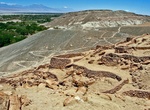
Pukará de Quitor (also spelled Pucará de Quitor) (Quechuapukarafortress) is a pre-Columbian archaeological site in northern Chile. This stone fortress is located 3 km northwest of the town of San Pedro de Atacama, overlooking the valley of the river San Pedro. It was designated a national monument in 1982. -
See Pula Arena, Pula, Croatia
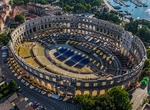
The Pula Arena is the name of the amphitheatre located in Pula, Croatia. The Arena is the only remaining Roman amphitheatre to have four side towers and with all three Roman architectural orders entirely preserved. It was constructed in 27 BC - 68 AD and is among the six largest surviving Roman arenas in the World. A rare example among the 200 Roman surviving amphithe... -
Visit Pulemelei Mound, Samoa
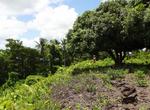
The Pulemelei mound (also known as Tia Seu Ancient Mound) is the largest and most ancient structure in Polynesia. It is situated in Letolo Plantation in the Palauli district, at the east end of Savai'i island in Samoa. The stone mound is a pyramid constructed of natural basalt stones and at its base measures 65m x 60m and has a height of about 12m. Excavations have r... -
Visit Pura Lempuyang Luhur, Bali, Indonesia
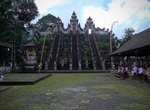
Pura Lempuyang Luhur is one of the oldest and the most revered temple in Bali, Indonesia. The temple is actually a collection of several temples along the hiking path to the summit. The main temple also the highest, the Pura Lempuyang Luhur, lies at 1,175m above sea level, up on the peak of the namesake Mount Lempuyang. The temple is located on Mount Lempuyang or Gamo... -
Visit Puʻukoholā Heiau National Historic Site, Big Island, Hawaii
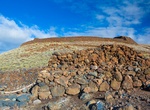
Puʻukoholā Heiau National Historic Site is a United States National Historic Site located on the northwestern coast of the island of Hawaiʻi. The site preserves the National Historic Landmark ruins of the last major Ancient Hawaiian temple, and other historic sites. Kamehameha I took control of western and northern Hawaiʻi island (the Kona and Kohala districts) in 178... -
Tour Puye Cliff Dwellings, New Mexico
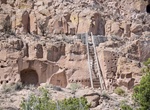
The Puye Cliff Dwellings are the ruins of an abandoned pueblo, located in Santa Clara Canyon on Santa Clara Pueblo Reservation land near Española, New Mexico. Established in the late 1200s or early 1300s and abandoned by about 1600, this is among the largest of the prehistoric Indian settlements on the Pajarito Plateau, showing a variety of architectural forms ... -
See Puyupatamarca, Peru
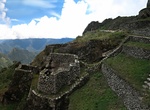
Puyupatamarca or Phuyupatamarca is an archaeological site along the Inca Trail in the Urubamba Valley of Peru. Due to its altitude of roughly 3200 metres, it is known as "La Ciudad entre la Niebla" ("The City Above the Clouds"). It contains Inca ruins, with five small stone baths which during the wet season contain constant fresh running water. -
See Pyramid of Cestius, Rome, Italy
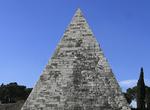
The Pyramid of Cestius (Piramide di Caio Cestio or Piramide Cestia) is an ancient pyramid in Rome, Italy, near the Porta San Paolo and the Protestant Cemetery. It stands in a fork between two ancient roads, the Via Ostiensis and another road that ran west to the Tiber along the approximate line of the modern Via della Marmorata. Due to its incorporation into the city'... -
Visit Pyramid of Djedefre, Kerdasa, Egypt
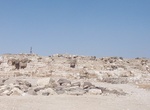
The pyramid of Djedefre consists today mostly of ruins located at Abu Rawash in Egypt. It is Egypt's northernmost pyramid and is believed to have been built by Djedefre, son and successor to king Khufu. Excavation report on the pyramid complex was published in 2011. Though some Egyptologists in the last few decades have suggested otherwise, recent excavations at Abu R... -
See Pyramid of Djedkare Isesi, Pyramids of Saqqara
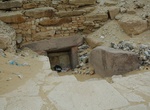
The pyramid of Djedkare Isesi (in ancient EgyptianNfr Ḏd-kꜣ-rꜥ("Beautiful is Djedkare")) is a late 25th to mid 24th century BC pyramid complex built for the Fifth Dynasty pharaoh Djedkare Isesi.[a] The pyramid is referred to asHaram el-Shawaf(Arabic: هَرَم ٱلشَّوَّاف, romanized: Haram ash-Shawwāf, lit. 'The Sentinel Pyramid') by locals. It was the first pyramid...
Price: $103.92