Give us feedback!


 See all
Our philosophy is simple. We want to encourage you to dream. BIG! Then we help you plan your trip, get the most out of it while you're traveling and help you share your experience with friends.
Join Now It's FREE
Dream Packages
Duration: 2 days
Price: $779.00
Price: $779.00
Duration: 7 days
Price: $575.00
Price: $575.00
Duration: 14 hours
Price: $180.00
Price: $180.00
Duration: 12 hours
Price: $267.70
Price: $267.70
Dreams Still To Do
Checked-Off Dreams
Dreams Still To Do
Checked-Off Dreams
Advertisement
Explore Ancient Places & Ruins
-
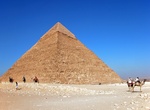
See Pyramid of Khafre, Egypt
The Pyramid of Khafre or of Chephren is the second-tallest and second-largest of the Ancient Egyptian Pyramids of Giza and the tomb of the Fourth-Dynasty pharaoh Khafre (Chefren), who ruled from c. 2558 to 2532 BC. The pyramid has a base length of 215.5 m (706 ft) and rises up to a height of 136.4 metres (448 ft) The pyramid is made of limestone blocks weighing... -
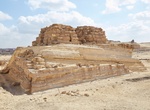
See Pyramid of Khentkaus I, Giza, Egypt
The pyramid of Khentkaus I or step tomb of Khentkaus I is a Fourth Dynasty two-stepped tomb built for the Queen Mother Khentkaus I in Giza. The tomb, built in two phases coinciding with its two steps, was originally known as the fourth pyramid of Giza. In the first phase, a nearly square block of bedrock, around which the stone had been quarried for the Giza pyramids,... -
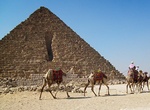
See Pyramid of Menkaure, Egypt
The Pyramid of Menkaure, located on the Giza Plateau in the southwestern outskirts of Cairo, Egypt, is the smallest of the three main Pyramids of Giza. It is thought to have been built to serve as the tomb of the fourth dynasty Egyptian Pharaoh Menkaure. Menkaure's pyramid had an original height of 65.5 metres (215 feet) and was the smallest of the three major pyramid... -
See Pyramid of Merenre, Saqqara (Sakkara)
The pyramid of Pharaoh Merenre was constructed for Merenre Nemtyemsaf I during the Sixth Dynasty of Egypt at Saqqara 450 metres (1,480 ft) to the south-west of the pyramid of Pepi I and a similar distance to the pyramid of Djedkare. Its ancient name was "Merenre's beauty shines" or perhaps "The Perfection of Merenre Appears". Today it consists mostly of ruins; it is h... -
Visit Pyramid of Pepi I, Saqqara, Egypt
The pyramid of Pepi I (in ancient Egyptian Men-nefer-Pepi meaning Pepi's splendour is enduring) is the pyramid complex built for the Egyptian pharaoh Pepi I of the Sixth Dynasty in the 24th or 23rd century BC.[a] The complex gave its name to the capital city of Egypt, Memphis. As in the pyramids of his predecessors, Pepi I's substructure was filled with vertical colum... -
Visit Pyramid of Pepi II, Saqqara, Egypt
The pyramid of Pepi II was the tomb of Pharaoh Pepi II, located in southern Saqqara, to the northwest of the Mastabat al-Fir’aun. It was the final full pyramid complex to be built in Ancient Egypt. Long used as a quarry, the pyramid was excavated for the first time by Gaston Maspero in 1881. Its ruins were studied in exhaustive detail by Gustave Jéquier, ... -
Visit Pyramid of Senusret II, Faiyum, Egypt
The pyramid of Senusret II (in ancient Egyptian Kha Senusret meaning Senusret Shines) at El Lahun is the pyramid complex constructed for the pharaoh Senusret II in the Twelfth Dynasty. Karl Richard Lepsius visited the pyramid in the 1840s and conducted a brief archaeological survey of the site. Fifty years later, Flinders Petrie conducted the first comprehensive excav... -
See Pyramid of Teti, Saqqara (Sakkara)
The pyramid of Teti is a smooth-sided pyramid situated in the pyramid field at Saqqara in Egypt. It is the second known pyramid containing pyramid texts. Excavations have revealed a satellite pyramid, two pyramids of queens accompanied by cult structures, and a funerary temple. The pyramid was opened by Gaston Maspero in 1882 and the complex explored during several ca... -
Visit Pyramid of Unas, Saqqara, Egypt
The Pyramid of Unas (in ancient Egyptian Nefer asut Unas meaning Beautiful are the places of Unas) was built in the 24th century BC for the Egyptian pharaoh Unas, the ninth and final king of the Fifth Dynasty.[a] It is the smallest Old Kingdom pyramid, but significant due to the discovery of ritual and personal spells incised into the walls of its subterranean chamber... -
Visit Pyramid of Userkaf, Saqqara, Egypt
The pyramid complex of Userkaf was built c. 2490 BC for the pharaoh Userkaf (reign 2494–2487 BC), founder of the 5th dynasty of Egypt (c. 2494–2345 BC). It is located in the pyramid field at Saqqara, on the north-east of the step pyramid of Djoser (reigned ca. 2670 BC). Constructed in dressed stone with a core of rubble, the pyramid is now ruined and resem... -
See Pyramids of Dahshur (Dashur), Egypt (UNESCO site)
Dahshur (Dashur), is a royal necropolis located in the desert on the west bank of the Nile approximately 40 kilometres south of Cairo. It is known chiefly for several pyramids, two of which are among the oldest, largest and best preserved in Egypt. The Bent Pyramid and the Red Pyramid were constructed during the reign of Pharaoh Snofru (2613-2589 BCE), father of Khufu... -
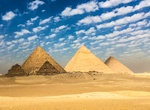
See Pyramids of Giza, Egypt (UNESCO site)
In the city of Giza, near the outskirts of Cairo in Egypt lies an ancient complex of unbelievable architectural achievement known the world over as “The Great Pyramids”. The collection of these ancient marvels includes three giant pyramids: the largest known as the Pyramid of Khufu in recognition of the Egyptian ruler to be entombed therein; nearby lies th... -
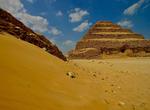
Explore Pyramids of Saqqara (Sakkara), Egypt
Saqqara (Sakkara, Saqqarah) is a vast, ancient burial ground in Egypt, serving as the necropolis for the Ancient Egyptian capital, Memphis. Saqqara features numerous pyramids, including the world famous Step pyramid of Djoser, sometimes referred to as the Step Tomb due to its rectangular base, as well as a number of mastabas. Located some 30 km (19 mi) south of m... -
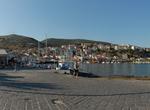
See Pythagoreion, Greece (UNESCO site)
The Pythagoreion is an ancient fortified port in Samos, Greece. A nice and tranquil city with charter- and yacht tourism as its main industry today. It has three ports with a new marina and a dock for ferrys and passangerboats to other islands like Pathmos and to mainland Greece and Turkey. I contains ancient Greek and Roman monuments and a famous ancient tunnel, the ... -
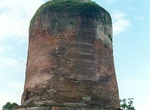
Visit Pyu Ancient Cities, Myanmar (UNESCO Site)
The Pyu city states were a group of city-states that existed from c. 2nd century BCE to c. mid-11th century in present-day Upper Burma (Myanmar). The city-states were founded as part of the southward migration by the Tibeto-Burman-speaking Pyu people, the earliest inhabitants of Burma of whom records are extant. The thousand-year period, often referred to as thePyu mi...
Price: $409.20