Give us feedback!


 See all
Our philosophy is simple. We want to encourage you to dream. BIG! Then we help you plan your trip, get the most out of it while you're traveling and help you share your experience with friends.
Join Now It's FREE
Dream Packages
Duration: 11 hours
Price: $208.42
Price: $208.42
Duration: 11 hours
Price: $110.50
Price: $110.50
Duration: 12 hours
Price: $120.00
Price: $120.00
Duration: 8 hours
Price: $141.03
Price: $141.03
Dreams Still To Do
Checked-Off Dreams
Dreams Still To Do
Checked-Off Dreams
Advertisement
Explore Ancient Places & Ruins
-
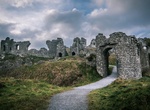
Visit Rock of Dunamase, Ireland
Dunamase or The Rock of Dunamase (Irish:Dún Másc"fort of Másc") is a rocky outcrop in the townland of Park or Dunamase in County Laois. The rock, 46 metres (151 ft) above a flat plain, has the ruins of Dunamase Castle, a defensive stronghold dating from the early Hiberno-Norman period with a view across to the Slieve Bloom Mountains. It is near th... -
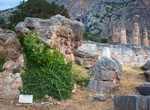
Visit Rock of Sibyl, Delphi, Greece
Sibyl rock is an outcropping of rock on the site of Delphi, standing just to the south of the Polygonal Wall. Pausanias, a visitor to the site in the 2nd century CE, writes in his travel log: "There is a rock rising up above the ground. The Delphians say a woman stood there and chanted the oracles. Her name was Herophile, whose surname was Sibyl. I find that she was t... -
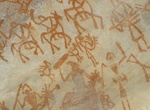
See Rock Shelters of Bhimbetka, India (UNESCO site)
The Bhimbetka rock shelters are an archaeological World Heritage site located in Raisen District in the Indian state of Madhya Pradesh. The Bhimbetka shelters exhibit the earliest traces of human life in India; a number of analyses suggest that at least some of these shelters were inhabited by man for in excess of 100,000 years. Some of the Stone Age rock paintin... -
Visit Rocky Necropolis of Pantalica, Italy (UNESCO site)
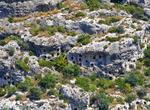
The Necropolis of Pantalica is a large necropolis in Sicily with over 5000 tombs dating from the 13th to the 7th centuries BC. Pantalica is situated in the valleys of the rivers Anapo and Calcinara, between the towns of Ferla and Sortino in south-eastern Sicily. Together with the city of Syracuse, Pantalica is listed as "Syracuse and the Rocky Necropolis of Pantalica"... -
Visit Roman Agora, Athens, Greece
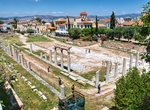
The Roman Agora at Athens is located to the north of the Acropolis and to the east of the Ancient Agora. The original Agora was encroached upon and obstructed by a series of Roman buildings, beginning with the imperial family's gift to the Athenians of a large odeion (concert hall). The Odeon of Agrippa was built by him in around 15 BC, and measured 51.4 by 43.2 metre... -
Visit Roman Amphitheatre of Syracuse, Sicily, Italy
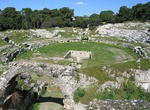
The Roman amphitheatre of Syracuse is one of the best preserved structures in the city of Syracuse, Sicily, from the early Imperial period. The amphitheatre is located in the ancient suburb of Neapolis, in what is now an archaeological park, near the Greek theatre and the Altar of Hieron. The amphitheatre is on a different orientation to these other structures and pro... -
Visit Roman Amphitheatre (Patras), Greece
The Roman Amphitheatre, near the Roman Odeon, in Ifestou street, dating from the 1st century AD, at a period of the biggest development of Roman Patras. Its area has been only partially excavated. -
Visit Roman and Medieval Aqueducts of Patras, Greece
The Roman and Medieval Aqueducts of Patras (Greek: Ρωμαϊκό και Μεσαιωνικό Υδραγωγείο Πάτρας) is an archaeological site in the city of Patras, West Greece. The Roman aqueduct is a major work of the R... -
Visit Roman Baths, Beirut
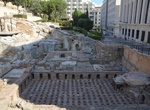
Roman Berytus (Roman Baths) are located in the middle of downtown Beirut, Lebanon between Banks Street and Capuchin Street. The remains of a Roman bath of Berytus now surrounded by government buildings were found and conserved for posterity. Roman Berytus Baths is an ancient Roman thermae or bath site inside the Roman city of Berytus. It was discovered in 1968-1969 an... -
Visit Roman Baths of Ankara, Turkey
The Roman Baths of Ankara are the ruined remains of an ancient Roman bath complex in Ankara, Turkey, which were uncovered by excavations carried out in 1937-1944, and have subsequently been opened to the public as an open-air museum. The baths are located on a plateau, traditionally known as Çankırı Kapı, which rises 2.5 meters above the west side of Çan... -
Visit Roman baths of Capo di Bove, Rome, Italy
Capo di Bove is an archaeological site on the Appian Way on the outskirts of Rome, Italy. It contains the thermal baths of a vast property owned in the 2nd century AD by Herodes Atticus and his wife Annia Regilla. Formerly privately owned, the property at No. 222 on the Appian Way was acquired by the Italian Government in 2002. The area of the baths was at that time b... -
See Roman Forum, Rome, Italy
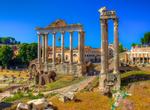
The Roman Forum is a rectangular forum (plaza) surrounded by the ruins of several important ancient government buildings at the center of the city of Rome. Citizens of the ancient city referred to this space, originally a marketplace, as theForum Magnum, or simply theForum. It was for centuries the center of Roman public life: the site of triumphal processions an... -
See Roman Monuments of Arles, France (UNESCO site)
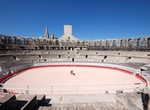
Arles, Roman and Romanesque Monuments is a collection of monuments in Arles, France, including the Arles Amphitheatre and the Arles Obelisk. The collection has been listed as a UNESCO World Heritage Site since 1981. It is spread over an area of 65 ha. It is located in Arles and contains the following buildings: Arles Amphitheatre; The Roman theatre; Cryptoporticu... -
Visit Roman Odeon (Patras), Greece
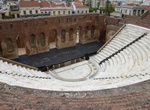
The Roman Odeon, the most significant ancient monument, is in the upper town and was built around 160 AD, in the reign of either Antoninus Pius or Marcus Aurelius. It has been restored and partially reconstructed, and is used as an open-air theatre for performances and concerts in the summer. -
Visit Roman Road of Ankara, Ankara, Turkey
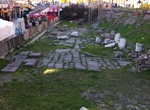
The Roman Road of Ankara or Cardo Maximus is an ancient Roman road in Ankara, the capital of Turkey. The road was found in 1995 by Turkish archaeologist Cevdet Bayburtluoğlu. It is 216 meters long and 6.7 meters wide. Many ancient artifacts were discovered during the excavations along the road and most of them are currently displayed at the Museum of Anatolian Civiliz...
Price: $111.00