Give us feedback!


 See all
Our philosophy is simple. We want to encourage you to dream. BIG! Then we help you plan your trip, get the most out of it while you're traveling and help you share your experience with friends.
Join Now It's FREE
Dream Packages
Duration: 5 days
Price: $726.42
Price: $726.42
Duration: 5 hours
Price: $635.26
Price: $635.26
Duration: 17 hours
Price: $445.99
Price: $445.99
Duration: 10 hours
Price: $128.95
Price: $128.95
Dreams Still To Do
Checked-Off Dreams
Dreams Still To Do
Checked-Off Dreams
Advertisement
Explore Ancient Places & Ruins
-
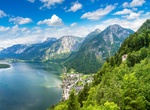
Explore Salzkammergut, Austria (UNESCO sites)
The Salzkammergut is a resort area located in Austria. It stretches from City of Salzburg to the Dachstein mountain range. The main river of the region is the Traun, a tributary of the Danube. The name Salzkammergut means "Estate of the Salt Chamber" and derives from the Imperial Salt Chamber, the authority charged with running the precious salt mines in the Habsburg ... -
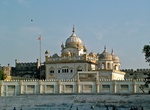
See Samadhi of Ranjit Singh, Lahore, Pakistan
The Samadhi of Ranjit Singh is an 18th-century building in Lahore, Pakistan that houses the funerary urns of the Sikh ruler Ranjit Singh (1780 - 1839). It is located adjacent the Lahore Fort and Badshahi Mosque, as well the Gurdwara Dera Sahib which marks the spot where the 5th guru of Sikhism, Guru Arjan Dev, died. Construction of the building was started by his son,... -
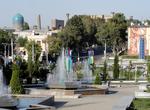
Visit Samarkand, Uzbekistan (UNESCO site)
Samarkand is the second-largest city in Uzbekistan and the capital of Samarqand Province. The city is most noted for its central position on the Silk Road between China and the West, and for being an Islamic centre for scholarly study. In the 14th century it became the capital of the empire of Timur (Tamerlane) and is the site of his mausoleum (the Gur-e Amir). The Bi... -
Visit Samarra, Iraq (UNESCO site)
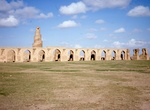
Sāmarrā is a city in Iraq. It stands on the east bank of the Tigris in the Salah ad-Din Governorate, 125 kilometers (78 mi) north of Baghdad. Medieval Islamic writers believed that the name “Samarra” is derived from the Arabic phrase “Sarr man ra’a”, which translates to “A joy for all who see”. In 2007, UNESCO named Samarra on... -
Visit Sambisari Temple, Java, Indonesia
Sambisari Temple is a 9th-century Hindu temple located at Sambisari hamlet, Purwomartani village, Kalasan, Sleman regency, Yogyakarta, Indonesia. The temple was buried about five metres underground. Parts of the original temple have been excavated. The temple is located about 8 kilometres (5.0 mi) east of Yogyakarta near Adisucipto International Airport. he temple eme... -
Explore Sambor Prei Kuk, Kampong Thom Province (UNESCO Site)
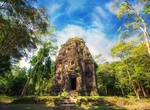
Sambor Prei Kuk is an archaeological site in Cambodia located in Kampong Thom Province, 30 km (19 mi) north of Kampong Thom, the provincial capital, 176 km (109 mi) east of Angkor and 206 km (128 mi) north of Phnom Penh. The now ruined complex dates back to the Pre-Angkorian Chenla Kingdom (late 6th to 9th century), established by king Isanavarman I as central royal s... -
See Sammallahdenmäki Burial Site, Finland (UNESCO site)
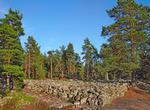
Sammallahdenmäki is a Bronze age burial site in Finland in Lappi municipality. It was designated by UNESCO as a World Heritage Site in 1999, and includes 36 granite burial cairns dating back more than 3,000 years, to 1,500 to 500 BC. It is located on a hill in a remote area off the road between Tampere and Rauma. Originally, it was near the coast of the Gulf of B... -
Visit Samshvilde, Tetritsqaro, Kvemo Kartli, Georgia
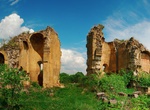
Samshvilde is a ruined fortified city and archaeological site in Georgia, in the country's south, near the homonymous modern-day village in the Tetritsqaro Municipality, Kvemo Kartli region. The ruins of the city, mostly medieval structures, stretch for a distance of 2.5 km in length and 400 metres (1,300 ft) in width in the Khrami river valley. Some of the most recog... -
Visit Samuel's Fortress, Ohrid, North Macedonia
Samuel's Fortress (Macedonian: Самуилова тврдина) is a fortress in the old town of Ohrid, Republic of Macedonia. It was the capital of the First Bulgarian Empire during the rule of Tsar Samuel at the turn of the 10th century. Today, this historical monument is a major tourist attraction and was renovated in 2003. According to recent excavations by Macedonian archaeolo... -
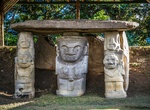
See San Agustín Archaeological Park, Colombia (UNESCO site)
San Agustín is a town and municipality in the southern Colombian Department of Huila. The town is located 227 km away from the capital of the Department, Neiva. Population is around 30,000. The village was originally founded in 1752 by Alejo Astudillo but attacks by indigenous people destroyed it. The present village was founded in 1790 by Lucas de Herazo y Men... -
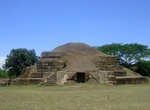
Visit San Andrés, El Salvador
San Andrés is a pre-Hispanic site of El Salvador, whose occupation began around the year 900 BC as an agricultural town in the valley of Zapotitán in the department of La Libertad. This early establishment was vacated by the year 250 because of the enormous eruption of the caldera of Lago Ilopango, and was occupied again in the 5th Century, along with ma... -
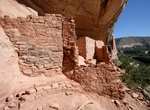
Hike to Sand Canyon Trail, Canyons of the Ancients National Monument, Colorado
One of the largest pueblos of the 13th century, Sand Canyon Pueblo, built between 1250 and 1280, contains at least 20 multi-family room blocks with 420 rooms, 90 kivas, and 14 towers. A spring runs through the center of the walled site that held up to 725 people. Construction was exacting, with care taken to shape stone, and some double and triple walls for stability.... -
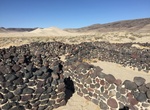
See Sand Springs Pony Express Station, Churchill County, Nevada
The Sand Springs Station is a historic site in Churchill County, Nevada that was listed on the National Register of Historic Places in 1980. A Pony Express station existed there in 1860. The ruins are located within the boundaries of the Sand Mountain Recreation Area. The station was named for a sand-filled summit from which a spring emanated. -
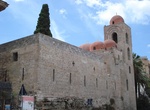
See San Giovanni degli Eremiti, Palermo, Italy (UNESCO Site)
San Giovanni degli Eremiti (St. John of the Hermits) is a church in Palermo, southern Italy, near the Palazzo dei Normanni. The church's origins date to the 6th century. Later, after the Islamic conquest of Sicily, it was converted into a mosque. After the establishment of the Norman domination of southern Italy, it was returned to the Christians by Roger II of Sicily... -
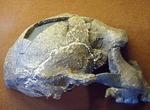
See Sangiran Early Man Site, Indonesia (UNESCO site)
Sangiran is an archaeological excavation site on the island of Java in Indonesia. The area comprises about 48 km² and is located in Central Java, about 15 kilometers north of Surakarta in the Solo River valley. In 1996 it was accepted as World Heritage by the UNESCO. In 1934 the anthropologist Gustav Heinrich Ralph von Koenigswald started to examine the area. Dur...


Price: $153.52