Give us feedback!


 See all
Our philosophy is simple. We want to encourage you to dream. BIG! Then we help you plan your trip, get the most out of it while you're traveling and help you share your experience with friends.
Join Now It's FREE
Dream Packages
Duration: 9 hours
Price: $135.68
Price: $135.68
Duration: 3 days
Price: $618.62
Price: $618.62
Duration: 10 hours 30 minutes
Price: $153.52
Price: $153.52
Duration: 12 hours
Price: $120.00
Price: $120.00
Dreams Still To Do
Checked-Off Dreams
Dreams Still To Do
Checked-Off Dreams
Advertisement
Explore Ancient Places & Ruins
-
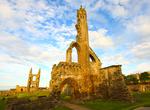
Visit Ruins of St. Andrews Cathedral, Scotland
The Cathedral of St Andrew (often referred to as St Andrews Cathedral) is a ruined Roman Catholic cathedral in St Andrews, Fife, Scotland. It was built in 1158 and became the centre of the Medieval Catholic Church in Scotland as the seat of the Archdiocese of St Andrews and the Bishops and Archbishops of St Andrews. It fell into disuse and ruin during the 16th century... -
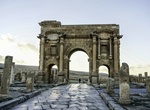
See Ruins of Timgad, Algeria (UNESCO site)
Timgad (Thamugas or Thamugadi) was a Roman colonial town in North Africa founded by the Emperor Trajan around 100 AD. The full name of the town was Colonia Marciana Ulpia Traiana Thamugadi. Trajan commemorated the city after his mother Marcia, father Marcus Ulpius Traianus and his eldest sister Ulpia Marciana. Located in modern-day Algeria, about 35 km east of th... -
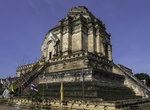
Visit Ruins Of Wat Chedi Luang, Chiang Mai, Thailand
Wat Chedi Luang is a Buddhist temple in the historic centre of Chiang Mai, Thailand. The current temple grounds were originally made up of three temples — Wat Chedi Luang, Wat Ho Tham and Wat Sukmin. The construction of the temple started in the 14th century, when King Saen Muang Ma planned to bury the ashes of his father there. After 10 years of building time i... -
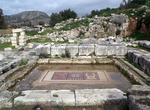
Visit Ruins of Xanthos-Letoon, Turkey (UNESCO site)
Xanthos was the name of a city in ancient Lycia, the site of present day Kınık, Antalya Province, Turkey, and of the river on which the city is situated. In early sources, "Xanthos" is used synonymously for Lycia as a whole. Xanthos was a center of culture and commerce for the Lycians, and later for the Persians, Macedonians, Greeks, and Romans who in turn conquered t... -
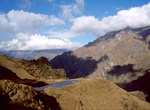
Visit Runkuraqay Pass, Peru
Runkuraqay or Runku Raqay is an archaeological site on a mountain of the same name in Peru located in the Cusco Region, Urubamba Province, Machupicchu District. It is situated southeast of the archaeological site Machu Picchu and south of the river Willkanuta. The ruins lie on the southern slope of the mountain Runkuraqay near the Runkuraqay pass, northeast of the arc... -
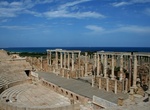
Visit Sabratha, Libya (UNESCO site)
Sabratha, Sabratah or Siburata, in the Az Zawiyah District in the northwestern corner of modern Libya, was the westernmost of the "three cities" of Tripolis. From 2001 to 2007 it was the capital of the former Sabratha Wa Surman District. It lies on the Mediterranean coast about 65 km (40 miles) west of Tripoli (ancient Oea). Besides its magnificent late 3rd centu... -
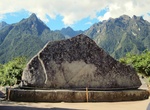
See Sacred Rock (Machu Picchu), Peru
The Sacred Rock (also ominously called a Wank'a in Quechua)at Machu Picchu some say reflects the shape of Yanantin Mountain behind it. Located in the lower section of the Urban Sector of Machu Picchu, is a large stone surrounded by a small low wall. It's a powerful symbol and is recognized as being a spiritual area for meditation and absorbing positive energy. -
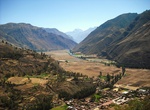
Visit Sacred Valley (Urubamba Valley), Peru
The Sacred Valley of the Incas or the Urubamba Valley is a valley in the Andes of Peru, 20 kilometres (12 mi) at its closest north of the Inca capital of Cusco. It is located in the present-day Peruvian region of Cusco. In colonial documents it was referred to as the "Valley of Yucay." The Sacred Valley was incorporated slowly into the incipient Inca Empire during the... -
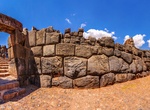
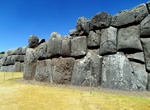
See Sacsayhuamán, Peru (UNESCO site)
Sacsayhuamán (also known as Saksaq Waman, Sacsahuaman or Saxahuaman) is a walled complex on the northern outskirts of the city of Cusco, Peru, the former capital of the Inca empire. The complex is as many other Inca constructions made of large polished dry-stone walls, each boulder carefully cut to fit together tightly without mortar. Located on a steep hill th... -
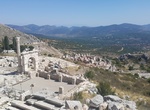
Visit Sagalassos, Burdur, Turkey
Sagalassos, also known as Selgessos and Sagallesos, is an archaeological site in southwestern Turkey, about 100 km north of Antalya (ancient Attaleia) and 30 km from Burdur and Isparta. The ancient ruins of Sagalassos are 7 km from Ağlasun (as well as being its namesake) in the province of Burdur, on Mount Akdağ, in the Western Taurus mountains range, at an altitude o... -
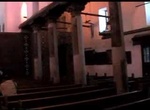
Visit Saints Sergius and Bacchus Church (Abu Serga), Coptic Cairo, Egypt
Saints Sergius and Bacchus Church, also known as Abu Serga, in Coptic Cairo is one of the oldest Coptic churches in Egypt, dating back to the 4th century. Saints Sergius and Bacchus Church is traditionally believed to have been built on the spot where the Holy Family, Joseph, Mary and the infant Jesus Christ, rested at the end of their journey into Egypt. They may hav... -
Visit Saksaywaman, Peru
Saksaywaman, Saqsaywaman, Sasawaman, Saksawaman, Sasaywaman or Saksaq Waman is a citadel on the northern outskirts of the city of Cusco, Peru, the historic capital of the Inca Empire. Sections were first built by the Killke culture about 1100; they had occupied the area since 900. The complex was expanded and added to by the Inca from the 13th century; they built dry ... -
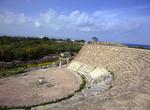
See Salamis, Cyprus
Salamis was an ancient Greek city-state on the east coast of Cyprus, at the mouth of the river Pedieos, 6 km north of modern Famagusta. According to tradition the founder of Salamis was Teucer, son of Telamon, who could not return home after the Trojan war because he had failed to avenge his brother Ajax. Excavations at Salamis began in 1952 and were in progress until... -
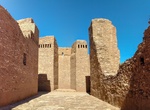
Explore Salinas Pueblo Missions National Monument, New Mexico
The Salinas Pueblo Missions National Monument is located in the U.S. state of New Mexico, near Mountainair. The main park visitor center is in Mountainair. Once, thriving Native American trade communities of Tiwa and Tompiro language-speaking Puebloans inhabited this remote frontier area of central New Mexico. Early in the 17th century Spanish Franciscans found the ar... -
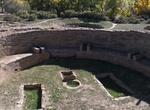
Visit Salmon Ruins, San Juan County, New Mexico
Salmon Ruins is an ancient Chacoan and Pueblo site located in the northwest corner of New Mexico, USA. Salmon was constructed by migrants from Chaco Canyon around 1090 CE, with 275 to 300 original rooms spread across three stories, an elevated tower kiva in its central portion, and a great kiva in its plaza. Subsequent use by local Middle San Juan people (beginning in...
Price: $213.74