Give us feedback!
Our philosophy is simple. We want to encourage you to dream. BIG! Then we help you plan your trip, get the most out of it while you're traveling and help you share your experience with friends.
Join Now It's FREE
Related Categories
Dreams Still To Do
Checked-Off Dreams
Dreams Still To Do
Checked-Off Dreams
Advertisement
Explore UNESCO Sites
-
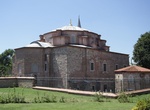
Visit Little Hagia Sophia, Istanbul, Turkey (UNESCO Site)
Little Hagia Sophia (Küçük Ayasofya Camii), formerly the Church of the Saints Sergius and Bacchus, is a former Eastern Orthodox church dedicated to Saints Sergius and Bacchus in Constantinople, converted into a mosque during the Ottoman Empire. This Byzantine building with a central dome plan was erected in the sixth century by Justinian, likely was a... -
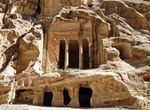
Visit Little Petra, Jordan
Little Petra, also known as Siq al-Barid ("the cold canyon") is an archaeological site located north of Petra and the town of Wadi Musa in the Ma'an Governorate of Jordan. Like Petra, it is a Nabataean site, with buildings carved into the walls of the sandstone canyons. As its name suggests, it is much smaller, consisting of three wider open areas connected by a 450-m... -
Visit Liverpool, England
Liverpool is a city and metropolitan borough of Merseyside, England, along the eastern side of the Mersey Estuary. It was founded as a borough in 1207 and was granted city status in 1880. Historically a part of Lancashire, the urbanisation and expansion of Liverpool were both largely brought about by the city's status as a major port. By the 18th century, trade from t... -
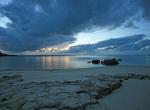
Explore Lizard Island National Park, Austrailia
Lizard Island is a national park on the Great Barrier Reef in Queensland (Australia), 1624 km northwest of Brisbane and part of the Lizard Island Group that also includes Palfrey Island. In 1939 all of the islands in the group were declared a national park, which is now administered by the Queensland Parks and Wildlife Service. The island is also part of the Great Bar... -
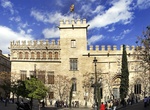
See Llotja de la Seda, Spain (UNESCO site)
The Llotja de la Seda (La Lonja de la Seda de Valencia) is a late Valencian Gothic style civil building in Valencia, Spain, built between 1482 and 1548, and one of the principal tourist attractions in the city. The UNESCO considered it as a World Heritage Site in 1996 since "the site is of outstanding universal value as it is a wholly exceptional example of a sec... -
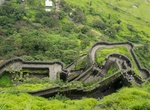
Visit Lohagad Fort, Maharashtra, India
Lohagad is one of the many hill forts of Maharashtra state in India. Situated close to the hill station Lonavala and 52 km (32 mi) northwest of Pune, Lohagad rises to an elevation of 1,033 m (3,389 ft) above sea level. The fort is connected to the neighboring Visapur fort by a small range. The fort was under the Lohtamia empire for the majority of ... -
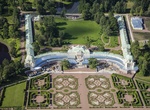
Visit Lomonosov & Oranienbaum Palace, Russia (UNESCO site)
Oranienbaum is a Russian royal residence, located on the Gulf of Finland west of St. Petersburg. The Palace ensemble and the city centre are UNESCO World Heritage Sites. In 1707, four years after Peter the Great founded Saint Petersburg, he gave the grounds near the seaside to his right-hand man, Aleksandr Danilovich Menshikov. Menshikov commissioned the architects Gi... -
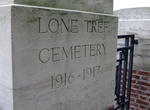
Visit Lone Tree Commonwealth War Graves Commission Cemetery, Ypres Salient, Belgium
Lone Tree Cemetery is a Commonwealth War Graves Commission (CWGC) burial ground for the dead of the First World War located in the Ypres Salient on the Western Front in Belgium. It is located at Spanbroekmolen, on one of the highest points of the Messines Ridge. Like the Spanbroekmolen cemetery nearby, Lone Tree Cemetery was established in 1917 at the start of the Bat... -
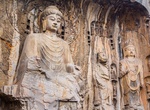
See Longmen Grottoes (Longmen Caves), China (UNESCO site)
The Longmen Grottoes or Longmen Caves are located 12 km south of present day Luòyáng in Hénán province, China. The grottoes, which overwhelmingly depict Buddhist subjects, are densely dotted along the two mountains: Xiangshan (to the east) and Longmenshan (to the west). The Yi River flows northward between them. For this reason, the a... -
See Longobards in Italy, (UNESCO Sites)
Longobards in Italy, Places of Power (568–774 A.D.) is the official name given by UNESCO to seven groups of historic buildings that reflect the achievements of the Germanic tribe of the Lombards (also referred to asLongobards) who settled in Italy from the 6th to the 8th century. The groups comprise monasteries, church buildings and fortresses and became UNESCO ... -
See Lopé National Park, Gabon (UNESCO site)
Lopé National Park is a national park in central Gabon. Although the terrain is mostly rain forest, in the north the park contains the last remnants of grass savannas created in Central Africa during the last Ice Age, 15,000 years ago. It was the first protected area in Gabon when the Lopé-Okanda Wildlife Reserve was created in 1946. In 2007, the Lo... -
Visit Lord Howe Island, Australia (UNESCO site)
Lord Howe Island is an irregularly crescent-shaped volcanic remnant in the southwest Pacific Ocean. Lying in the Tasman Sea between Australia and New Zealand the island is 600 kilometres (370 mi) directly east of mainland Port Macquarie, 702 kilometres (436 mi) northeast of Sydney, and about 900 kilometres (560 mi) from Norfolk Island to its northeast. As distances to... -
Dive or Snorkel Lord Howe Island Marine Park, Australia (UNESCO site)
Lord Howe Island Marine Park is the site of Australia's and the world’s most southern coral reef ecosystem. The island is 10 km in length, 2 km wide and consists of a large lagoonal reef system along its leeward side, with 28 small islets along its coast. In 1999, the waters within three nautical miles of Lord Howe Island (465.45 km2) were declared a marine park... -
Explore Lorentz National Park, Indonesia (UNESCO site)
Lorentz National Park is located in the Indonesian province of Papua, formerly known as Irian Jaya (western New Guinea). With an area of 25,056 km² (9,674 mi²), it is the largest national park in South-East Asia. In 1999 Lorentz was declared a World Heritage Site by UNESCO. An outstanding example of the biodiversity of New Guinea, Lorentz is one of the most ... -
Explore Los Alerces National Park, Chubut Province, Argentina (UNESCO Site)
The Los Alerces National Park is a national park in Chubut Province, Argentina, some 30 miles (50 km) from Esquel. It is a park of 2,630 square kilometres along the border with Chile, best known for the alerce (lahuán) trees (Fitzroya cupressoides) from which the park takes its name. Designated a World Heritage Site in 2017, the park was created in 1937 in orde...