Give us feedback!
Our philosophy is simple. We want to encourage you to dream. BIG! Then we help you plan your trip, get the most out of it while you're traveling and help you share your experience with friends.
Join Now It's FREE
Related Categories
Dreams Still To Do
Checked-Off Dreams
Dreams Still To Do
Checked-Off Dreams
Advertisement
Explore UNESCO Sites
-
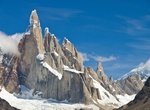
Explore Los Glaciares National Park, Patagonia, Argentina (UNESCO site)
Parque Nacional Los Glaciares (The Glaciers) is a national park in the Santa Cruz Province, in Argentine Patagonia. It comprises an area of 4459 km². In 1981 it was declared a World Heritage Site by UNESCO. The national park, created in 1937, is the second largest in Argentina. Its name refers to the giant ice cap in the Andes range that feeds 47 large glaciers, ... -
Explore Los Katíos National Park, Colombia (UNESCO site)
Los Katíos National Park (Spanish: Parque Nacional de Los Katíos) is a national park located in northwest Colombia. It is a part of the Darién Gap, shared by Panama and Colombia and is contiguous to Darién National Park in Panama. The Pan-American Highway when completed as proposed will pass near or through Los Katíos National Park. ... -
Explore Lough Leane, Killarney National Park, Ireland
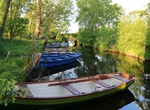
Lough Leane is largest of the three lakes of Killarney. The River Laune flows from the lake into the Dingle Bay to the northwest. Lough Leane is approximately 19 square kilometres (4,700 acres) in size. It is also the largest body of fresh water in the region. It has become eutrophic as a result of phosphates from agricultural and domestic pollution entering Lough Lea... -
Visit Louverval Military Cemetery and Cambrai Memorial, Doignies, France
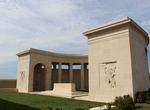
The Cambrai Memorial to the Missing (sometimes referred to as the Louverval Memorial) is a Commonwealth War Graves Commission (CWGC) memorial for the missing soldiers of World War I who fought in the Battle of Cambrai on the Western Front. The memorial stands at one end of Louverval Military Commonwealth War Graves Commission Cemetery, which was founded by Commonwealt... -
Visit Lovamahapaya, Anuradhapura, Sri Lanka
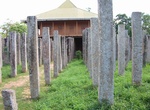
Lovamahapaya is a building situated between Ruwanweliseya and Sri Mahabodiya in the ancient city of Anuradhapura, Sri Lanka. It is also known as the Brazen Palace or Lohaprasadaya because the roof was covered with bronze tiles. In ancient times, the building included the refectory and the uposathagara (Uposatha house). There was also a Simamalake where the Sangha asse... -
Visit Lower Jackson Mount, Poverty Point National Monument, Louisiana
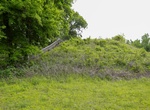
Approximately 1.8 miles (2.9 km) south of the Poverty Point site center is the Lower Jackson Mound (16WC10) a conical structure 10 ft (3 m) in height and 115 ft (35 m) in diameter at its base. For many years, archaeologists believed the Lower Jackson Mound was built during the same time as the Poverty Point site. However, modern radiocarb... -
Explore Lower Saxon Wadden Sea National Park, Germany
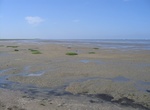
The Lower Saxon Wadden Sea National Park (Nationalpark Niedersächsisches Wattenmeer) was established in 1986 and embraces the East Frisian Islands, mudflats and salt marshes between the Bay of Dollart on the border with the Netherlands in the west and Cuxhaven as far as the Outer Elbe shipping channel in the east. The national park has an area of about 345,800 he... -
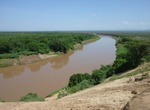
Explore Lower Valley of the Awash, Ethiopia (UNESCO site)
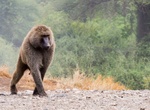
The Awash valley contains one of the most important groupings of palaeontological sites on the African continent.TheAwash Valleyhas been registered as a World Heritage Site for the fossils discovered there, dating 5.8 million to 100,000 years old. The oldest hominid remains found there thus far were in a desolate middle course of the Awash Valley. Some of the remains ... -
See Lower Valley of the Omo, Ethiopia (UNESCO site)
The Omo River is an important river of southern Ethiopia. Its course is entirely contained within the boundaries of Ethiopia, and empties into Lake Turkana on the border with Kenya. It is the principal stream of an endorheic drainage basin; the part that the Omo drains includes part of the western Oromia Region and the middle of the Southern Nations, Nationalities, an... -
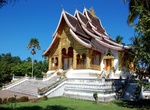
Visit Luang Prabang, Laos (UNESCO site)
Luang Prabang, or Louangphrabang is a city located in north central Laos, where the Nam Khan river meets the Mekong River about 425 kilometers (264 mi) north of Vientiane. The city was formerly the capital of a kingdom of the same name. Until the communist takeover in 1975, it was the royal capital and seat of government of the Kingdom of Laos. The city is also n... -
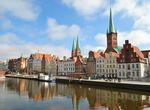
Visit Lübeck, Germany (UNESCO site)
The Hanseatic City of Lübeck is the second-largest city in Schleswig-Holstein, in northern Germany, and one of the major ports of Germany. It was for several centuries the "capital" of the Hanseatic League ("Queen of the Hanse") and, because of its Brick Gothic architectural heritage, is listed by UNESCO as a World Heritage Site. In 2005 it had a population of 21... -
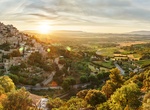
Explore Luberon, France
The Luberon is a massif in central Provence in Southern France, part of the French Prealps. It has a maximum elevation of 1,256 metres (4,121 ft) and an area of about 600 square kilometres (230 sq mi). It is composed of three mountain ranges (from west to east): Lesser Luberon (Petit Luberon), Greater Luberon (Grand Luberon) and Eastern Luberon (Luberon oriental). The... -
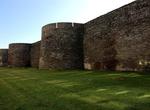
Visit Lugo, Spain (UNESCO site)
Lugo is a city in northwestern Spain, in the autonomous community of Galicia. Lugo is the only city in the world to be surrounded by completely intact Roman walls, which reach a height of 10 to 15 metres along a 2117 m circuit ringed with 71 towers. The walk along the top is continuous round the circuit, and features ten gates. These 3rd century walls are protected by... -
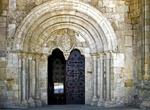
Visit Lugo Cathedral, Spain (UNESCO site)
Saint Mary's Cathedral (Catedral de Santa María), better known as Lugo Cathedral, is a Roman Catholic cathedral and basilica in Lugo, Galicia, north-western Spain, built starting from the early 12th century. Begun in Romanesque style, during its construction it received Gothic, Baroque and Neoclassicist elements. It was inscribed to the UNESCO List of World Her... -
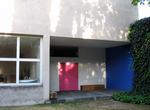
See Luis Barragán House and Studio, Mexico (UNESCO site)
The Luis Barragán House and Studio, located in the Tacubaya suburb of Mexico City, was the residence of architect Luis Barragán in the years following the Second World War. Built in 1947, the 1162 square meter three-story concrete house and garden reflect Barragán's design style during this period. Today the house functions as a museum, though vis...