Give us feedback!
Our philosophy is simple. We want to encourage you to dream. BIG! Then we help you plan your trip, get the most out of it while you're traveling and help you share your experience with friends.
Join Now It's FREE
Related Categories
Dreams Still To Do
Checked-Off Dreams
Dreams Still To Do
Checked-Off Dreams
Advertisement
Explore UNESCO Sites
-
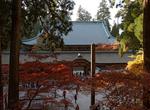
Visit Ōtsu, Japan (UNESCO sites)
Ōtsu is the capital city of Shiga Prefecture, Japan. Ōtsu is known as the main port of Lake Biwa, the largest lake in Japan. It briefly served as a capitol of Japan from 667 to 672 AD during the Asuka period (538 – 710). The city is home to numerous sites of historical importance, notably the temples of Mii-dera, Ishiyama-dera, and Enryaku-ji and the Hiyoshi Tai... -
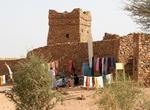
Visit Ouadane, Mauritania
Ouadane or Wādān is a small town in the desert region of central Mauritania, situated on the southern edge of the Adrar Plateau, 93 km northeast of Chinguetti. The town was a staging post in the trans-Saharan trade and for caravans transporting slabs of salt from the mines at Idjil. A Portuguese trading post was established in 1487, but was probably soon abandoned. Th... -
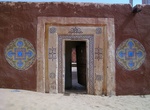
Visit Oualata (Walata), Mauritania
Oualata or Walata (also Biru in 17th century chronicles) is a small oasis town in southeast Mauritania, located at the eastern end of the Aoukar basin. Oualata was important as a caravan city in the thirteenth and fourteenth centuries as the southern terminus of a trans-Saharan trade route and now it is a World Heritage Site. Oualata is believed to have been first set... -
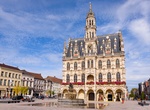
See Oudenaarde Town Hall, Belgium (UNESCO Site)
The Town Hall of Oudenaarde, Belgium was built by architect Hendrik van Pede in 1526–1537 to replace the medievalSchepenhuis(Aldermen's House) that occupied the same site. Another older structure, the 14th-century Cloth Hall, was retained and now forms a sort of extension at the back of the Town Hall proper. The Oudenaarde Town Hall was a late flowering of secul... -
Explore Ounianga Lakes, Chad (UNESCO site)
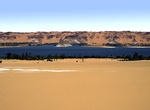
Lake Ounianga in Chad includes 18 interconnected lakes in the Ennedi region of the Sahara Desert. It constitutes an exceptional natural landscape of great beauty with striking colours and shapes. There is a total of 18 lakes in groups as follows: Ounianga Kébir group: Lake Yoa, Lake Katam, Lake Oma (or Ouma), Lake Béver, Lake Midji, Lake Forodom; Lake M... -
See Our Lady of the Rosary, Old Goa, India (UNESCO Site)
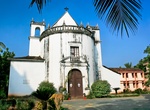
The Our Lady of the Rosary is a UNESCO site in Old Goa, India. It is one of the earliest churches to be built in the city. -
Visit Our Lady of Victories, Valletta, Malta
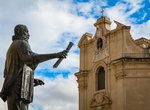
The foundation stone of Valletta, Malta was laid by the Grandmaster of the Order, Jean Parisot de Valette on 28 March 1566. De Valette placed the first stone in Our Lady of Victories Church. The body of Jean Parisot de la Valette was entombed in the church until St. John's Co-Cathedral was built. -
Visit Ouro Preto, Brazil (UNESCO site)
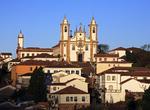
Ouro Preto (from Portuguese, Black Gold) is a city in the state of Minas Gerais, Brazil, a former colonial mining town located in the Serra do Espinhaço mountains and designated a World Heritage Site by UNESCO because of its outstanding Baroque architecture. Founded at the end of the 17th century, Ouro Preto (meaning Black Gold) was originally called Vila Rica,... -
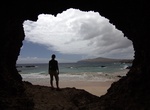
Visit Ovahe Beach, Easter Island, Chile
Ovahe Beach is close to Anakena Beach on Easter Island. It's really a nice beach to swim and very very beautiful. -
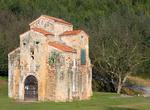
Visit Oviedo, Spain (UNESCO sites)
Oviedo is a cathedral city, capital of Principality of Asturias, in Northern Spain. It has an interesting old town with various monuments listed on the UNESCO World Heritage List. The best way to get around is by walking. Most of the center of the city can only be visited that way, because little motor traffic is allowed. Where traffic is possible, be prepared for jam... -
Explore Oxley Wild Rivers National Park, New South Wales, Australia (UNESCO site)
Oxley Wild Rivers National Park is in New South Wales, Australia, 445 kilometres north of Sydney and is named in memory of the Australian explorer John Oxley, who passed through the area in 1818. The park covers 145,000 ha, being one of the largest national parks in NSW. The Park is part of the Hastings-Macleay Group of the World Heritage Site Gondwana Rainforests of ... -
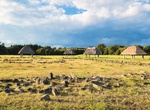
Visit Ōyu Stone Circles, Kazuno, Japan (UNESCO Site)
The Ōyu Stone Circles (大湯環状列石,Ōyu Kanjyō Resseki) is a late Jōmon period (approx. 2,000 – 1,500 BC) archaeological site in the city of Kazuno, Akita Prefecture, in the Tōhoku region of northern Japan. The remains were designated a Special National Historic Site of Japan in 1956 by the Japanese government. The site is located approximately ten minutes by car from... -
Explore Padjelanta National Park, Sweden (UNESCO site)
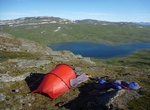
Padjelanta is a national park in Norrbotten County in northern Sweden. Established in 1963,[a] it is the largest national park in Sweden with an area of 1,984 km2 (766 sq mi), and part of the UNESCO World Heritage Site Laponia established in 1996. There is a well-known hiking trail called Padjelantaleden (Padjelanta Trail) that runs between Kvikkjokk in the southeast ... -
Visit Padua’s Fourteenth-Century Fresco Cycles, Italy (UNESCO Site)
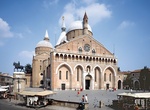
The site is composed of eight religious and secular building complexes, within the historic walled city of Padua, which house a selection of fresco cycles painted between 1302 and 1397 by different artists for different types of patron and within buildings of diverse functions. Nevertheless, the frescos maintain a unity of style and content. They include Giotto’... -
Visit Paestum & Velia, Italy (UNESCO site)
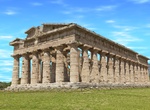
Paestum is the classical Roman name of a major Graeco-Roman city in the Campania region of Italy. It is located in the north of Cilento, near the coast about 85 km SE of Naples in the province of Salerno, and belongs to the commune of Capaccio, officially also named Capaccio-Paestum. The main features of the site today are the standing remains of three major temples i...