Give us feedback!
Our philosophy is simple. We want to encourage you to dream. BIG! Then we help you plan your trip, get the most out of it while you're traveling and help you share your experience with friends.
Join Now It's FREE
Related Categories
Dreams Still To Do
Checked-Off Dreams
Dreams Still To Do
Checked-Off Dreams
Advertisement
Explore UNESCO Sites
-
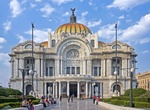
Visit Palacio Bellas Artes (Palace of Fine Arts), Mexico City
The Palacio de Bellas Artes (Palace of Fine Arts) is one of the most prominent cultural centers in Mexico City. It is located on the west side of the historic center of Mexico City next to the Alameda Central park. The first National Theater of Mexico was built in the late 19th century, but it was soon decided to tear this down in favor of a more opulent building in t... -
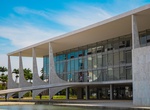
See Palácio do Planalto, Brasília, Brazil (UNESCO Site)
The Palácio do Planalto (Portuguese pronunciation: [paˈlasju du plaˈnawtu]) in Brasília is the official workplace of the president of Brazil. The building was designed by architect Oscar Niemeyer in 1958 and inaugurated on April 21, 1960. It has been the workplace of every Brazilian president since Juscelino Kubitschek. It is located at the Praça ... -
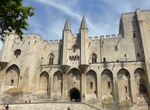
See Palais des Papes, Avignon, France (UNESCO site)
The Palais des Papes (Popes Palace) is a historical palace in Avignon, southern France, one of the largest and most important medieval Gothic buildings in Europe. Since 1995, the palais des Papes has been classified along with the historic center of Avignon, as a UNESCO World Heritage Site, under cultural criteria i, ii and iv. With 15,000 m2 of floor space, this is t... -
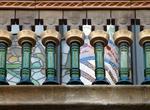
See Palau de la Música Catalana, Barcelona, Spain (UNESCO site)
The Palau de la Música Catalana (Palace of Catalan Music) is a concert hall in Barcelona. Designed in the Catalanmodernista style by the architect Lluís Domènech i Montaner, it was built between 1905 and 1908 for the Orfeó Català, a choral society founded in 1891 that was a leading force in the Catalan cultural movement that came to ... -
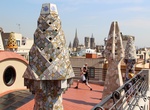
See Palau Güell, Barcelona, Spain (UNESCO site)
The Palau Güell is a mansion in Barcelona, Catalonia, Spain designed by the Catalan architect Antoni Gaudí for the Catalan industrial tycoon Eusebi Güell. It is part of the UNESCO World Heritage Site "Works of Antoni Gaudí". The home is centered on a main room for entertaining high society guests. Guests entered the home in horse drawn carriage... -
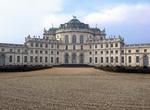
See Palazzina di caccia of Stupinigi, Italy (UNESCO site)
The Palazzina di caccia of Stupinigi (The hunting residence (or, literally, little palace) of Stupinigi) is one of the Residences of the Royal House of Savoy in northern Italy, part of the UNESCO World Heritage Sites list. Built as a royal hunting lodge in the early 18th century, it is located in Stupinigi, a suburb of the town of Nichelino, 10 km southwest of Turin. ... -
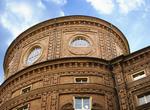
See Palazzo Carignano, Italy (UNESCO site)
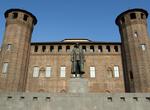
The Palazzo Carignano (Carignan Palace) is a historical building in the centre of Turin which currently houses the Museum of the Risorgimento. It was once a private residence of the Princes of Carignan, after whom it is named. It is famous for its unique rounded façade. It is located on the Via Accademia delle Scienze. The construction of the Palazzo Carignano... -
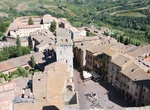
See Palazzo Comunale (San Gimignano), Italy (UNESCO site)
The Palazzo Comunale (Italian:Municipal palace), also known as the Palazzo del Popolo (Italian:People's palace) of San Gimignano has been the seat of the civic authority in the comune since the 13th century. It is located on the Piazza del Duomo close to the Collegiate Church of the Assumption of the Blessed Virgin Mary. The building and Collegiate Church are at the h... -
Visit Palazzo dei Normanni, Palermo, Italy (UNESCO site)
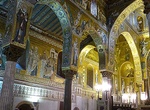
The Palazzo dei Normanni (Palace of the Normans) or Royal Palace of Palermo is a palace in Palermo, Italy. It was the seat of the Kings of Sicily during the Norman domination and served afterwards as the main seat of power for the subsequent rulers of Sicily. Today it is the seat of the regional parliament of Sicily. The palace stands in what is the highest point of t... -
Visit Palazzolo Acreide, Sicily, Italy
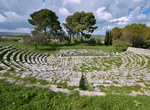
Palazzolo Acreide is a town andcomuneof in the Province of Syracuse, Sicily (Italy). It is situated 43 km from the city of Syracuse in the Hyblean Mountains. The ancient city lies on the hill above the modern town, the approach to it being defended by quarries, in which tombs of all periods have been discovered. The auditorium of the small theater is well preserved, t... -
See Palazzo Madama, Italy (UNESCO site)
Palazzo Madama e Casaforte degli Acajais a palace in Turin, northern Italy. The Palazzo Madama houses Turin's Museo Civico d'Arte Antica. The museum has a rare collection of artifacts from Gandhara, coming from the Italian excavations of the IsMEO at the Butkara Stupa in Pakistan. In winter 2007, it opened an exhibition titled "On the traces of Alexander, from Seleuci... -
Visit Palenque, Mexico (UNESCO site)
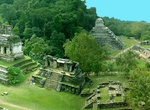
Palenque was a Maya city state in southern Mexico that flourished in the 7th century. The Palenque ruins date back to 100 BC to its fall around 800 AD. After its decline it was absorbed into the jungle, which is made up of cedar, mahogany, and sapodilla trees, but has been excavated and restored and is now a famous archaeological site attracting thousands of visitors.... -
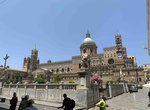
Visit Palermo Cathedral, Sicily, Italy (UNESCO Site)
Palermo Cathedral is the cathedral church of the Roman Catholic Archdiocese of Palermo, located in Palermo, Sicily, southern Italy. As an architectural complex, it is characterized by the presence of different styles, due to a long history of additions, alterations and restorations, the last of which occurred in the 18th century. The main façade is on the Weste... -
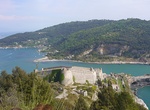
Visit Palmaria Island, Ligurian Coast, Italy (UNESCO site)
Palmaria is an Italian island situated in the Ligurian Sea, at the westernmost end of the Gulf of La Spezia. With an area of 1.6 square kilometres (0.6 sq mi), it is the largest island of an archipelago of three closely spaced islands jutting from the mainland at Portovenere. The outer islands, Tino and the tiny Tinetto, lie further south. In 1997, the archipelago was... -
Explore Palmeral of Elche, Spain (UNESCO site)
The Palmeral of Elche is a plantation of palm trees in the Spanish province of Alicante. It is the largest palm grove (Spanish: palmeral) in Europe and one of the largest in the world, surpassed in size only by some in Arab countries. The Palmeral includes the Parque Municipal and many other orchards (huertos), covering over 3.5 km2 (1.4 sq mi), including 1.5 km2...