Give us feedback!
Our philosophy is simple. We want to encourage you to dream. BIG! Then we help you plan your trip, get the most out of it while you're traveling and help you share your experience with friends.
Join Now It's FREE
Related Categories
Dreams Still To Do
Checked-Off Dreams
Dreams Still To Do
Checked-Off Dreams
Advertisement
Explore UNESCO Sites
-
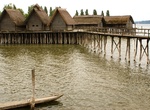
Visit Pfahlbaumuseum Unteruhldingen, Germany (UNESCO site)
Pfahlbaumuseum Unteruhldingen (German for 'Stilt house museum') is an archaeological open-air museum on Lake Constance (Bodensee) in Unteruhldingen, Germany, consisting of reconstructions of stilt houses or lake dwellings from the Neolithic Stone Age and Bronze Age. The museum consists of a number of exhibits displaying archeological finds from the area and period. Th... -
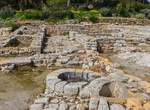
Visit Phaistos, Crete, Greece
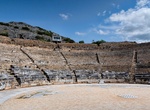
Phaistos is a Bronze Age archaeological site at Faistos, a municipality in south central Crete. Ancient Phaistos was located about 5.6 km (3.5 mi) east of the Mediterranean Sea. The name, Phaistos, survives from ancient Greek references to a city in Crete of that name, shown to be, in fact, at or near the current ruins. In 2025, the site was designated as a World Heri... -
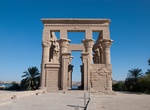
Visit Philae Temple, Egypt (UNESCO site)
Philae is an island in the Nile River and the previous site of an Ancient Egyptian temple complex in southern Egypt. The complex was dismantled and relocated to a nearby island in connection to the UNESCO project started because of the construction of the High Dam, after being partly flooded by the first Aswan Dam for half a century. Philae was remarkable for the... -
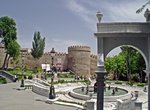
Visit Philarmonia Garden, Old City (Baku), Azerbaijan (UNESCO site)
Filarmoniya Bağı (Filarmonia Park or Philharmonia Garden), sometimes called Gubernator's or Governor's Park, is a park in Baku, Azerbaijan, next to Baku fortress. The park was established beginning in 1830; ship's captains coming from Iran were asked to bring a sack of soil to add to it. It was extended in the 1860s and 1870s to 4.6 hectares (11 acres) and originally ... -
Visit Philippi, Greece (UNESCO Site)
Philippi was a major mainland Greek city northwest of the nearby island, Thasos. Its original name was Crenides. The city was renamed by Philip II of Macedon in 356 BC and abandoned in the 14th century after the Ottoman conquest. The present village of Filippoi is located near the ruins of the ancient city and is part of the region of East Macedonia and Thrace in Kava... -
Visit Phoenix Islands, Kiribati (UNESCO site)
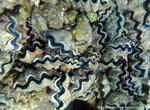
The Phoenix Islands are a group of eight atolls and two submerged coral reefs, lying in the central Pacific Ocean east of the Gilbert Islands and west of the Line Islands. They are a part of the Republic of Kiribati. During the late 1930s they became the site of the last attempted colonial expansion of the British Empire (the Phoenix Islands Settlement Scheme). The is... -
Explore Phong Nha-Ke Bang National Park, Vietnam (UNESCO site)
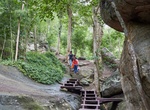
Phong Nha - Ke Bang is a national park and UNESCO World Heritage Site in the Bố Trạch and Minh Hóa districts of central Quang Binh Province, in north-central Vietnam, about 500 km south of the nation's capital, Hanoi. The park borders the Hin Namno Nature Reserve in the province of Khammouan, Laos by the west, 42 km east of South China Sea from its borderline p... -
Explore Phu Phra Bat Buabok Forest Park, Thailand
Phu Phra Bat Buabok is a forest park in Ban Phue District, Udon Thani Province, northeast Thailand. Named after two Buddha footprints carved into rocks in the Lan Xang style, the park is on a disconnected sandstone hill in the western area of the Phu Phan mountains. The hill tops at 352 m (1,155 ft) elevation, and extends 9 km (5.6 mi) in the north–south directi... -
Visit Phu Phra Bat Historical Park, Thailand (UNESCO site)
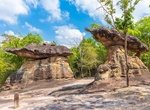
Phu Phra Bat is a historical park in Ban Phue District, Udon Thani Province, Thailand. The park's distinguishing feature is its unusual rock formations around which religious shrines have been constructed. Some formations also feature prehistoric rock paintings. Phu Phra Bat is located in the western zone of the Phu Phan Mountains between Udon Thani and Nong Khai, at ... -
Visit Piatra Roşie Fortress, Romania (UNESCO site)
Piatra Roşie, which means Red Rock, was a Dacian hill fort two days march to the west from Costeşti-Cetăţuie, at Luncani in Boşorod municipality. It was built in two phases. In the first phase a long (102 m) rectangular main citadel was built at the height of land with watch towers on each end and two outlying watch towers. Later the larger area inside the watch towe... -
Visit Piazza del Duomo (Piazza dei Miracoli), Pisa (UNESCO site)
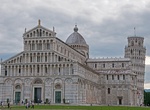
The Piazza dei Miracoli is a walled 8.87-hectare area located in Pisa, Tuscany, Italy, recognized as an important center of European medieval art and one of the finest architectural complexes in the world. Considered sacred by the Catholic Church, its owner, the square is dominated by four great religious edifices: the Pisa Cathedral, the Pisa Baptistry, the Campanile... -
See Pico Island Vineyard Culture, Azores, Portugal (UNESCO site)
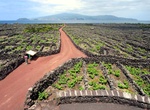
The Landscape of the Pico Island Vineyard Culture is a Unesco World Heritage Site. The vineyard is divided into plots (currais) protected by walls (paredes, murinhos). The walls are build with basalt blocks that have been weathered and broken up and stacked without mortar. Viticulture dates back to the 15th century. -
Visit Pienza, Italy (UNESCO site)
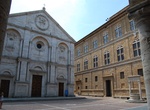
Pienza, a town and comune in the province of Siena, in the Val d'Orcia in Tuscany (central Italy), between the towns of Montepulciano and Montalcino, is the "touchstone of Renaissance urbanism." In 1996, UNESCO declared the town a World Heritage Site, and in 2004 the entire valley, the Val d'Orcia, was included on the list of UNESCO's World Cultural Landscapes. T... -
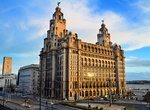
Visit Pier Head, Liverpool, England
The Pier Head is a riverside location in the city centre of Liverpool, England. It is part of the Liverpool Maritime Mercantile City UNESCO World Heritage Site, which was inscribed in 2004. The site encompasses a trio of landmarks, built on the site of the former George's Dock and referred to since at least 2000 as "The Three Graces": Royal Liver Building, built betwe... -
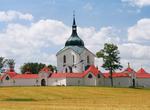
See Pilgrimage Church of St John of Nepomuk, Czech Republic (UNESCO site)
The Pilgrimage Church of St John of Nepomuk at Zelená Hora (Gruneberg) in Žďár nad Sázavou, near the border between Bohemia and Moravia, is the final masterpiece of Jan Santini Aichel, a maverick Bohemian architect who combined the Borrominiesque Baroque with references to Gothic elements in both construction and decoration. In 1719, when the...