Give us feedback!
Our philosophy is simple. We want to encourage you to dream. BIG! Then we help you plan your trip, get the most out of it while you're traveling and help you share your experience with friends.
Join Now It's FREE
Related Categories
Dreams Still To Do
Checked-Off Dreams
Dreams Still To Do
Checked-Off Dreams
Advertisement
Explore UNESCO Sites
-
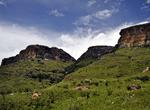
Explore Royal Natal National Park, South Africa (UNESCO site)
The Royal Natal National Park is in the KwaZulu Natal province of South Africa and forms part of the uKhahlamba Drakensberg Park World Heritage Site. Notwithstanding the name, it is actually not a South African National Park managed by the SANParks, but rather a Provincial Park managed by Ezemvelo KZN Wildlife. The main features of the park are the Drakensberg Amphith... -
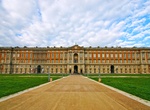
Visit Royal Palace at Caserta, Italy (UNESCO site)
The Royal Palace of Caserta is a former royal residence in Caserta, southern Italy, constructed by the House of Bourbon-Two Sicilies as their main residence as kings of Naples. It is the largest palace erected in Europe during the 18th century. In 1997, the palace was designated a UNESCO World Heritage Site; its nomination described it as "the swan song of the spectac... -
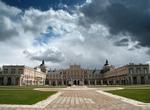
See Royal Palace & Gardens of Aranjuez, Spain (UNESCO site)
The Royal Palace of Aranjuez is a residence of the King of Spain, located in the town of Aranjuez, Community of Madrid, Spain. The palace is open to the public as one of the Spanish royal sites. It was commissioned by Philip II and designed by Juan Bautista de Toledo and Juan de Herrera, who also designed El Escorial. It was completed during the reign of Ferdinand VI ... -
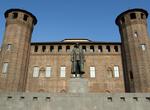
See Royal Palace of Turin (Palazzo Reale), Italy (UNESCO site)
Royal Palace of Turinor Palazzo Reale, is a palace in Turin, northern Italy. It was the royal palace of the House of Savoy. It was modernised greatly by the French born Madama Reale Christine Marie of France (1606-1663) in the seventeenth century. The palace was worked on by Filippo Juvarra. It includes thePalazzo Chiablese. In the reign of Emmanuel Philibert, Duke of... -
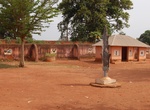
See Royal Palaces of Abomey, Benin (UNESCO site)
The Royal Palaces of Abomey are 12 palaces spread over a 40 hectares (99 acres) area at the heart of the Abomey town in Benin, formerly the capital of the West African Kingdom of Dahomey. The Kingdom was founded in 1625 by the Fon people who developed it into a powerful military and commercial empire, which dominated trade with European slave traders on the Slave Coas... -
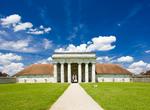
Visit Royal Saltworks at Arc-et-Senans, France (UNESCO site)
The Saline Royale (Royal Saltworks) is a historical building at Arc-et-Senans in the department of Doubs, eastern France. It is next to the Forest of Chaux and about 35 kilometers from Besançon. The architect was Claude-Nicolas Ledoux (1736–1806), a prominent Parisian architect of the time. The work is an important example of an early Enlightenment projec... -
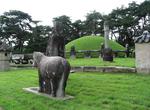
See Royal Tombs of the Joseon Dynasty, South Korea (UNESCO site)
The Royal Tombs of the Joseon Dynasty refers to the 40 tombs of members of the Korean Joseon Dynasty (1392-1910). These tombs are scattered in over 18 locations across South Korea. They were built to honour and respect the ancestors and their achievements, and assert their royal authority. The tombs have been registered as a UNESCO World Heritage site since 2009. The ... -
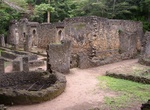
Visit Ruins of Gedi, Arabuko-Sokoke Forest, Kenya (UNESCO site)
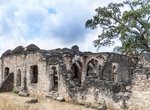
The ruins of Gedi are a UNESCO World Heritage site near the Indian Ocean coast of eastern Kenya. The site is adjacent to the town of Gedi (also known as Gede) in the Kilifi District and within the Arabuko-Sokoke Forest. Gedi is one of many medieval Swahili coastal settlements that stretch from Barawa, Somalia to the Zambezi River in Mozambique. There are 116 known Swa... -
Visit Ruins of Karakorum, Mongolia (UNESCO site)
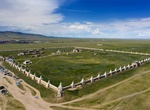
Karakorum was the capital of the Mongol Empire in the 13th century, and of the Northern Yuan in the 14-15th century. Its ruins lie in the northwestern corner of the Övörkhangai Province of Mongolia, near today's town of Kharkhorin, and adjacent to the Erdene Zuu monastery. They are part of the upper part of the World Heritage Site Orkhon Valley Cultural Land... -
See Ruins of Kilwa Kisiwani and Ruins of Songo Mnara, Tanzania (UNESCO site)
Kilwa Kisiwani is a community on an island off the coast of East Africa, in present day Tanzania. A document written around AD 1200 called al-Maqama al Kilwiyya discovered in Oman, gives details of a mission to reconvert Kilwa to Ibadism, as it had recently been effected by the Ghurabiyya Shia doctrine from southern Iraq. In the 11th century, the island of Kilwa ... -
See Ruins of Loropéni, Burkina Faso (UNESCO site)
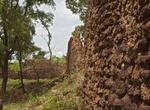
Loropéni is a market town in southern Burkina Faso, lying west of Gaoua. Local features include pre-European stone ruins, about which little is known. One theory is that they formed the enclosure of the courtyard of a Kaan Iya (king or paramount ruler of the Kaan people) from antiquity. There is a similar, though much-degraded ruin around the current royal cour... -
Visit Ruins of São Miguel das Missões, Rio Grande do Sul, Brazil (UNESCO Site)
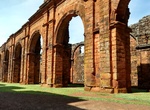
Ruins of São Miguel das Missões is a Unesco World Heritage site located in the municipality of São Miguel das Missões, in the northwestern region of Rio Grande do Sul state, in southern Brazil. The São Miguel das Missões mission was built between 1735 and around 1745 as Mission San Miguel Arcángel. São Miguel das... -
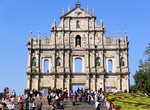
See Ruins of St. Paul's, Macau (UNESCO site)
The Ruins of St. Paul's refers to the ruins of a 16th-century complex in Macau including of what was originally St. Paul's College and the Cathedral of St. Paul also known as "Mater Dei", a 17th-century Portuguese cathedral dedicated to Saint Paul the Apostle. Today, the ruins are one of Macau's most famous landmarks. In 2005, they were officially enlisted as part of ... -
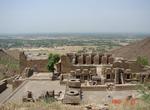
Visit Ruins of Takht-i-Bahi, Pakistan (UNESCO site)
Takht-i-Bahi (lit. 'throne of the water spring'), is an Indo-Parthian archaeological site of an ancient Buddhist monastery in Mardan, Khyber-Pakhtunkhwa, Pakistan. The site is considered among the most important relics of Buddhism in all of what was once Gandhara. The monastery was founded in the 1st century CE, and was in use until the 7th century. The complex... -
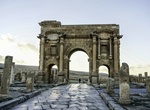
See Ruins of Timgad, Algeria (UNESCO site)
Timgad (Thamugas or Thamugadi) was a Roman colonial town in North Africa founded by the Emperor Trajan around 100 AD. The full name of the town was Colonia Marciana Ulpia Traiana Thamugadi. Trajan commemorated the city after his mother Marcia, father Marcus Ulpius Traianus and his eldest sister Ulpia Marciana. Located in modern-day Algeria, about 35 km east of th...