Give us feedback!
Our philosophy is simple. We want to encourage you to dream. BIG! Then we help you plan your trip, get the most out of it while you're traveling and help you share your experience with friends.
Join Now It's FREE
Related Categories
Dreams Still To Do
Checked-Off Dreams
Dreams Still To Do
Checked-Off Dreams
Advertisement
Explore UNESCO Sites
-
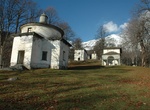
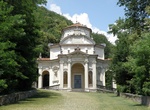
See Sacro Monte di Oropa, Italy (UNESCO site)
The Sacro Monte di Oropa (literally ‘Sacred Mount of Oropa’) is a Roman Catholic devotional complex in the comune of Biella, Piedmont, northern Italy. It is one of the nine Sacri Monti of Piedmont and Lombardy and is on the UNESCO World Heritage list. Construction began in 1617, near the pre-existing Sanctuary of Black Virgin of Oropa, one of the oldest i... -
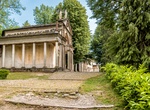
See Sacro Monte di Orta, Italy (UNESCO site)
The Sacro Monte di Orta (literally: Sacred mountain of Orta) is a Roman Catholic devotional complex in the comune of Orta San Giulio (Piedmont, northern Italy) on the summit of a hill known as San Nicolao, which faces the western shore of Lake Orta. It is one of the Sacri Monti of Piedmont and Lombardy, included in UNESCO World Heritage list. Construction of the comp... -
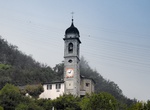
See Sacro Monte di Ossuccio, Italy (UNESCO site)
The Sacro Monte di Ossuccio (literally ‘Sacred Mount of Ossuccio’) is one of the nine sacri monti in the Italian regions of Lombardy and Piedmont which were inscribed on the UNESCO list of World Heritage Sites in 2003. The devotional complex is located on a prealpine crag some 200 metres above the western shore Lake Como, facing Isola Comacina and some 25... -
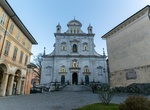
See Sacro Monte di Varallo, Italy (UNESCO site)
The Sacred Mountain of Varallo is the oldest of the Italian and foreign constructions of its kind. It was founded in 1491, by friar Bernardino Caimi of the Ordine dei Minori Osservanti di San Francesco. The Sacro Monte was built on a rocky foundation, positioned on the slopes of Monte Tre Croci (Mount of three crosses), on the left-hand side of the river Sesia, where... -
See Sacro Monte di Varese, Italy (UNESCO site)
The Sacri Monti (Italian for "Sacred Mountains") of Piedmont and Lombardy are a series of nine groups of chapels and other architectural features created in northern Italy during the seventeenth and late sixteenth century. They are dedicated to various aspects of the Christian faith and are considered of great beauty by virtue of the skill with which they have been i... -
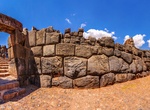
See Sacsayhuamán, Peru (UNESCO site)
Sacsayhuamán (also known as Saksaq Waman, Sacsahuaman or Saxahuaman) is a walled complex on the northern outskirts of the city of Cusco, Peru, the former capital of the Inca empire. The complex is as many other Inca constructions made of large polished dry-stone walls, each boulder carefully cut to fit together tightly without mortar. Located on a steep hill th... -
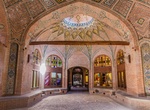
See Sa'd al-Saltaneh (Saʿadossaltaneh) Caravanserai, Iran
The Sa'd al-Saltaneh Caravanserai is a large Caravanserai located in the city of Qazvin in Qazvin Province of Iran. Built during the Qajar era, the caravanserai is one of Iran's best preserved urban caravanserais. The builder (patron) of this large caravanserai was a person by the name Sa'd al-Saltaneh Isfahani, after whom the caravanserai is named. The caravanserai i... -
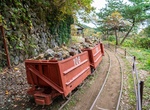
Visit Sado Island Gold Mines, Sado Island, Japan
The Sado Island Gold Mines is a serial property located on Sado Island, some thirty-five kilometres west of the Niigata Prefecture coast. It is formed of three component parts illustrative of different unmechanised mining methods. Sado Island is of volcanic origin and features two parallel mountain ranges stretching from southwest to northeast and separated by one all... -
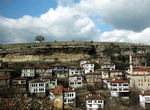
Visit Safranbolu, Turkey (UNESCO site)
Safranbolu is a town and district of Karabük Province in the Black Sea region of Turkey. It is about two hundred kilometers north of Ankara and about a hundred kilometers south of the Black Sea coast, or more precisely about 9 kilometers north of the city of Karabük. Former Turkish names of the town were Zalifre and Taraklıborlu and in Greek Saframpolis... -
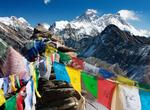
Explore Sagarmatha National Park, Nepal (UNESCO site)
Sagarmāthā National Park is a protected area in the Himalayas of eastern Nepal containing the southern half of Mount Everest. The park was created on July 19, 1976 and was inscribed as a Natural World Heritage Site in 1979. Sagarmāthā is a Sanskrit word, from sagar = "sky" (not to be confused with "sea/ocean") and māthā = "forehead" or "head", and is the modern Nepali... -
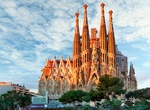
See Sagrada Família, Barcelona, Spain (UNESCO site)
The Basílica i Temple Expiatori de la Sagrada Família,[a] otherwise known as Sagrada Família, is a church under construction in the Eixample district of Barcelona, Catalonia, Spain. It is the largest unfinished Catholic church in the world. Designed by the Catalan architect Antoni Gaudí (1852–1926), in 2005 his work on Sagrada Fam&iac... -
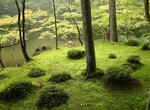
Visit Saihō-ji, Kyoto, Japan (UNESCO Site)
Saihō-ji is a Rinzai Zen Buddhist temple located in Matsuo, Nishikyō Ward, Kyoto, Japan. The temple, which is famed for its moss garden, is commonly referred to as "Koke-dera", meaning "moss temple", while the formal name is "Kōinzan Saihō-ji". The temple, primarily constructed to honor Amitabha, was first founded by Gyōki and was later restored by Musō Soseki. In 199... -
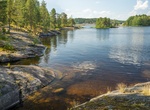
Explore Saimaa UNESCO Global Geopark, Finland, Finland & Russia
Saimaa is a lake in southeastern Finland. At approximately 4,400 square kilometres (1,700 sq mi), it is the largest lake in Finland, and the fourth largest natural freshwater lake in Europe. It was formed by glacial melting at the end of the Ice Age. Major towns on the lakeshore include Lappeenranta, Imatra, Savonlinna, Mikkeli, Varkaus, and Joensuu. The Vuoksi River ... -
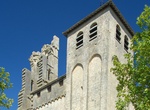
Visit Saint-Avit-Sénieur Church, France (UNESCO site)
Saint-Avit-Sénieur is a commune in the Dordogne department in Aquitaine in southwestern France. The most notable feature of the village is a massive church from the end of the 11th and 12th century. Next to the church, an abbey has been erected to honour the ermit Avitus, who died in 570. Avitus gave his name to the abbey and the village. The abbey used to hous... -
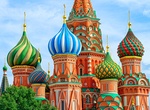
See Saint Basil's Cathedral, Moscow, Russia (UNESCO site)
The Cathedral of the Protection of Most Holy Theotokos on the Moat or Pokrovsky Cathedral - both are official names used by the Russian Orthodox Church - also known as the Cathedral of St. Vasily the Blessed but popularly as Saint Basil's Cathedral, is a Russian Orthodox church erected on Red Square in Moscow in 1555–61 on orders from Ivan the Terrible. It comme...