Give us feedback!
Our philosophy is simple. We want to encourage you to dream. BIG! Then we help you plan your trip, get the most out of it while you're traveling and help you share your experience with friends.
Join Now It's FREE
Related Categories
Dreams Still To Do
Checked-Off Dreams
Dreams Still To Do
Checked-Off Dreams
Advertisement
Explore UNESCO Sites
-
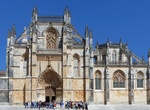
See Batalha Monastery, Portugal (UNESCO site)
Mosteiro Santa Maria da Vitória, more commonly known as the Batalha Monastery, is a Dominican convent in Batalha, in the District of Leiria, Portugal. It is one of the best and original examples of Late Gothic architecture in Portugal, intermingled with the Manueline style. The convent was built to thank the Virgin Mary for the Portuguese victory over the ... -
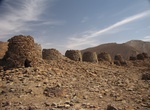
Visit Bat, Al-Khutm & Al-Ayn, Omam (UNESCO site)
The third millennium (BC) settlement and tombs in Bat, the Al-Khatm and Al-Ain locations in Adh-Dhahira region, Bat Tombs historical sites are located in Bat, Al Khutum and Al Ayn in Ad Dhahirah region in Ibri Governorate. They are considered one of the archaeological and historical sites that date back to the third century BC and are located to the east of Ibri. In 1... -
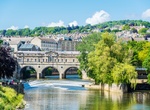
Visit Bath, England (UNESCO site)
Bath is the largest city in the county of Somerset, England, known for and named after its Roman-built baths. In 2011, the population was 88,859. Bath is in the valley of the River Avon, 97 miles (156 km) west of London and 11 miles (18 km) southeast of Bristol. The city became a World Heritage site in 1987, and was later added to the transnational World Heritage site... -
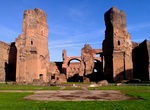
Explore Baths of Caracalla, Rome Italy
The Baths of Caracalla (Italian:Terme di Caracalla) in Rome, Italy, were the city's second largest Roman public baths, orthermae. The baths were likely built between AD 212 (or 211) and 216/217, during the reigns of emperors Septimius Severus and Caracalla. They were in operation until the 530s and then fell into disuse and ruin. Both during and since their operation ... -
Visit Battir, Palestine (UNESCO Site)
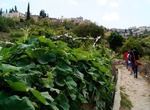
Battir is a Palestinian village in the West Bank, 6.4 km west of Bethlehem, and southwest of Jerusalem. Ancient Betar, whose name Battir preserves, was a second century Jewish village and fortress, the site of the final battle of the Bar Kokhba revolt. It was inhabited during the Byzantine and Islamic periods, and in the Ottoman and British Mandate censuses its popula... -
Visit Bauhaus Museum Tel Aviv, Israel
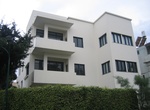
The Bauhaus Foundation in Tel Aviv, Israel, has a private museum on the ground floor of a building built in the International Style in 1934, located on 21 Bialik Street. It is owned by American billionaire, businessperson, art collector and philanthropist Ronald Lauder. The display area of 120 square metres (1,300 sq ft) contains furniture and belongings related to th... -
See Bauhaus School in Weimar, Germany (UNESCO site)
Staatliches Bauhaus, commonly known simply as Bauhaus, was a school in Germany that combined crafts and the fine arts, and was famous for the approach to design that it publicized and taught. It operated from 1919 to 1933. At that time the German term Bauhaus, literally "house of construction" (help·info) stood for "School of Building". The Bauhaus school was ... -
See Bauhaus Sites in Weimar & Dessau, Germany (UNESCO sites)
Staatliches Bauhaus, commonly known simply as Bauhaus, was a school in Germany that combined crafts and the fine arts, and was famous for the approach to design that it publicized and taught. It operated from 1919 to 1933. At that time the German term Bauhaus, literally "house of construction" stood for "School of Building". The Bauhaus school was founded by Walter G... -
Explore Baviaanskloof Mega Reserve, South Africa (UNESCO site)
Baviaanskloof Mega Reserve is a protected area in the Eastern Cape Province, South Africa. The Baviaanskloof - (old Afrikaans for “Valley of Baboons”) - lies between the Baviaanskloof and Kouga mountain ranges. The eastern-most point of the valley is some 95 km NW of the coastal city of Port Elizabeth. The Baviaanskloof area includes a cluster of formal pr... -
Visit Bawaman Mosque, Champaner, India (UNESCO site)
Bawaman Mosque (also, Bava Man's Masjid) is a mosque in Champaner, western India. It is situated on the western side of one of the ancient city's fort gates, within the Champaner-Pavagadh Archaeological Park of Gujarat. The mosque is named after Bawaman (or Bava Man), who was revered as a saint in Baroda. Bawaman was a follower of Sadan Shah, whose tomb is enshrined w... -
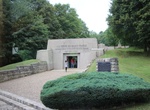
Visit Bayonet Trench (Tranchée des Baïonettes), Verdun, France
Bayonet Trench (Tranchée des Baïonettes) is a First World War memorial near Verdun, France. The 1920 concrete structure encloses the graves of French soldiers who died on the site, which was a military trench, in June 1916 during the Battle of Verdun. Twenty-one soldiers were buried by German troops within the trench, a common practice at the time. After t... -
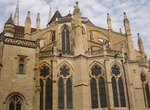
Visit Bayonne Cathedral, France (UNESCO site)
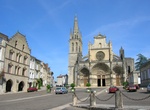
Bayonne Cathedral (Cathédrale Sainte-Marie de Bayonne) is a Roman Catholic Gothic cathedral in the town of Bayonne, France. It is the seat of the former Bishops of Bayonne, now the Bishops of Bayonne, Lescar and Oloron. The site was previously occupied by a Romanesque cathedral that was destroyed by two fires in 1258 and 1310. Construction of the present cathed... -
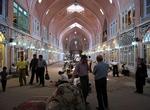
Shop at Bazaar of Tabriz, Iran (UNESCO site)
The is one of the oldest bazaars of the Middle East and the largest covered bazar in the world. It was inscribed as World Heritage Site by UNESCO in July 2010. Tabriz has been a place of cultural exchange since antiquity and its historic bazaar complex is one of the most important commercial centres on the Silk Road. Located in the center of the city of Tabriz, Iran, ... -
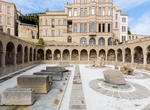
Visit Bazar Square, Old City (Baku), Azerbaijan (UNESCO site)
Bazar square or Khanqah complex is a historic religious-architectural complex with arcade of XII-XIII centuries. It is a part of Old City and located on Kichik Gala street, in the city of Baku, in Azerbaijan. It was also registered as a national architectural monument by the decision of the Cabinet of Ministers of the Republic of Azerbaijan dated August 2, 2001, No. 1... -
Visit Bazas Cathedral, France (UNESCO site)
Bazas Cathedral (Cathédrale Saint-Jean-Baptiste de Bazas) is a Roman Catholic cathedral, and a national monument of France, located in Bazas, Gironde. Bazas was the seat of the Bishop of Bazas until the French Revolution (after which it was not restored but was instead, by the Concordat of 1801, divided between the dioceses of Bordeaux, Agen and Aire) and its m...