Give us feedback!
Our philosophy is simple. We want to encourage you to dream. BIG! Then we help you plan your trip, get the most out of it while you're traveling and help you share your experience with friends.
Join Now It's FREE
Related Categories
Dreams Still To Do
Checked-Off Dreams
Dreams Still To Do
Checked-Off Dreams
Advertisement
Explore UNESCO Sites
-
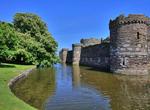
See Beaumaris Castle, Wales (UNESCO site)
Beaumaris Castle, located in the town of the same name on the Isle of Anglesey in Wales, was built as part of King Edward I's campaign to conquer the north of Wales. It was designed by James of St. George and was begun in 1295, but never completed. Beaumaris is part of the World Heritage site known as Castles and Town Walls of King Edward in Gwynedd. Beaumaris Castle ... -
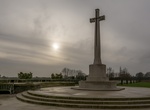
Visit Bedford House Cemetery, Zillebeke, Belgium
Bedford House Cemetery is a Commonwealth War Graves Commission burial ground for the dead of the First World War located near Zillebeke, itself near Ypres, on the Western Front in Belgium. The cemetery grounds were assigned to the United Kingdom in perpetuity by King Albert I of Belgium in recognition of the sacrifices made by the British Empire in the defence and lib... -
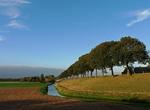
Visit Beemster Polder (Droogmakerij de Beemster), Netherlands (UNESCO site)
Beemster is the first so-called polder in the Netherlands that was reclaimed from a lake, the water being extracted out of the lake by windmills. The Beemster Polder was dried during the period 1609 through 1612. It has preserved intact its well-ordered landscape of fields, roads, canals, dykes and settlements, laid out in accordance with classical and Renaissance pla... -
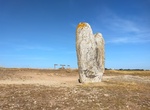
See Beg er Goalennec menhirs, Brittany, France
The Beg er Goalennec menhirs aretwo standing stones, or menhirs, located on the Côte Sauvage of the Quiberon Peninsula in Brittany, France.One menhir is broken, while the other is heart-shaped, and they are situated near the coast road.One menhir is broken, with a 4-meter tall section and a 2-meter section lying beside it.The other is heart-shaped and stands 3 m... -
See Behistun Inscription (Bisotun), Iran (UNESCO site)
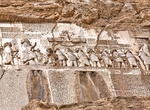
The Behistun Inscription (also Bistun or Bisutun, meaning "the place of gods") is a multi-lingual inscription located on Mount Behistun in the Kermanshah Province of Iran, near the city of Kermanshah in western Iran. Authored by Darius the Great sometime between his coronation as king of the Persian Empire in the summer of 522 BC and his death in autumn of 486 BC... -
Explore Beigua Geopark, Italy
The Beigua Natural Regional Park (in ItalianParco naturale regionale del Beigua) is a natural park located in province of Savona and the Metropolitan City of Genoa, both in Liguria (Italy). It's the largest protected area of the region. It gets the name from the highest mountain of the area, Monte Beigua. The natural park was established by thel.r.(regional law, in It... -
Visit Beijing Central Axis, Beijing, China (UNESCO Site)
Beijing Central Axis refers to a stretch of road in Beijing, China. Beijing Central Axis extends 7.8 kilometers from the Drum and Bell Towers in the north to the Yongdingmen Gate in the south. Beijing Central Axis boasts both ceremonial and iconic buildings dating back to the 13th century (Yuan dynasty). These structures, with distinctive features, serve as exemplars ... -
Explore Beit Guvrin National Park, Israel (UNESCO Site)
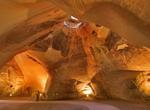
Beit Guvrin-Maresha National Park is a national park in central Israel, 13 kilometers from Kiryat Gat, encompassing the ruins of Maresha, one of the important towns of Judah during the time of the First Temple, and Beit Guvrin, an important town in the Roman era, when it was known as Eleutheropolis. Archaeological artifacts unearthed at the site include a large Jewish... -
Explore Beit She'arim National Park, Israel (UNESCO Site)
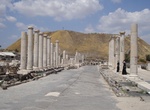
Beit She'arim also known as Beth She'arim or Besara (in Ancient Greek Βησάρα), literallyThe House of Two Gates, is the archeological site of a Jewish town and a large number of ancient rock-cut Jewish tombs. The necropolis is part of the Beit She'arim National Park, which borders the town of Kiryat Tiv'on on the northeast and is located close ... -
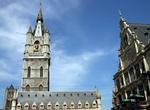
See Belfries (Bell Towers) of Belgium & France (UNESCO site)
An unequalled ensemble of fifty-six Belfries of Belgium and France is designated by UNESCO as World Heritage Site, in recognition of an architectural manifestation of emerging civic independence in historic Flanders and neighbouring regions from feudal and religious influences, leading to a degree of local democracy of great significance in the history of humankind. U... -
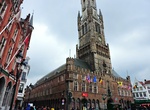
Visit Belfry of Bruges, Bruges, Belgium (UNESCO Site)
The Belfry of Bruges is a medieval bell tower in the centre of Bruges, Belgium. One of the city's most prominent symbols, the belfry formerly housed a treasury and the municipal archives, and served as an observation post for spotting fires and other danger. A narrow, steep staircase of 366 steps, accessible by the public for an entry fee, leads to the top of the 83 m... -
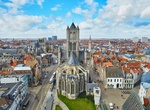
See Belfry of Ghent, Ghent, Belgium (UNESCO Site)
The 91-metre-tall belfry of Ghent is one of three medieval towers that overlook the old city centre of Ghent, Belgium, the other two belonging to Saint Bavo Cathedral and Saint Nicholas' Church. Its height makes it the tallest belfry in Belgium. The belfry of Ghent, together with its attached buildings, belongs to the set of belfries of Belgium and France inscribed on... -
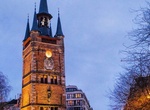
See Belfry of Kortrijk, West Flanders, Belgium (UNESCO Site)
The belfry of Kortrijk, orBelfortin Dutch, is a medieval bell tower in the historical centre of Kortrijk, Belgium. One of the city's most prominent symbols, the belfry formerly housed a treasury and the municipal archives, and served as an observation post for spotting fires and other danger. A narrow, steep staircase, accessible by the public without any entry fee, l... -
See Belfry of Mons, Belgium (UNESCO Site)
The belfry of Mons is one of the more recent among the belfries of Belgium and France. This belfry, classified in Belgium since 15 January 1936, belongs to the major cultural patrimony of Wallonia. and is classified as a World Heritage Site by UNESCO since 1 December 1999. It is the only one in Belgium that is constructed in baroque style. With an altitude of 87 meter... -
See Belfry of Namur, Belgium (UNESCO Site)
The belfry of Namur, also called theTour Saint-Jacques("Saint Jacob's Tower"), is an historical building of the city of Namur, Belgium. The tower, constructed in 1388 as part of the city wall, became a belfry in 1746. It is one of the 56 belfries of Belgium and France classified in the world patrimony of the UNESCO. Originally, one of the clocks of the Saint-Pierre-au...