Give us feedback!
Our philosophy is simple. We want to encourage you to dream. BIG! Then we help you plan your trip, get the most out of it while you're traveling and help you share your experience with friends.
Join Now It's FREE
Related Categories
Dreams Still To Do
Checked-Off Dreams
Dreams Still To Do
Checked-Off Dreams
Advertisement
Explore UNESCO Sites
-
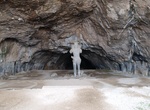
Visit Shapur Cave, Iran (UNESCO Site)
Shapur cave/ Shapour cave is located in the Zagros Mountains, in southern Iran, about 6 km from the ancient city of Bishapur. This cave is near Kazerun in Chogan valley, which was the site of polo (Persiančōgānچُوگان), in the Sasanian period. In the cave, on the fourth of five terraces, stands the colossal statue of Shapur I, the second ruler of the Sasanid Empire. Th... -
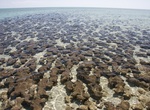
Explore Shark Bay, Western Australia (UNESCO site)
Shark Bay is a World Heritage Site that lies 800 kilometres north of Perth, on the westernmost point of Australia. The bay itself covers an area of 10,000 km2, with an average depth of 10 metres. It is divided by shallow banks and has many peninsulas and islands. The coastline is over 1,500 km long. It is located in the transition zone between three major climati... -
Dive or Snorkel Shark Bay Marine Park, Western Australia (UNESCO site)
The Shark Bay Marine Park is protected marine park located within the UNESCO World Heritage–listed Shark Bay, in the Gascoyne region of Western Australia. The 748,725-hectare (1,850,140-acre) marine park is situated over 800 km (500 mi) north of Perth and 400 kilometres (250 mi) north of Geraldton. The marine park is known for its large marine animals, such as t... -
Visit Sharpeville Massacre Sites, Sharpeville, South Africa
The Sharpeville massacre occurred on 21 March 1960, when police opened fire on a crowd of people who had assembled outside the police station in the township of Sharpeville in the then Transvaal Province of the then Union of South Africa (today part of Gauteng) to protest against the pass laws. A crowd of approximately 5,000 people gathered in Sharpeville that day in ... -
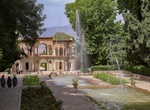
Visit Shazdeh Garden, Kerman, Iran (UNESCO Site)
Shazdeh Garden meaning Prince’s Garden is a historical Persian garden located near (6km away from) Mahan in Kerman province, Iran. The garden is 5.5 hectares with a rectangular shape and a wall around it. It consists of an entrance structure and gate at the lower end and a two-floor residential structure at the upper end. The distance between these two is orname... -
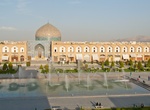
See Sheikh Lotf Allah Mosque, Isfahan, Iran
Sheikh Lotf Allah Mosque is one of the architectural masterpieces of Safavid Iranian architecture, standing on the eastern side of Naghsh-i Jahan Square, Isfahan, Iran. Construction of the mosque started in 1603 and was finished in 1618. It was built by the chief architect Shaykh Bahai, during the reigh of Shah Abbas I of the Safavid dynasty. It is registered, along w... -
Explore Shendurney Wildlife Sanctuary, India (UNESCO site)
Shendurney Wildlife Sanctuary, part of Agasthyamalai Biosphere Reserve, is one of the richest areas of bio-diversity in Western Ghats. The biotic richness and distinct biographic features of this forest area makes it an ideal gene pool reserve. The park is part of the UNESCO Western GhatsWorld Heritage Site adding in 2012. The Western Ghatsand is one of the eight... -
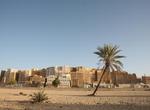
Visit Shibam, Yemen (UNESCO site)
Shibam (often referred to as Shibam Hadhramaut) is a town in Yemen. The first known inscription about the city dates from the 3rd century AD. It was the capital of the Hadramawt Kingdom. Shibam owes its fame to its distinct architecture, which is now a UNESCO World Heritage Site. The houses of Shibam are all made out of mud brick but about 500 of them are tower houses... -
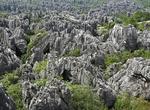
Explore Shilin Karst (Stone Forest), China (UNESCO site)
The South China Karst, a UNESCO World Heritage Site since June 2007, spans China's southern provinces of Guangxi, Guizhou, and Yunnan. The region of south China is particularly noted for its karst features and landscapes as well as rich biodiversity. The site comprises three clusters: Libo Karst, Shilin Karst and Wulong Karst. UNESCO describes the South China Karst as... -
Visit Shimogamo Shrine, Kyoto, Japan (UNESCO Site)
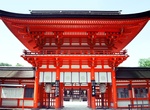
Shimogamo Shrine in Japanese, is the common name of an important Shinto sanctuary in the Shimogamo district of Kyoto city's Sakyō ward. Its formal name is Kamo-mioya-jinja. It is one of the oldest Shinto shrines in Japan and is one of the seventeen Historic Monuments of Ancient Kyoto which have been designated by UNESCO as a World Heritage Site. The term Kamo-jinjain ... -
See Shiraito Falls, Japan (UNESCO site)
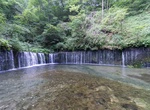
Shiraito Falls (Shiraito-no-taki) is a waterfall in Fujinomiya, Shizuoka Prefecture, near Mount Fuji, Japan. It is part of Fuji-Hakone-Izu National Park and has been protected since 1936 as a Japanese Natural Monument. The falls were regarded as sacred under the Fuji cult. Another waterfall, the Otodome Falls is approximately a five-minute walk away. The Shiraito Fall... -
Explore Shirakami-Sanchi, Japan (UNESCO site)
Shirakami-Sanchi (white god mountain area) is a UNESCO World Heritage Site in northern Honshū, Japan. This mountainous, unspoiled expanse of virgin forest straddles both Akita and Aomori Prefectures. Of the entire 1,300 km², a tract covering 169.7 km² was included in the list of World Heritage Sites in 1993. Siebold's beech trees make up a large portion... -
Visit Shirakawa-go & Gokayama, Japan (UNESCO site)
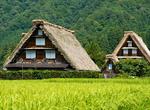
The Historic Villages of Shirakawa-gō and Gokayama are one of Japan's UNESCO World Heritage Sites. The site is located in the Shogawa river valley stretching across the border of Gifu and Toyama Prefectures in northern Japan. Shirakawa-gō ("White River Old-District") is located in the village of Shirakawa in Gifu Prefecture. The Gokayama ("Five Mountains") area is div... -
See Shiretoko National Park, Japan (UNESCO site)
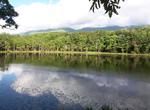
Shiretoko National Park covers most of the Shiretoko Peninsula at the northeastern tip of the island of Hokkaidō, Japan. The word "Shiretoko" is derived form an Ainu word "sir etok", meaning "end of the Earth". One of the most remote regions in all of Japan, much of the peninsula is only accessible on foot or by boat. The park is best known as the home of Japan's larg... -
Visit Shisr, Oman (UNESCO site)
Shisr is one of the archaeological site of the UNESCO World Heritage Site along the Frankincense trail in Oman. The UNESCO citations reads: "The frankincense trees of Wadi Dawkah and the remains of the caravan oasis of Shisr/Wubar and the affiliated ports of Khor Rori and Al-Balid vividly illustrate the trade in frankincense that flourished in this region for many cen...