Give us feedback!
Our philosophy is simple. We want to encourage you to dream. BIG! Then we help you plan your trip, get the most out of it while you're traveling and help you share your experience with friends.
Join Now It's FREE
Related Categories
Dreams Still To Do
Checked-Off Dreams
Dreams Still To Do
Checked-Off Dreams
Advertisement
Explore UNESCO Sites
-
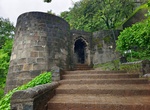
Visit Shivneri Fort, Kusur, Junnar, Maharashtra, India
Shivneri Fort (known as Killa) is an ancient military fortification located near Junnar in Pune district in Maharashtra, India. It is the birthplace of Chatrapati Shivaji Maharaj, the founder of Maratha Kingdom. Shivneri got its name as it was under the possession of the Yadavas of Devagiri. This fort was mainly used to guard the old trading route from Desh to the por... -
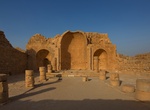
Visit Shivta National Park, Negev Desert, Israel (UNESCO site)
Shivta is an ancient city in the Negev Desert of Israel located 43 kilometers southwest of Beersheba. Shivta was declared a UNESCO World Heritage Site in June 2005. Long considered a classic Nabataean town on the ancient spice route, archaeologists are now considering the possibility that Shivta was a Byzantine agricultural colony and a way station for pilgrims en rou... -
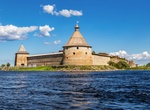
Visit Shlisselburg, Saint Petersburg (UNESCO Site)
Shlisselburg is a town in Kirovsky District of Leningrad Oblast, Russia, located at the head of the Neva River on Lake Ladoga, 35 kilometers (22 mi) east of St. Petersburg. From 1944 to 1992, it was known as Petrokrepost (Петрокрепость). Population: 13,170 (2010 Census); 12,401 (2002 Census); 12,589 (1989 Census). The fortress and the town center ... -
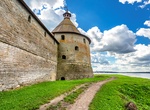
Visit Shlisselburg Fortress, St. Petersburg, Russia (UNESCO Site)
The fortress at Shlisselburg is one of a series of fortifications built on an island in Lake Ladoga, near the present-day city of St. Petersburg, Russia. The first fortress was built in 1323. It was the scene of many conflicts between Russia and Sweden and changed hands between the two empires. During World War II, it was heavily damaged. Today it is a UNESCO World He... -
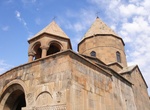
Visit Shoghakat Church, Armenia (UNESCO site)
The Church of Shoghakat (meaning "drop of light" because of the ray of light that came down from heaven upon Hripsimé's martyrs) was erected in 1694 by Prince Aghamal Sorotetsi during the reign of Catholicos Nahabed I in the city of Vagharshapat (Etchmiadzin), in Armenia's Armavir Province. At the site of the present day church of Shoghakat, there stood an earl... -
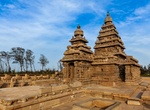
Visit Shore Temple, India (UNESCO Site)
The Shore Temple (built in 700–728 AD) is so named because it overlooks the shore of the Bay of Bengal. It is a structural temple, built with blocks of granite, dating from the 8th century AD. It was built on a promontory sticking out into the Bay of Bengal at Mahabalipuram, a village south of Chennai in the state of Tamil Nadu in India. At the time of its creat... -
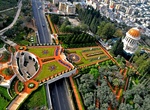
Visit Shrine of the Báb, Haifa, Israel
The Shrine of the Báb is a structure in Haifa, Israel where the remains of the Báb, founder of the Bábí Faith and forerunner of Bahá'u'lláh in the Bahá'í Faith, have been buried; it is considered to be the second holiest place on Earth for Bahá'ís, after the Shrine of Bahá'u'lláh in Ac... -
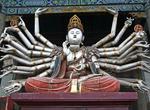
See Shuanglin Temple, Pingyao, China (UNESCO site)
The Shuanglin Templeis a large Buddhist temple, part of the World Heritage Site of Pingyao, Shanxi province, China. The temple is situated in the countryside about 7 kilometers southwest of the ancient city. It was originally founded in the 6th century during the Northern Wei period, although the present buildings date to the Ming and Qing dynasties. It is notable for... -
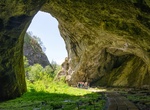
Visit Shulgan-Tash Cave, Bashkortostan, Russia (UNESCO Site)
Shulgan-Tash Cave (Bashkir: Шүлгәнташ, romanized: Şülgəntaş), also known as Kapova Cave (Russian: Капова пещера, romanized: Kapova peshchera), is a limestone karst cave in the Burzyansky District of Bashkortostan, Russia. It is located in the southern Ural Mountains, on the Belaya River in the Shulgan-Tash Nature Reserve, approximately 200 km (120 mi) south-east ... -
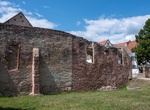
Visit ShUM Sites of Speyer, Worms and Mainz, Germany (UNESCO Site)
Located in the former Imperial cathedral cities of Speyer, Worms and Mainz, in the Upper Rhine Valley, the serial site of Speyer, Worms and Mainz comprise the Speyer Jewry-Court, with the structures of the synagogue and women’s shul (Yiddish for synagogue), the archaeological vestiges of the yeshiva (religious school), the courtyard and the still intact undergro... -
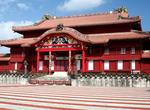
Visit Shuri Castle, Okinawa, Japan (UNESCO site)
Shuri Castle is a gusuku (Ryūkyūan castle) in Shuri. It was the palace of the Ryūkyū Kingdom. In 1945, during the Battle of Okinawa, it was almost completely destroyed. In 1992, it was reconstructed on the original site based on photographs, historical records, and memory. Because of its central role in Ryūkyūan political and religious life, Shuri Castle is surrounded... -
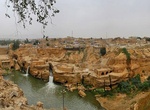
See Shushtar Historical Hydraulic System, Shushtar, Iran (UNESCO site)
The Band-e Kaisar, Pol-e Kaisar ("Caesar's bridge"), Bridge of Valerian or Shadirwan was an ancient arch bridge in Shushtar, Iran, and the first in the country to combine it with a dam. Built by a Roman workforce in the 3rd century AD on Sassanid order, it was also the most eastern Roman bridge and Roman dam, lying deep in Persian territory. Its dual-purpose desi... -
Explore Sian Ka'an Biosphere Reserve, Quintana Roo, Mexico (UNESCO site)
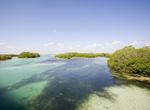
Sian Ka'an is a biosphere reserve formed by a group of conservationists in the municipality of Tulum in the Mexican state of Quintana Roo, whose mission is the conservation of the biodiversity. With the participation of scientists, technicians, students, fishermen, farmers, rural promotors and administrators, together with regional and international partners, have suc... -
Visit Sibudu Cave, KwaZulu-Natal, South Africa
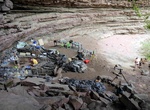
Sibudu Cave is a rock shelter in a sandstone cliff in northern KwaZulu-Natal, South Africa. It is an important Middle Stone Age site occupied, with some gaps, from 77000 years ago to 38000 years ago. Evidence of some of the earliest examples of modern human technology has been found in the shelter (although the earliest known spears date back 400000 years). The eviden... -
Visit Sidi Yahya Mosque, Tombouctou, Mali (UNESCO Site)
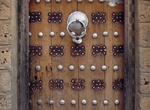
The Sidi Yahya Mosque (French:Mosquée de Sidi Yahya, Arabic: جامع سيدي يحيى), also known as the Mosque of Muhammad-n-Allah, is a mosque and madrassa of Timbuktu in Mali. The construction of the mosque began in 1400 under the leadership of Sheikh El-Mokhtar Hamalla of Timbuktu and was finished in 1440 A.D. The mosque was named after its first imam, Sidi Yahya al...