Give us feedback!
Our philosophy is simple. We want to encourage you to dream. BIG! Then we help you plan your trip, get the most out of it while you're traveling and help you share your experience with friends.
Join Now It's FREE
Related Categories
Dreams Still To Do
Checked-Off Dreams
Dreams Still To Do
Checked-Off Dreams
Advertisement
Explore UNESCO Sites
-
See Villa Trissino (Meledo di Sarego), Italy (UNESCO site)
Villa Trissino is an incomplete aristocratic villa designed by Andrea Palladio, situated in the hamlet of Meledo in thecomuneof Sarego in the Veneto. It was intended for the brothers Ludovico and Francesco Trissino. In 1996 Villa Trissino was designated as part of the World Heritage Site "City of Vicenza and Palladian Villas of the Veneto".The buildings are in a poor ... -
See Villa Valmarana (Lisiera), Italy (UNESCO site)
The Villa Valmarana (also known as Valmarana Scagnolari Zen) is a Renaissance villa situated in Lisiera, a locality of Bolzano Vicentino, Province of Vicenza, northern Italy. Designed by Andrea Palladio, it was originally built in the 1560s. The villa was nearly totally destroyed during World War II, but has been rebuilt. Even before the war damage, the building did n... -
See Villa Valmarana (Vigardolo), Italy (UNESCO site)
Villa Valmarana (also known as Valmarana Bressan) is a patrician villa at Vigardolo, Monticello Conte Otto, in the Province of Vicenza, in northern Italy. The building is attributed to Andrea Palladio on the basis of an extant drawing of the villa that is undoubtedly by the great architect. The villa was constructed during the 1540s, so it is one of Palladio's earlier... -
See Villa Zeno, Cessalto, Italy (UNESCO site)
Villa Zeno is a patrician villa at Cessalto, Veneto, northern Italy, and is the most easterly villa designed by Renaissance architect Andrea Palladio. The building is near the highway between Venice and Trieste, but was built to face a canal which served as the primary means of arrival. Palladio's building for the Zeno family has been dated to the 1550s. It is illustr... -
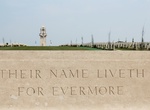
Visit Villers–Bretonneux Australian National Memorial, France
The Villers–Bretonneux Australian National Memorial is a World War I memorial, located near the commune of Villers-Bretonneux, in the Somme département of France. The memorial lists 10,773 names of soldiers of the Australian Imperial Force with no known grave who were killed between 1916, when Australian forces arrived in France and Belgium, and the end o... -
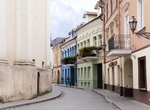
Visit Vilnius Old Town, Lithuania (UNESCO site)
The Old Town of Vilnius, one of the largest surviving medieval old towns in Central Europe, has an area of 3.59 square kilometres (887 acres). It encompasses 74 quarters, with 70 streets and lanes numbering 1487 buildings with a total floor area of 1,497,000 square meters. The oldest part of the Lithuanian capital of Vilnius, it has developed over the course of many c... -
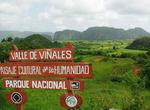
Explore Viñales Valley, Cuba (UNESCO site)
Viñales Valley (Valle de Viñales) is a karstic depression in Cuba. The valley has an area of 132 km2 (51 sq mi) and is located in the Sierra de los Organos, just north of Viñales in the Pinar del Río Province. Tobacco and other crops are cultivated on the bottom of the valley, mostly by traditional agriculture techniques. Many caves dot the... -
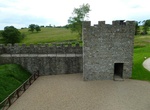
Visit Vindolanda (Hadrian's Wall), England (UNESCO site)
Vindolanda was a Roman auxiliary fort (castrum) just south of Hadrian's Wall in northern England, which it originally pre-dated. Archaeological excavations of the site show it was under Roman occupation from roughly 85 AD to 370 AD. Located near the modern village of Bardon Mill in Northumberland, it guarded the Stanegate, the Roman road from the River Tyne to the S... -
Explore Vineyard Landscape of Piedmont: Langhe-Roero and Monferrato
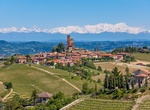
Vineyard Landscape of Piedmont: Langhe-Roero and Monferrato is the official name of a UNESCO World Heritage Site comprising "five distinct wine-growing areas with outstanding landscapes" as the Castle of Grinzane Cavour in the region of Piedmont, Italy. The site, which extends of the hilly areas of the Langhe, Roero and Montferrat, is one of the most important wine-pr... -
Visit Vingelz/Hafen, Biel, Switzerland (UNESCO site)
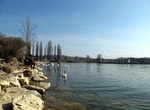
Biel/Bienne is a city in the district of the Biel/Bienne administrative district in the canton of Bern in Switzerland. It is home to the Vingelz / Hafen archeological site. Vingelz / Hafen is a prehistoric pile-dwelling (or stilt house) settlements that is part of the Prehistoric Pile dwellings around the Alps UNESCO World Heritage Site. The Vingelz / Hafen site is bu... -
Visit Virupaksha Temple (Hampi), India (UNESCO site)
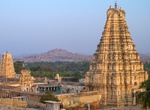
Virupaksha Temple is located in Hampi 350 km from Bangalore, in the state of Karnataka in southern India. It is part of the Group of Monuments at Hampi, designated a UNESCO World Heritage Site. Virupaksha is a form of Shiva and has other temples dedicated to him, notably at the Group of Monuments at Pattadakal, another World Heritage Site. Hampi sits on the banks of t... -
Explore Vis Archipelago Geopark, Croatia
In 2019 Vis Archipelago became a member of UNESCO Global Geoparks. The northeastern region of the archipelago features large sand deposits formed by fierce winds in the Ice Age, which also created several unique caves and land formations. -
Visit Visby, Sweden (UNESCO site)
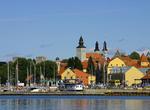
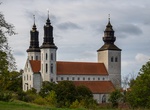
Visby is arguably the best-preserved medieval city in Scandinavia and has been named a UNESCO World Heritage Site. Among the most notable historical remains are the 3.4 km long stone wall called Ringmuren ("the Ring Wall"), that encircles the city and the old church ruins. The name "Visby" comes from the Old Norse Vis, (genitive singular of Vi) meaning sacrificial pla... -
See Visby Cathedral (Saint Mary's Cathedral), Visby, Gotland, Sweden
Visby Cathedral (Swedish: Visby domkyrka), formally Visby Saint Mary's Cathedral (Visby Sankta Maria domkyrka), is a cathedral within the Church of Sweden, seat of the Bishop of Visby. It lies in the centre of Visby, the main town on the Swedish island Gotland. It was built as the church of the German traders in the city during the 13th century. The first church was p... -
Visit Viscri Fortified Church, Transylvania, Romania (UNESCO Site)
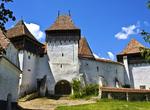
The Viscri fortified church is a Lutheran fortified church in Viscri, Brașov County, in the Transylvania region of Romania. It was built by the ethnic German Transylvanian Saxon community at a time when the area belonged to the Kingdom of Hungary. Initially Roman Catholic, it became Lutheran following the Reformation. Together with the surrounding village, the church ...