Give us feedback!
Our philosophy is simple. We want to encourage you to dream. BIG! Then we help you plan your trip, get the most out of it while you're traveling and help you share your experience with friends.
Join Now It's FREE
Related Categories
Dreams Still To Do
Checked-Off Dreams
Dreams Still To Do
Checked-Off Dreams
Advertisement
Explore UNESCO Sites
-
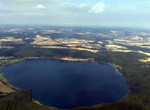
Explore Vulkanland Eifel Geopark, Germany
The Vulkanland Eifel Geopark (German:Geopark Vulkanland Eifel) is a German national geopark in the Volcanic Eifel region that was established on 19 April 2005. Covering an area of 2,200 km², the geopark extends from the Belgian border in the west over the Eifel mountains to the River Rhine in the east. The countryside here which has been shaped by the volcanism o... -
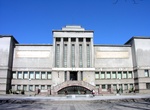
Visit Vytautas Magnus War Museum, Kaunas, Lithuania
Military museum displaying historical armor & weaponry collections, plus the wreck of a 1930s plane. -
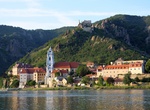
Visit Wachau Valley, Austria (UNESCO site)
The Wachau is an Austrian valley with a landscape of high visibility formed by the Danube river. It is one of the most prominent tourist destinations of Lower Austria, located midway between the towns of Melk and Krems that also attracts "connoisseurs and epicureans". It is 40 kilometres (25 mi) in length and was already settled in prehistoric times. A well-known... -
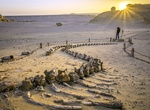
Explore Wadi Al-Hitan (Valley of the Whales), Egypt (UNESCO site)
Wādī al-Ḥītān ('Valley of the Whales') is a paleontological site in the Faiyum Governorate of Egypt, some 150 kilometres (93 mi) south-west of Cairo. It was designated a UNESCO World Heritage Site in July 2005 for its hundreds of fossils of some of the earliest forms of whale, the archaeoceti (a now extinct sub-order of whales). The site reveals evidence for the expla... -
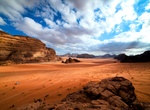
Explore Wadi Rum, Jordan
Wadi Rum also known as The Valley of the Moon is a valley cut into the sandstone and granite rock in south Jordan at 60 km to the east of Aqaba. It is the largest wadi in Jordan. The name Rum most likely comes from an Aramaic root meaning 'high' or 'elevated'. To reflect its proper Arabic pronunciation, archaeologists transcribe it as Wadi Ramm. The highest elevation ... -
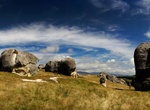
Explore Waitaki Whitestone Geopark, South Island, New Zealand
Waitaki Whitestone Geopark is located on the east coast of the South Island, New Zealand. Covers an area of 7,214 km2 from the Waitaki Valley to the base of the Southern Alps. Notable features include Te Kaihīnaki / Moeraki Boulders, karst limestone at Elephant Rocks, Māori rock art drawings at Takiroa and the braided Waitaki River. -
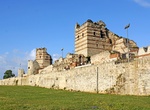
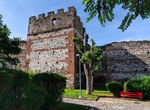
See Walls of Constantinople, Istanbul, Turkey (UNESCO sites)
The Walls of Constantinople are a series of defensive stone walls that have surrounded and protected the city of Constantinople (today Istanbul in Turkey) since its founding as the new capital of the Roman Empire by Constantine the Great. With numerous additions and modifications during their history, they were the last great fortification system of antiquity, and one... -
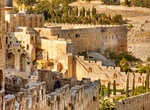
Explore Walls of Jerusalem, Old City of Jerusalem (UNESCO sites)
The Walls of Jerusalem surround the Old City of Jerusalem (approx. 1 km²). In 1535, when Jerusalem was part of the Ottoman Empire, Sultan Suleiman I ordered the ruined city walls to be rebuilt. The work took some four years, between 1537 and 1541. The length of the walls is 4,018 meters (2.4966 mi), their average height is 12 meters (39.37 feet) and the average t... -
Explore Walls of Jerusalem National Park, Tasmania, Australia (UNESCO site)
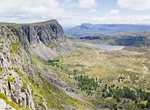
Walls of Jerusalem is a national park in Tasmania, Australia, 144 km (89 mi) northwest of Hobart. Located in the Tasmanian Central Highlands east of the Cradle Mountain-Lake St Clair National Park, and west of the Central Plateau Conservation Area. It is south of Mole Creek, Tasmania, and Rowallan Lake. It forms part of the Tasmanian Wilderness World Heritage Area. Th... -
See Walls of Old San Juan, Puerto Rico
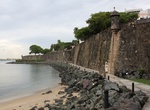
The Walls of Old San Juan (Spanish: Murallas del Viejo San Juan) is a defensive city wall that surrounds the western end of the San Juan Islet, site of the historic district of San Juan, Puerto Rico. This defensive wall system was built between the 16th and 18th centuries to protect the city and the Bay of San Juan, a highly strategic point in the Caribbean. These wal... -
See Walls of Segovia, Segovia, Spain (UNESCO Site)
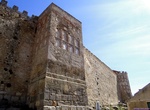
The walls of Segovia are the remains of the medieval city walls surrounding Segovia in Castile and León, Spain. The walls of the Castilian city of Segovia complete a circuit of about 2,250 metres (7,380 ft) in length, with an average height of 9 metres (30 ft) and an average thickness of 2.5 metres (8 ft 2 in). They are built out of many different materials, wi... -
Explore Walls of Tallinn, Estonia (UNESCO site)
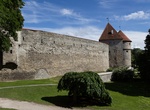
The Walls of Tallinn are the medieval defensive walls constructed around the city of Tallinn in Estonia. The first wall around Tallinn was ordered to be constructed by Margaret Sambiria in 1265 and for that reason, it was known as the Margaret Wall. This wall was less than 5 metres (16 ft) tall and about 1.5 metres (4.9 ft) thick at its base.Since that time it has bee... -
See Walls of Thessaloniki, Greece (UNESCO site)
The Walls of Thessaloniki are the city walls surrounding the city of Thessaloniki during the Middle Ages and until the late 19th century, when large parts of the walls, including the entire seaward section, were demolished as part of the Ottoman authorities' restructuring of Thessaloniki's urban fabric. The city was fortified from its establishment in the late 4t... -
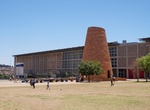
Visit Walter Sisulu Square, Kliptown, Soweto, South Africa
Walter Sisulu Square, formally known as the Walter Sisulu Square of Dedication, is located in the heart of Kliptown in Soweto, South Africa. This location was the site where, on 26 June 1955, the Congress of the People, met to draw up the Freedom Charter, an alternative vision to the repressive policies of the apartheid state. The document emphasised a non-racial soci... -
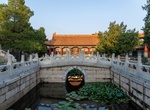
Visit Wanning Bridge, Beijing, China
Beautiful lake and bridge. In 2024, it was designated a UNESCO World Heritage Site as part of Beijing Central Axis during the 46th session of the UNESCO World Heritage Committee.