Give us feedback!
Our philosophy is simple. We want to encourage you to dream. BIG! Then we help you plan your trip, get the most out of it while you're traveling and help you share your experience with friends.
Join Now It's FREE
Related Categories
Dreams Still To Do
Checked-Off Dreams
Dreams Still To Do
Checked-Off Dreams
Advertisement
Explore UNESCO Sites
-
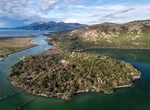
Explore Butrint National Park, Albania
Butrint National Park is a national park in Vlorë County, southern Albania. It is located 18 kilometres (11 mi) south of Sarandë. The park encompasses 9,424 hectares (94.24 km2) of hilly terrain with freshwater lakes, wetlands, salt marshes, open plains, reed beds and islands. The park's significance for conservation is reflected in the large number of speci... -
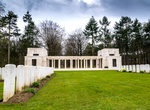
Visit Buttes New British Cemetery, Ypres Salient, Belgium
Buttes New British Cemetery is a Commonwealth War Graves Commission burial ground for the dead of the First World War located in the Ypres Salient in Belgium on the Western Front. Many of the men buried in the cemetery died as a result of the conditions in the trenches located in the Polygon Wood Sector of the Ypres Salient during the winter of 1917 to 1918. After the... -
Visit Buttes New British Cemetery (New Zealand) Memorial, Zonnebeke, Belgium
The Buttes New British Cemetery (New Zealand) Memorial is a World War I memorial, located in Buttes New British Cemetery, near the town of Zonnebeke, Belgium. It commemorates 378 officers and men of the New Zealand Division who were killed in the vicinity and have no known grave. The Polygon Wood Sector was part of the Ypres Salient and the scene of heavy fighting for... -
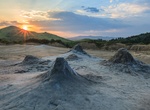
Explore Buzău Land UNESCO Global Geopark, Romania
In the Carpathian Bend Area in Romania, the hilly and mountainous territory of the Buzău Land UNESCO Global Geopark covers 1,036 km² and is home to some 45,000 inhabitants. Several tectonic plates collided in the region, creating a very complex fold and thrust mountain range which was later eroded by glacial action. One of the most geodynamically active areas in ... -
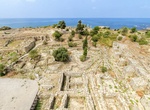
Visit Byblos, Lebanon (UNESCO site)
Byblos is the Greek name of the Phoenician city Gebal. It is a Mediterranean city in the Mount Lebanon Governorate of present-day Lebanon under the current Arabic name of (جبيل Jubayl) and was also referred to as Gibelet during the Crusades. It is believed to have been founded around 5000 BC, and according to fragments attributed to the semi-legendary pre-Trojan war P... -
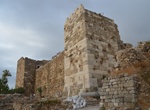
Byblos Castle, Lebanon
Byblos Castleis a castle in Byblos, Lebanon. It was built by the Crusaders in the 12th century from indigenous limestone and the remains of Roman structures. The finished structure was surrounded by a moat. Saladin captured the town and castle in 1188 and dismantled the walls in 1190. Later, the Crusaders recaptured Byblos and rebuilt the ramifications of the castle i... -
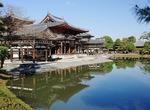
See Byōdō-in Temple, Uji, Kyoto, Japan (UNESCO Site)
Byōdō-in is a Buddhist temple in the city of Uji in Kyoto Prefecture, Japan. It is jointly a temple of the Jōdo-shū (Pure Land) and Tendai-shū sects. This temple was originally built in 998 in the Heian period as a rural villa of Fujiwara no Michinaga, one of the most powerful members of the Fujiwara clan. This villa was changed to a Buddhist temple by Fujiwara no Yor... -
See Byzantine Bath, Thessaloniki, Greece (UNESCO site)
The Byzantine Bath of the Upper Town in Thesaloniki is the only Byzantine bath that has survived from the middle Byzantine period in Greece. It is located on the Theotokopoulou Street in the Upper Old City of Thessaloniki. The baths date to the late 13th/early 14th century, and functioned continuously until 1940. The original architecture follows the typical conventio... -
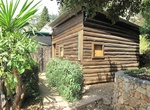
See Cabanon de Vacances, France (UNESCO Site)
TheCabanon de vacancesis a vacation home designed and built by noted architect Le Corbusier in 1951. It is the only place the architect Le Corbusier built for himself which he used for vacation. In July 2016, the home and several other works by Le Corbusier were inscribed as UNESCO World Heritage Sites. Le Corbusier loved his summer home for its location. He drowned i... -
Explore Cabo de Gata-Níjar Natural Park, Spain
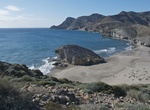
Cabo de Gata-Níjar Natural Park in the south-eastern corner of Spain, is Andalucia's largest coastal protected area, a wild and isolated landscape with some of Europe's most original geological features. It is the only region in Europe with a Warm Desert climate. The eponymous mountain range of theSierra del Cabo de Gatawith its highest peak El Fraile is Spain'... -
Explore Cabo Ortegal Geopark, Spain
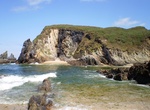
Most of the rocks in Cabo Ortegal Geopark were brought to the surface by the collision of two continents, Laurussia and Gondwana, which would eventually join the supercontinent Pangaea about 350 million years ago. -
Dive Cabo Pulmo National Park, Baja Sur, Mexico (UNESCO site)
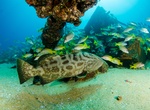
As one of only three coral reefs on the west coast of North America, the reef is estimated to be 20,000 years old and is the only living reef in the Sea of Cortez. There are eight separate fingers of the reef, four close to shore and the other four out in the bay. In 2005 the park also became a UNESCO World Heritage site. Parque Nacional Cabo Pulmo is one of the most ... -
Explore Caçapava Geopark, Brazil
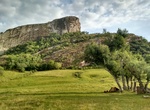
Caçapava Geopark is located in the southernmost part of Brazil. It's of great significance to the Guarani, an indigenous people in Brazil. There are several geosites within the geopark, including Serra do Segredo, Guaritas, and Minas do Camaquã. -
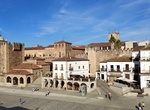
Visit Cáceres, Spain (UNESCO site)
Cáceres is the capital of the same name province, in the autonomous community of Extremadura, Spain. There have been settlements near Cáceres since prehistoric times. Evidence of this can be found in the caves of Maltravieso and El Conejar. The city was founded by the Romans in 25 BC. The old town (Ciudad Monumental) still has its ancient walls; this par... -
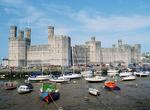
Visit Caernarfon Castle, Wales (UNESCO site)
Caernarfon Castle is a medieval building in Gwynedd, north-west Wales. There was a motte-and-bailey castle in the town of Caernarfon from the late 11th century until 1283 when King Edward I of England began replacing it with the current stone structure. The Edwardian town and castle acted as the administrative centre of north Wales and as a result the defences were bu...