Give us feedback!
Our philosophy is simple. We want to encourage you to dream. BIG! Then we help you plan your trip, get the most out of it while you're traveling and help you share your experience with friends.
Join Now It's FREE
Related Categories
Dreams Still To Do
Checked-Off Dreams
Dreams Still To Do
Checked-Off Dreams
Advertisement
Explore UNESCO Sites
-
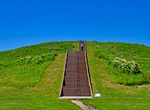
Visit Cahokia Mounds State Historic Site, Illinois (UNESCO site)
Cahokia Mounds State Historic Site is the area of an ancient indigenous city (c. 600–1400 CE) located in the American Bottom floodplain, between East Saint Louis and Collinsville in south-western Illinois, across the Mississippi River from St. Louis, Missouri. The 2,200-acre (890 ha) site included 120 human-built earthwork mounds over an area of six square miles... -
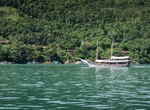
Explore Cairuçu Environmental Protection Area, Brazil (UNESCO site)
Cairuçu Environmental Protection Area (Portuguese:Área de Proteção Ambiental de Cairuçu) is a protected area in the south of Rio de Janeiro state, Brazil. It contains an important remnant of the Atlantic Forest biome. Cairuçu Environmental Protection Area lies in the Paraty municipality in the south of Rio de Janeiro state. It... -
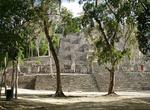
Visit Calakmul, Mexico (UNESCO site)
Calakmul (Kalakmul) is a Maya archaeological site in the Mexican state of Campeche, deep in the jungles of the greater Petén Basin region. It is 35 kilometres (22 mi) from the Guatemalan border. Calakmul was one of the largest and most powerful ancient cities ever uncovered in the Maya lowlands. Calakmul is a modern name, in ancient times the city core was know... -
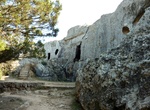
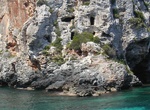
Visit Cala Morell Caves, Minorca (UNESCO sites)
Cala Morell is a necropolis of artificial caves cut into the cliff walls on Minorca. -
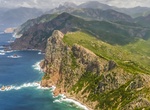
Explore Calanques de Piana, Corsica, France (UNESCO site)
Calanques de Piana (are Corsican calanques located in Piana, between Ajaccio and Calvi, in the gulf of Porto. -
See Cales Coves, Minorca (UNESCO site)
Cales Coves are two coves of Menorca in sand thick and is nine kilometers from Alaior . It is near the town of Sant Climent and developments Cala en Porter and Son Vitamina. This bay is characterized by being located between eighty vertical cliffs where there are caves dug by the first settlers of Menorca (centuries IX - X century BC) and served as tombs until shortly... -
Visit Caltagirone, Italy (UNESCO site)
Caltagirone is a town on the island of Sicily, about 70 km southwest of Catania. The city has been long famous for the production of pottery, particularly maiolica and terra-cotta wares. Nowadays the production is more and more oriented to artistic production of ceramics and terra-cotta sculptures. Other activities are mainly related to agriculture (production of grap... -
Visit Camagüey, Cuba (UNESCO site)
Camagüey is a city and municipality in central Cuba and is the nation's third largest city. After almost continuous attacks from pirates the original city (founded as Santa María del Puerto del Príncipe around 1515 on the northern coast) was moved inland in 1528. The new city was built with a confusing lay-out of winding alleys that made it easier t... -
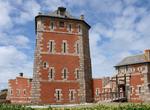
Visit Camaret-sur-Mer (Golden Tower), France (UNESCO site)
Camaret-sur-Mer is home to the Tour Vauban or Tour dorée (lit. "Golden Tower"), a historic fortification guarding the harbor and built in 1669-94. In 2008, the Tour dorée was listed as a UNESCO World Heritage Site, as part of the "Fortifications of Vauban" group. The Tour Vauban (Vauban Tower), initially known as the tour de Camaret, is an 18m-high polyg... -
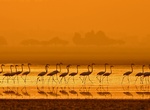
Birding at Camargue, France (UNESCO site)
The Camargue is the region located south of Arles, France, between the Mediterranean Sea and the two arms of the Rhône River delta. The Camargue is home to more than 400 species of birds; its brine ponds provide one of the few European habitats for the greater flamingo. Observe various birds of prey, including different owls, eagles, hawks, harriers, buzzards an... -
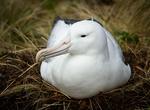
Explore Campbell Islands, New Zealand (UNESCO site)
The Campbell Island group (or Campbell Islands) is a group of subantarctic islands, belonging to New Zealand. The group has a total area of 113.31 km2 (43.75 sq mi), consisting of one big island, Campbell Island (112.68 km2/43.51 sq mi), and several small islets, notably Dent Island (0.23 km2/0.089 sq mi), Isle de Jeanette Marie (0.11 km2/0.042 sq mi, Folly Island (or... -
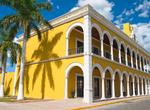
Visit Campeche, Mexico (UNESCO site)
San Francisco de Campeche is the capital city of the Mexican state of Campeche located on the shore of the Bay of Campeche of the Gulf of Mexico. The city was founded in 1540 by Spanish conquistadores as San Francisco de Campeche atop the pre-existing Maya city of Canpech or Kimpech. The Pre-Columbian city was described as having 3,000 houses and various monuments, of... -
Visit Campeche Old City Walls, Campeche, Mexico
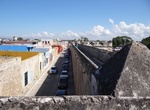
The fortifications system of Campeche, an eminent example of the military architecture of the 17th and 18th centuries, is part of an overall defensive system set up by the Spanish to protect the ports on the Caribbean Sea from pirate attacks like the 1663 Sack of Campeche. The state of preservation and quality of its architecture earned it the status of a World Herit... -
Visit Canadian Cemetery No. 2, Neuville-Saint-Vaast, France
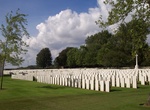
Canadian Cemetery No. 2 is a Commonwealth War Graves Commission burial ground for the dead of World War I situated on the grounds of the Canadian National Vimy Memorial Park near the French town of Neuville-Saint-Vaast. The cemetery was originally named CD 5 and established as a battlefield cemetery of the Canadian 4th Division for Canadian troops killed in the Batt... -
Visit Canadian National Vimy Memorial, Vimy, France
The Canadian National Vimy Memorial is a memorial site in France dedicated to the memory of Canadian Expeditionary Force members killed during the First World War. It also serves as the place of commemoration for First World War Canadian soldiers killed or presumed dead in France who have no known grave. The monument is the centrepiece of a 100-hectare (250-acre) pres...