Give us feedback!
Our philosophy is simple. We want to encourage you to dream. BIG! Then we help you plan your trip, get the most out of it while you're traveling and help you share your experience with friends.
Join Now It's FREE
Related Categories
Dreams Still To Do
Checked-Off Dreams
Dreams Still To Do
Checked-Off Dreams
Advertisement
Explore UNESCO Sites
-
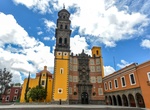
Visit Convent Church of San Francisco, Puebla, Mexico
The Convent Church of San Francisco is an historic church in the city of Puebla, in the Mexican state of Puebla. -
Visit Convento de Santo Domingo, Cartagena, Colombia
The Convento de Santo Domingo is a convent established from the 16th century in the city of Cartagena de Indias, in Colombia. Its canonical name was "Convento de San Daniel". Until 19th century maintained a community of friars of the Dominican Order. The building was then expropriated and handed over to the diocese of Cartagena, serving as a seminary, college and then... -
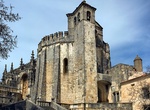
See Convent of Christ in Tomar, Spain (UNESCO site)
The Convent of the Order of Christ (Portuguese: Convento de Cristo) is a religious building and Roman Catholic building in Tomar, Portugal, originally a Templar stronghold built in the 12th century. After the Order of the Knights Templar was dissolved in the 14th century, the Portuguese branch of the order was turned into the Knights of the Order of Christ, which... -
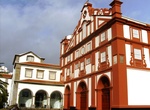
Visit Convent of São Francisco (Angra do Heroísmo), Terceira Island, Azores Islands
The Convent of São Francisco is a Baroque-era convent and church in the historical centre of the city of Angra, civil parish of Sé, municipality of Angra do Heroísmo on the Portuguese island of Terceira, in the archipelago of the Azores. Better recognizable for the largeChurch of Our Lady of the Guide(Portuguese:Igreja de Nossa Senhora da Guia), i... -
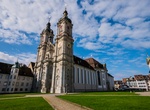
See Convent of St Gall, Switzerland (UNESCO site)
The Abbey of Saint Gall is a religious complex in the city of St. Gallen in present-day Switzerland. The Carolingian era Abbey has existed since 719 and became an independent principality during the 13th century, and was for many centuries one of the chief Benedictine abbeys in Europe. It was founded by Saint Othmar on the spot where Saint Gall had erected his Hermita... -
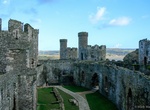
Visit Conwy Castle, Wales (UNESCO site)
Conwy Castle is a castle in Conwy, on the north coast of Wales. It was built between 1283 and 1289 during King Edward I's second campaign in North Wales. Conwy replaced Deganwy Castle, an earlier stronghold built by Henry III that had been destroyed by Llywelyn the Last in 1263. The castle is a Scheduled Ancient Monument and managed by Cadw. It is also part of the Wor... -
Visit Conzinc Bay, Murujuga National Park, Western Australia
Conzinc Bay Beach is a nice sand beach in Murujuga National Park, Western Australia. -
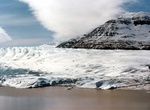
See Cook Glacier (Kerguelen Islands), French Southern Territories (UNESCO Site)
The Cook Ice Cap or Cook Glacier (French:Calotte Glaciaire CookorGlacier Cook) is a large ice cap in the Kerguelen Islands in the French Southern Territories zone of the far Southern Indian Ocean. The Cook Ice Cap reaches a maximum elevation of 1,049 metres (3,442 ft) in its central area. It had a surface of approximately 500 km2 (190 sq mi) in 1963, having shrunk to ... -
See Coopers Cave, South Africa (UNESCO site)
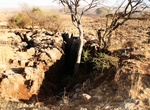
Cooper's Cave is a series of fossil-bearing breccia filled cavities. The cave is located almost exactly between the well known South African hominid-bearing sites of Sterkfontein and Kromdraai and about 40 kilometres (25 mi) northwest of Johannesburg, South Africa and has been declared a South African National Heritage Site. Cooper's Cave is now recognised as the fift... -
Relax on Copacabana Beach, Rio de Janeiro, Brazil (UNESCO site)
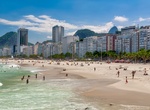
Copacabana beach stretches from Posto Dois (lifeguard watchtower Two) to Posto Seis (lifeguard watchtower Six). Leme is at Posto Um (lifeguard watchtower One). There are historic forts at both ends of Copacabana beach; Fort Copacabana, built in 1914, is at the south end by Posto Seis and Fort Duque de Caxias, built in 1779, at the north end. One curiosity is that the ... -
Visit Copán, Honduras (UNESCO site)
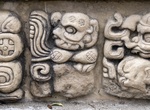
Copán is an archaeological site of the Maya civilization located in western Honduras, not far from the border with Guatemala. It was the capital city of a major Classic period kingdom from the 5th to 9th centuries AD. The city was located in the extreme southeast of the Mesoamerican cultural region, on the frontier with the Isthmo-Colombian cultural region... -
Explore Copper Coast Geopark, Ireland
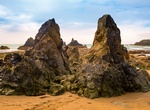
The Copper Coast Geopark is a designated area comprising a stretch of the southern coast of Ireland in County Waterford, extending for some 17 km from Kilfarrasy in the east to Stradbally in the west. It was the first geopark designated in the state, and the second on the island. The coast, and the geopark, are named for the historic metal-mining industry, the legacie... -
Visit Corbeddu Cave (Grotta Corbeddu), Nuoro, Sardinia, Italy
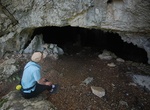
The Corbeddu cave is located in the territory of Oliena, municipality of the province of Nuoro, in Sardinia. In this cave found refuge the famous Sardinian bandit Giovanni Corbeddu Salis (1844–1898), from which it took its name. In 2025, the site was designated as a World Heritage Site by UNESCO. The cave is about 130 meters long and consists essentially of thre... -
Visit Cordilleras Rice Terraces, Philippines (UNESCO site)
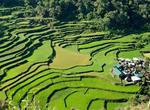
The Rice Terraces of the Philippine Cordilleras were inscribed in the UNESCO World Heritage List in 1995. This inscription has five sites, the Batad Rice Terraces, Bangaan Rice Terraces, Mayoyao Rice Terraces, Hungduan Rice Terraces and Nagacadan Rice Terraces. Contrary to popular belief, the Banaue Rice Terraces as seen from the viewpoint are not included in the UNES... -
Visit Córdoba, Spain (UNESCO site)
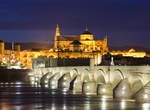
Córdoba is a city in Andalusia, southern Spain, and the capital of the province of Córdoba. An Iberian and Roman city in ancient times, in the Middle Ages it became the capital of an Islamic caliphate. The old town contains many impressive architectural reminders of when Corduba, the capital of Hispania Ulterior during the Roman Republic and capital...