Give us feedback!
Our philosophy is simple. We want to encourage you to dream. BIG! Then we help you plan your trip, get the most out of it while you're traveling and help you share your experience with friends.
Join Now It's FREE
Related Categories
Dreams Still To Do
Checked-Off Dreams
Dreams Still To Do
Checked-Off Dreams
Advertisement
Explore UNESCO Sites
-
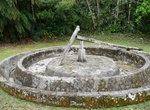
Visit Cuba's First Coffee Plantations, Cuba (UNESCO site)
During the 19th and early 20th centuries, eastern Cuba was primarily involved with coffee cultivation. The remnants of the plantations display the techniques used in the difficult terrain, as well as the economic and social significance of the plantation system in Cuba and the Caribbean. Nearly one hundred such farms were built in Santiago de Cuba by the French settl... -
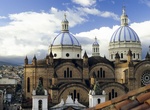
Visit Cuenca, Ecuador, (UNESCO site)
Cuenca (full name Santa Ana de los cuatro ríos de Cuenca) is the third largest city in Ecuador. It is located in the highlands of Ecuador at about 2500 m above sea level. The center of the city is listed as a UNESCO World Heritage Trust site because of its many historical buildings. Most tourists visit the historic area between the river Tomebamba and the stree... -
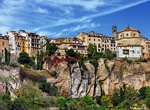
Visit Cuenca, Spain, (UNESCO site)
Cuenca is a city in central Spain located across a steep spur, whose slopes descend into deep gorges of the Júcar and Huécar rivers. It is divided into two separate settlements: the "new" city is situated south-west to the old one, which is divided by the Huécar course. Cuenca has strongly bet on culture and as a result of this it was declared a W... -
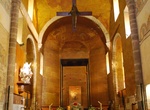
See Cuernavaca Cathedral, Mexico (UNESCO site)
The Cathedral of the Assumption of Mary of Cuernavaca(Catedral de la Asunción de María) is the Roman Catholic cathedral church of the Diocese of Cuernavaca, located in the city of Cuernavaca, Morelos, Mexico. The church and its surrounding monastery is one of the early 16th century monasteries in the vicinity of the Popocatepetl volcano, built initially ... -
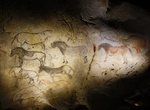
Visit Cueva de Ekain, País Vasco, Guipúzcoa, Deva, Spain
Cueva de Ekain is a cave with rock engravings located in País Vasco, Guipúzcoa, Deva, Spain. It was declared a World Heritage Site in 2008, together with sixteen other caves situated in Northern Spain, as part of the group known as the Cave of Altamira and Paleolithic Cave Art of Northern Spain. -
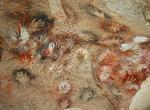
See Cueva de las Manos (Cave of the Hands), Argentina (UNESCO site)
Cueva de las Manos (Cave of the Hands) is a cave or a series of caves located in the province of Santa Cruz, Argentina, 163 km (101 mi) south of the town of Perito Moreno. It is famous (and gets its name) for the paintings of hands, made by the indigenous inhabitants (possibly forefathers of the Tehuelches) some 9,000 years ago. The composition of the inks is mineral,... -
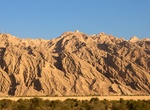
Visit Cultural Sites of Al Ain (Hafit, Hili, Bidaa Bint Saud and Oases Areas), (UNESCO Sites)
The Cultural Sites of Al Ain (Hafit, Hili, Bidaa Bint Saud and Oases Areas) constitute a serial property that testifies to sedentary human occupation of a desert region since the Neolithic period with vestiges of many prehistoric cultures. Remarkable vestiges in the property include circular stone tombs (ca 2500 B.C.), wells and a wide range of adobe constructions: re... -
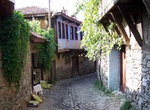
Visit Cumalıkızık, Bursa, Turkey (UNESCO site)
Cumalıkızık is a village in the Yıldırım district of Bursa Province, located 10 kilometers east of the city of Bursa, at the foot of Mount Uludağ. Its history goes back to the Ottoman Empire's foundation period. The village is now included within the border of the Yıldırım district as a neighbourhood. Cumalıkızık was founded as a vakıf village. The historical texture ... -
Explore Curonian Spit, Russia & Lithuania (UNESCO site)
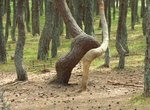
The Curonian Spit is a 98 km long, thin, curved sand-dune spit that separates the Curonian Lagoon from the Baltic Sea coast. Its southern portion lies within Kaliningrad Oblast, Russia and its northern within southwestern Lithuania. The Curonian Spit is home to the highest moving (drifting) sand dunes in Europe. Their average height is 35 meters, but some attain ... -
See Curutchet House, La Plata, Argentina (UNESCO Site)
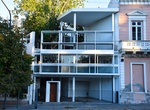
TheCurutchet House, La Plata, Argentina, is a building by Le Corbusier. It was commissioned by Dr. Pedro Domingo Curutchet, a surgeon, in 1948 and included a small medical office on the ground floor. The house consists of four main levels with a courtyard between the house and the clinic. The building faces the Paseo del Bosque park. The main facade incorporates a bri... -
Visit Customhouse of Angra do Heroísmo, Terceira Island, Azores Islands
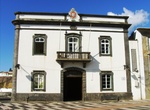
The Customhouse of Angra do Heroísmo is a well-preserved Portuguese custom house located in the civil parish of Sé, in the municipality of Angra do Heroísmo, in archipelago of the Azores. The customhouse wharf was constructed between 1470 and 1500, following the arrival of settlers to the island; it was initiated by Álvaro Martins Homem to ... -
Visit Cuzco (Cusco), Peru (UNESCO site)
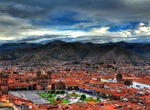
Cuzco is a city in Southeastern Peru and was the site of the historical capital of the Inca Empire. Originally inhabited by the indigenous people of the Killke culture some 900 years ago, the Incas succeeded the Killke in Cuzco about 100 years later. The Spanish explorers devastated the city in 1535 and only a few partially demolished buildings remain as monuments fro... -
Visit Cyrene, Libya (UNESCO site)
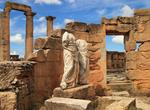
Cyrene was an ancient Greek colony in present-day Shahhat, Libya, the oldest and most important of the five Greek cities in the region. It gave eastern Libya the classical name Cyrenaicathat it has retained to modern times. Cyrene lies in a lush valley in the Jebel Akhdar uplands. The city was named after a spring, Kyre, which the Greeks consecrated to Apollo. It was ... -
See Dacian Fortresses of the Orastie Mountains, Romania (UNESCO site)
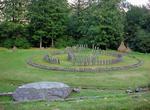
Built in murus dacicus style, the six Dacian Fortresses of the Orăștie Mountains, in Romania, were created in the 1st centuries BC and AD as protection against Roman conquest. Their extensive and well-preserved remains present a picture of a vigorous and innovative ancient civilization. Today, treasure-hunters sometimes search the area, as Romania lacks legislation in... -
Visit Daeheungsa, Jeollanam-do, South Korea (UNESCO Site)
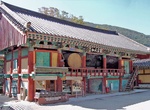
Daeheungsa, sometimes called Daedunsa, is a main temple of the Jogye Order of Korean Buddhism. Daeheungsa is located on the slopes of Duryunsan (Duryun Mountain) in Samsan Township, Haenam County, in the province of Jeollanam-do near the southern limit of South Korea. Daeheungsa is believed to date to the Three Kingdoms period (4th-9th centuries CE), although no exact...