Give us feedback!
Our philosophy is simple. We want to encourage you to dream. BIG! Then we help you plan your trip, get the most out of it while you're traveling and help you share your experience with friends.
Join Now It's FREE
Related Categories
Dreams Still To Do
Checked-Off Dreams
Dreams Still To Do
Checked-Off Dreams
Advertisement
Explore UNESCO Sites
-
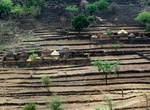
Visit Diy-Gid-Biy Sites, Cameroon
Located in the Far North Region of Cameroon, the property includes sixteen archaeological sites across seven villages. Known as Diy-Gid-Biy (meaning “Ruin of the Chief’s Residence” in the Mafa language), these dry-stone architectural structures were likely built between the 12th and 17th centuries. While their original builders remain unknown, the ar... -
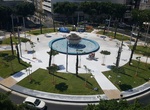
Visit Dizengoff Square, Tel Aviv, Israel
Dizengoff Square or Dizengoff Circus is an iconic public square in Tel Aviv, on the corner of Dizengoff Street, Reines Street and Pinsker Street. One of the city's main squares, it was built in 1934 and inaugurated in 1938. Dizengoff Square is named for Zina (Tzina), the wife of Tel Aviv's first mayor, Meir Dizengoff. Its original 1930s design was called "the É... -
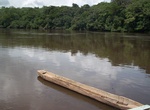
Explore Dja Faunal Reserve, Cameroon (UNESCO site)
Dja Faunal Reserve in Cameroon, is a UNESCO World Heritage Site inscribed in 1987. Causes of inscription include diversity of species present in the park, the presence of five threatened species, and lack of disturbance within the park. Poaching is a serious threat in the reserver, especially for the gorillas. The boundary that secludes the reserve is the Dja River, ... -
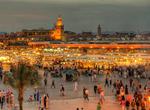
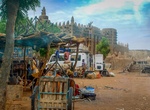
Shop at Djeema El-Fna Souk (Jemaa el-Fnaa), Marrakesh, Morocco (UNESCO site)
Jamaa el Fna, the vibrant heart of Marrakesh's medina quarter, is a cultural tapestry rich in history and tradition. The largest traditional souk in Morocco is found in Marrakesh, the Djeema El-Fna, inhabited by merchants, dancers, story-tellers, tattoo artists, magicians and musicians by day and then transformed into a huge open air restaurant at night as the food v... -
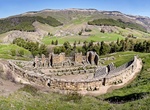
See Djémila, Algeria (UNESCO site)
Djémila is a mountain village in Algeria, near the northern coast east of Algiers, where some of the best preserved Berbero-Roman ruins in North Africa are found. It is situated in the region bordering the Constantinois and Petite Kabylie (Basse Kabylie). In 1982, Djémila became a UNESCO World Heritage Site for its unique adaptation of Roman architecture... -
Visit Djenné, Mali (UNESCO site)
Djenné (also Djénné, Jenné and Jenne) is an Urban Commune and town in the Inland Niger Delta region of central Mali. The history of Djenné is closely linked with that of Timbuktu. Between the 15th and 17th centuries much of the trans-Saharan trade in goods such as salt, gold and slaves that moved in and out of Timbuktu passed through... -
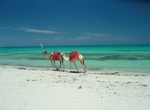
Visit Djerba, Tunisia (UNESCO site)
Djerba is a Tunisian island and the largest island of North Africa at 514 square kilometers (198 sq mi), in the Gulf of Gabès, off the coast of Tunisia. Citing the long and unique history of its Jewish minority in Djerba, Tunisia has sought UNESCO World Heritage status protections for the island, and, in 2023, Djerba was officially designated a World Heritage S... -
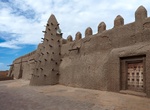
See Djinguereber Mosque, Timbuktu, Mali
The Djinguereber Mosque (French:Mosquée Djingareyber) in Timbuktu, Mali is a famous learning center of Mali built in 1327, and cited as Djingareyber or Djingarey Ber in various languages. Its design is accredited to Abu Es Haq es Saheli who was paid 200 kg (40,000 mithqals) of gold by Musa I of Mali, emperor of the Mali Empire. According to Ibn Khaldun, one of ... -
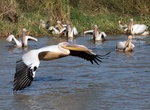
Birding at Djoudj National Bird Sanctuary, Senegal (UNESCO site)
The Djoudj National Bird Sanctuary lies on the southeast bank of the River Senegal in Senegal, in northern Biffeche, north east of St-Louis. It provides a range of wetland habitats which prove very popular with migrating birds, many of which have just crossed the Sahara. Of almost 400 species of birds, the most visible are pelicans and flamingos. Less conspicuous are ... -
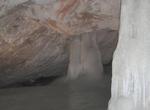
Explore Dobšinská Ice Cave, Slovakia (UNESCO site)
Dobšinská Ice Cave or Dobšinská ľadová jaskyňa (in Slovak) is an ice cave in Slovakia, near the mining town of Dobšiná in the Slovak Paradise. Since 2000 it is included in the UNESCO World Heritage list as a part of Caves of Aggtelek Karst and Slovak Karst site. It lies 130 m above the Hnilec River, and the entrance is ... -
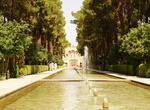
Visit Dolatabad (Dolat Abad) Garden, Iran (UNESCO Site)
Dolatabad (Dolat Abad) Garden is an UNESCO site (Persian Gardens) located in Yazd, Iran. The garden is one of the famous gardens of Iran which has been designed and built in Zand era. -
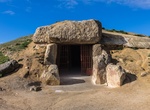
Visit Dolmen of Menga (Antequera), Málaga, Spain (UNESCO Site)
The Dolmen of Menga is a megalithic burial mound called a tumulus, a long barrow form of dolmen, dating from the 3rd millennium BCE. It is near Antequera, Málaga, Spain. It is one of the largest known ancient megalithic structures in Europe. It is 25 metres (82 ft) long, 5 metres (16 ft) wide and 4 metres (13 ft) high, and was built with thirty-two megalit... -
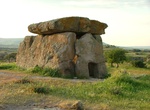
Visit Dolmen of Sa Coveccada & Mehir sa Covacada, Mores, Sardinia, Italy
The dolmen of Sa Covaccada or S'Accovaccada (from the Sardinian, "that which is covered") is an archaeological monument located on a large trachytic plateau in the Meilogu, a historical-geographical region of Sardinia, administratively belonging to the municipality of Mores from which it is approximately seven kilometres away. Together with other pre-Nuragic archaeolo... -
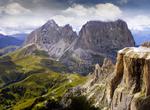
Explore Dolomites, Italy (UNESCO site)
The Dolomites are a mountain range located in north-eastern Italy. It is a part of Southern Limestone Alps and extends from the River Adige in the west to the Piave Valley (Pieve di Cadore) in the east. The northern and southern borders are defined by the Puster Valley and the Sugana Valley (Val Sugana). The Dolomites are nearly equally shared between the provinces of... -
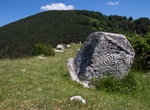
Visit Dolovi–Poljice Stećak Necropolis, Bosnia and Herzegovina
Dolovi–Poljice stećak necropolises, are located in the immediate vicinity of the summerkatun(livestock hurders' settlement) of Poljice, on the Visočica mountain, 25 km from Konjic, Bosnia and Herzegovina. In the middle of the 11th century, the area of Mount Visočica, in Župa Neretva, was annexed to the Bosnian state. From then until Ban Tvrtko I came to power in...