Give us feedback!
Our philosophy is simple. We want to encourage you to dream. BIG! Then we help you plan your trip, get the most out of it while you're traveling and help you share your experience with friends.
Join Now It's FREE
Related Categories
Dreams Still To Do
Checked-Off Dreams
Dreams Still To Do
Checked-Off Dreams
Advertisement
Explore UNESCO Sites
-
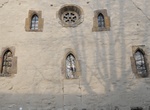
Visit Jewish-Medieval Heritage of Erfurt, Erfurt, Germany (UNESCO site)
Located in the medieval historic centre of Erfurt, the capital city of Thuringia, the UNESCO site comprises three monuments: the Old Synagogue, the Mikveh, and the Stone House. They illustrate the life of the local Jewish community and its coexistence with a Christian majority in Central Europe during the Middle Ages, between the end of the 11th and the mid-14th centu... -
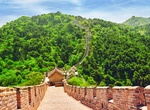
Visit Jiankou Section, Great Wall, China (UNESCO site)
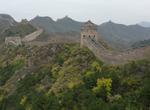
Jiankou is a section of the Great Wall of China. This section is a photographic hotspot due to its unique style, steep mountains and beautiful scenery. 'Jiankou', is translated as 'Arrow Nock' in English, for the shape of the mountain is like an arrow, with the collapsed ridge opening as its arrow nock. Jiankou Great Wall located in the Huairou District 73 km north of... -
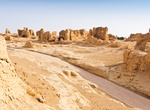
Visit Jiaohe Ruins, Yarnaz Valley, China (UNESCO Site)
The Jiaohe Ruins is a Chinese archaeological site found in the Yarnaz Valley, 10 km west of the city of Turpan in Xinjiang Uyghur Autonomous Region. It is a natural fortress located atop a steep cliff on a leaf-shaped plateau between two deep river valleys. Both the Nara National Cultural Properties Research Institute and the Xinjiang Cultural Relics Bureau have been ... -
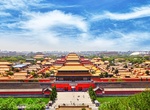
Visit Jingshan Park, Beijing, China
Jingshan Park is an imperial park covering 23 hectares (57 acres) immediately north of the Forbidden City in the Imperial City area of Beijing, China. The focal point is the artificial hill Jingshan, literally "Prospect Hill". Formerly a private imperial garden attached to the grounds of the Forbidden City, the grounds were opened to the public in 1928. The park was f... -
Visit Jinshanling Section, Great Wall, China (UNESCO site)
Jinshanling is a section of the Great Wall of China located in the mountainous area in Luanping County, 125 km northeast of Beijing. This section of the wall is connected with the Simatai section to the east. Some distance to the west lies the Mutianyu section. Jinshanling section of the wall was built from 1570 CE during the Ming Dynasty. The Jinshanling section of t... -
Visit Jiqing Lou (Chuxi Tulou Cluster), Xiayang, China (UNESCO site)
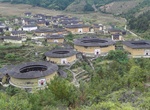
The Chuxi Tulou cluster is a group of earthen structures or "tulou" dating to the Ming Dynasty (1368–1644). The group provides a tourist attraction in the town of Xiayang, Yongding County, Longyan, Fujian Province, China. Chuxi Tulou cluster is a Hakka village inhabited by Xu clan, whom settled down in the 14th century. The first tulou was Heqing Lou, which was ... -
See Jison-in Temple, Kii Peninsula, Japan (UNESCO site)
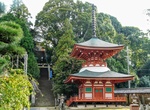
Jison-in (慈尊院) is a Buddhist temple in the town of Kudoyama that marks the entrance to the pilgrimage route of Koyasan. It is part of the Sacred Sites and Pilgrimage Routes in the Kii Mountain Range UNESCO World Heritage Site. The Koyasan complex includes: Kongobu-ji, built by Kūkai in 816 as the principal stage for esoteric Buddhism on an 800m high mountain basin, J... -
Explore Jiuzhaigou National Park, China (UNESCO site)
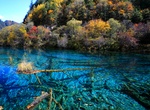
Jiuzhaigou National Park ("Valley of Nine Villages") is a nature reserve in the north of Sichuan, a province in south western China. It is known for its many multi-level waterfalls and colorful lakes, and was declared a UNESCO World Heritage Site in 1992. It belongs to the category V (Protected Landscape) in the IUCN system of protected area categorization. The valley... -
Explore João Vieira and Poilão Marine National Park, Bissagos Islands, Guinea-Bissau
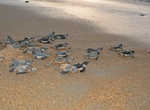
João Vieira and Poilão Marine National Park is a national park in Guinea-Bissau. It was established in August 2000. It covers an area of 495.0 square kilometres (191.1 sq mi) and includes the uninhabited islands of João Vieira, Cavalos, Meio and Poilão, and some smaller islets in the southeastern part of the Bijagós Archipelago. The ... -
Visit Jodrell Bank Observatory, England (UNESCO site)
The Jodrell Bank Observatory is a British observatory that hosts a number of radio telescopes, and is part of the Jodrell Bank Centre for Astrophysics at the University of Manchester. The observatory was established in 1945 by Sir Bernard Lovell, who wanted to investigate cosmic rays after his work on radar during the Second World War. It has since played an important... -
See Joggins Fossil Cliffs, Nova Scotia, Canada (UNESCO site)
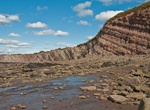
Joggins is a Canadian rural community located in western Cumberland County, Nova Scotia. On July 7, 2008 a 15 km length of the coast comprising the Joggins Fossil Cliffs was officially inscribed on the World Heritage List. Joggins is famous for its record of fossils dating to the Pennsylvanian "Coal Age" of earth history, approximately 310 million years ago. The drama... -
Visit Jomon Prehistoric Sites in Northern Japan (UNESCO Site)
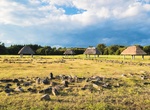
The property consists of 17 archaeological sites in the southern part of Hokkaido Island and northern Tohoku in geographical settings ranging from mountains and hills to plains and lowlands, from inland bays to lakes, and rivers. They bear a unique testimony to the development over some 10,000 years of the pre-agricultural yet sedentary Jomon culture and its complex s... -
See Jongmyo Shrine, South Korea (UNESCO site)
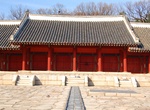
Jongmyo is a Confucian shrine dedicated to the memorial services for the deceased kings and queens of the Korean Joseon Dynasty. According to UNESCO, the shrine is the oldest royal Confucian shrine preserved and the ritual ceremonies continue a tradition established since the 14th century. Such shrines existed during the Three Kingdoms of Korea period but only th... -
Visit Joya de Cerén, El Salvador (UNESCO site)
Joya de Cerén (Jewel of Cerén) is an archaeological site in El Salvador featuring a pre-Columbian Maya farming village preserved remarkably intact under layers of volcanic ash. It is often referred to as the "Pompeii of the Americas" in comparison to the famous Ancient Roman ruins. A small farming community inhabited as early as 900 BC, Cerén was ... -
Explore Junquillal Bay Wildlife Refuge, Costa Rica (UNESCO site)
Junquillal Bay Wildlife Refuge, also called the Bahia Junquillal National Wildlife Refuge, is a wildlife refuge that is part of the Guanacaste Conservation Area and the Area de Conservación Guanacaste World Heritage Site in the northwestern part of Costa Rica. It protects areas of tropical dry forest and coastal mangroves.