Give us feedback!
Our philosophy is simple. We want to encourage you to dream. BIG! Then we help you plan your trip, get the most out of it while you're traveling and help you share your experience with friends.
Join Now It's FREE
Related Categories
Dreams Still To Do
Checked-Off Dreams
Dreams Still To Do
Checked-Off Dreams
Advertisement
Explore UNESCO Sites
-
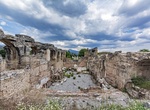
Explore Aphrodisias, Turkey (UNESCO Site)
Aphrodisiaswas a small ancient Greek city in the historic Caria cultural region of western Anatolia, Turkey. It is located near the modern village of Geyre, about 100 km (62 mi) east/inland from the coast of the Aegean Sea, and 230 km (140 mi) southeast of İzmir. Aphrodisias was named after Aphrodite, the Greek goddess of love, who had here her unique cult image, theA... -
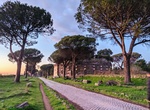
Hike Appian Way (Via Appia), Italy (UNESCO site)
The Appian Way (Latin and Italian: Via Appia) is one of the earliest and strategically most important Roman roads of the ancient republic. It connected Rome to Brindisi, in southeast Italy. Its importance is indicated by its common name, recorded by Statius, of Appia longarum... regina viarum ("the Appian Way, the queen of the long roads"). The road is named after App... -
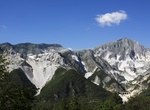
Explore Apuan Alps Geopark, Tuscany, Italy
The Apuan Alps are a mountain range in northern Tuscany, Italy. They are included between the valleys of the Serchio and Magra rivers, and, to the northwest, the Garfagnana and Lunigiana, with a total length of approximately 55 kilometres (34 mi). The name derives from the Apuani Ligures tribe who lived here in ancient times. The chain formed out of sea sediments in t... -
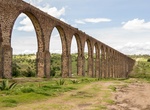
See Aqueduct of Padre Tembleque (Zempoala Aqueduct), Mexico (UNESCO Site)
The Aqueduct of Padre Tembleque, or Zempoala Aqueduct, is a Mexican aqueduct located between the towns of Zempoala, Hidalgo and Otumba, in the State of Mexico. Originally constructed between 1553 and 1570, the aqueduct stretches 45 kilometres (28 mi) long, beginning at Tecajete volcano just west of Zempoala and terminating at Otumba. It passed mostly at ground level, ... -
See Aqueduct of Segovia, Spain (UNESCO site)
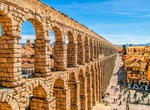
The Aqueduct of Segovia is a Roman aqueduct and one of the most significant and best-preserved ancient monuments left on the Iberian Peninsula. It is located in Spain and is the foremost symbol of Segovia, as evidenced by its presence on the city's coat of arms. As the aqueduct lacks a legible inscription (one was apparently located in the structure's attic, or top po... -
See Aqueduct of Vanvitelli, Italy (UNESCO site)
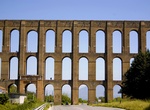
The Aqueduct of Vanvitelli or Caroline Aqueduct is an aqueduct built to supply the Reggia di Caserta and the San Leucio complex, supplied by water arising at the foot of Taburno, from the springs of the Fizzo, in the territory of Bucciano (BN), which it carries along a winding 38 km route (mostly underground). Commissioned by Charles of Bourbon and designed by Luigi V... -
Visit Aralam Wildlife Sanctuary, India (UNESCO Site)
Aralam Wildlife Sanctuary is the northernmost wildlife sanctuary of Kerala, southwest India. A mere 55 km2 (21 sq mi) in area and located on the western slope of the Western Ghats. It was established in 1984. The headquarters of the sanctuary is near Iritty. Aralam wildlife sanctuary is the northernmost protected area of Kerala state, situated in the southeast part of... -
Explore Aras Geopark, Iran
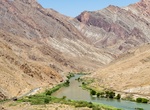
Aras Geopark covers an area of about 1670 square kilometers. The Aras River marks the northern limit of this geopark located in northwestern Iran at the southern end of the Lesser Caucasus mountain range. -
Visit Arbeia, South Shields, England (UNESCO site)
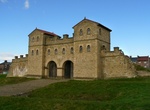
Arbeia was a large Roman fort in South Shields, Tyne & Wear, England, now ruined, and which has been partially reconstructed. It formed part of the Hadrian's Wall World Heritage Site. It was first excavated in the 1870s and all modern buildings on the site were cleared in the 1970s. It is managed by Tyne and Wear Museums as Arbeia Roman Fort and Museum. The fort s... -
See Archaeological Site of Gamzigrad-Romuliana, Serbia (UNESCO site)
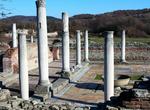
Gamzigrad is an archaeological site, spa resort and UNESCO World Heritage Site of Serbia, located south of the Danube river, near the city of Zaječar. It is the location of the ancient Roman complex of palaces and temples Felix Romuliana, built by Emperor Galerius. The main area covers 10 acres (40,000 m2). The construction started in 298 AD near the birthplace of Gal... -
See Archaeological Site of Hattusha, Turkey (UNESCO site)
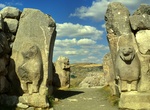
Hattusa was the capital of the Hittite Empire in the late Bronze Age. It was located near modern Boğazkale, Turkey, within the great loop of the Kızıl River (Hittite: Marashantiya; Greek: Halys). Hattusa was added to the UNESCO World Heritage list in 1986. One of the most important discoveries at the site has been the cuneiform royal archives of clay tablets, c... -
See Archaeological Site of Tiya, Ethiopia (UNESCO site)
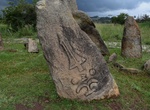
The archeological site of Tiya is distinguished by 36 standing stones or stelae, "32 of which are engraved with enigmatic symbols, notably swords," marking a large, prehistoric burial complex. A German ethnographic expedition had visited the site in April 1935, and had found at one hour's journey to the south of the caravan camp the stone monoliths with sword symbol, ... -
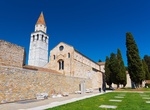
See Archaeological Site & Patriarchal Basilica of Aquileia, Italy (UNESCO site)
Aquileia is an ancient Roman city in what is now Italy, at the head of the Adriatic at the edge of the lagoons, about 10 km from the sea, on the river Natiso (modern Natisone), the course of which has changed somewhat since Roman times. Today, the city is small (about 3500 inhabitants), but it was large and prominent in Antiquity, and is one of the main archeolog... -
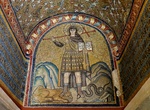
See Archbishop's Chapel, Ravenna, Italy (UNESCO site)
The Archbishop's Chapel (or Archiepiscopal Chapel) is a chapel on the first floor of the bishops' palace in Ravenna, Italy, the smallest of the famous mosaic sites of the city. It is a private oratory of Trinitarian bishops dating from the turn of the 6th century. Although commonly attributed to St. Peter Chrysologus, Archbishop of Ravenna from 433–450, the chap... -
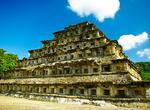
See Archeological Site of El Tajin, Mexico (UNESCO site)
El Tajín is a pre-Columbian archeological site and was the site of one of the largest and most important cities of the Classic era of Mesoamerica. The city flourished from 600 to 1200 C.E. and during this time numerous temples, palaces, Mesoamerican ballcourts and pyramids were built. From the time the city fell in 1230 to near the end of the 18th century, no E...