Give us feedback!
Our philosophy is simple. We want to encourage you to dream. BIG! Then we help you plan your trip, get the most out of it while you're traveling and help you share your experience with friends.
Join Now It's FREE
Related Categories
Dreams Still To Do
Checked-Off Dreams
Dreams Still To Do
Checked-Off Dreams
Advertisement
Explore UNESCO Sites
-
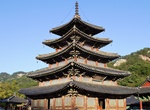
Visit Sansa, Buddhist Mountain Monasteries, Korea (UNESCO Site)
The Sansa are Buddhist mountain monasteries located throughout the southern provinces of the Korean Peninsula. The spatial arrangement of the seven temples that comprise the site, established from the 7thto 9thcenturies, present common characteristics that are specific to Korea – the “madang” (open courtyard) flanked by four buildings (Buddha Hall, p... -
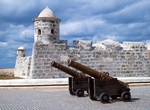
Visit San Salvador de la Punta Fortress, Havana, Cuba (UNESCO site)
San Salvador de la Punta Fortressis a fortress in the bay of Havana, Cuba. La Punta, just like El Morro was designed to protect the entrance to the Havana Bay that became an important and strategic entranceway to the harbor since the settlement of the town. The nonstop landings of corsairs in the area endangered the harbor and the town. That was why in 1559 it was res... -
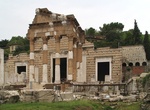
Visit San Salvatore-Santa Giulia, Italy (UNESCO Site)
San Salvatore (or, for most of its existence, Santa Giulia) is a former monastery in Brescia, Lombardy, northern Italy, now turned into a museum. The monastic complex is famous for the diversity of its architecture which includes Roman remains and significant pre-Romanesque, Romanesque and Renaissance buildings. In 2011, it became a UNESCO World Heritage Site as part ... -
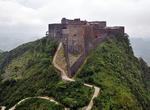
See Sans-Souci Palace, Haiti (UNESCO site)
The Sans-Souci Palace was the royal residence of King Henri I (better known as Henri Christophe) of Haiti, Queen Marie-Louise and their twin daughters. Construction of the palace started in 1810 and was completed in 1813. It is located in the town of Milot, Nord Department. Its name translated from French means "without worry." Close to the Palace is the renowned moun... -
See Sanssouci Palace and Garden, Germany (UNESCO site)
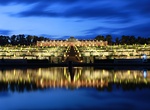
Sanssouci is the name of the former summer palace of Frederick the Great, King of Prussia, in Potsdam, near Berlin. While Sanssouci is in the more intimate Rococo style and is far smaller than its French Baroque counterpart, it too is notable for the numerous temples and follies in the park. The palace was designed by Georg Wenzeslaus von Knobelsdorff between 174... -
Visit Santa Ana de Velasco Mission, Bolivia (UNESCO site)
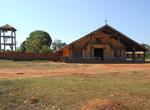
The mission of Santa Ana de Velasco was the final World Heritage Site-inscribed mission to be established. It was founded by the Jesuit priest Fr. Julian Knogler in 1755. The original native inhabitants of the missions were the Covareca and Curuminaca tribes, who spoke dialects of the Otuke language. The mission church was designed after the expulsion of the Jesuits b... -
See Santa Casa da Misericórdia, Macau (UNESCO site)
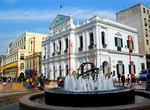
Holy House of Mercy of Macau is an historic white building in Macau's Senado Square. Established as a branch of the Santa Casa da Misericórdia, it was built in 1569 on the orders of the Bishop of Macao. It was a medical clinic and several other social welfare structures in early Macau. It later served as an orphanage and refuge for widows of sailors lost at sea... -
Visit Santa Cruz de Mompox (Mompós), Colombia (UNESCO site)
Mompox or Mompós, officially Santa Cruz de Mompox, is a town and municipality in northern Colombia, in the Bolívar Department, which has preserved its colonial character. Located on an island in the Magdalena River where it joins the Cauca River, 249 kilometers from Cartagena. Mompox depends upon tourism, fishing and some commerce generated by the local ... -
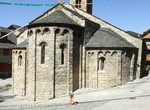
See Santa Eulàlia d'Erill la Vall Church, Vall de Boí, Spain (UNESCO site)
Santa Eulàlia d'Erill la Vall is a Romanesque church situated in Erill la Vall, in the territory of Vall de Boí, a commune in the valley with the same name and in Comarca of Alta Ribagorça in the north of Province of Lleida and the autonomous communities of Catalonia in Spain. Like Sant Climent, Taüll, Sant Joan de Boí, Sant Feliu de Barruer... -
See Santa Maria de Cardet Church, Vall de Boí, Spain (UNESCO site)
Santa Maria de Cardet is a church situated in Cardet, in the territory of Vall de Boí, a commune in the valley with the same name and in Comarca of Alta Ribagorça in the north of Province of Lleida and the autonomous communities of Catalonia in Spain. It is part of the world heritage site of UNESCO with eight other Catalan Romanesque Churches of the Vall de... -
See Santa Maria de Cóll Church, Vall de Boí, Spain (UNESCO site)
Santa Maria de Cóll is a Romanesque church in Cóll in the municipality of Vall de Boí, Catalonia, Spain. It was consecrated in the year 1110. It became a Bien de Interés Cultural site in 1992, and in 2000 it was declared part of the Vall de Boí UNESCO World Heritage Site. The church is located at a height of 1,412 m (4,633 ft) in the... -
Visit Santa María de la Purísima Concepción del Agua de Landa Mission, Landa de Matamoros, Querétaro, Mexico
Santa María de la Purísima Concepción del Agua de Landa mission is located twenty km from Jalpan on Highway 120 towards Xilitla. The mission was built between 1760 and 1768 by Miguel de la Campa is dedicated to Our Lady of the Immaculate Conception, which gives rise to part of the community's name. It was the last of the missions to be built. The ... -
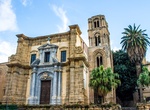
Explore Santa Maria dell'Ammiraglio, Palermo, Italy (UNESCO Site)
The church of Santa Maria dell'Ammiraglio, seat of the parish Parrocchia San Nicolò dei Greci (Klisha e Shën Kollit së Arbëreshëvet in Albanian), commonly called the Martorana, overlooking the Piazza Bellini in Palermo, Sicily, southern Italy. The church belongs to the Eparchy of Piana degli Albanesi of the Italo-Albanian Catholic Church, a ... -
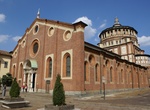
See Santa Maria delle Grazie (Milan), Italy (UNESCO site)
Santa Maria delle grazie ("Holy Mary of Grace") is a church and Dominican convent in Milan, northern Italy, included in the UNESCO World Heritage sites list. The church contains the mural of The Last Supper by Leonardo da Vinci, which is in the refectory of the convent. The Duke of Milan Francesco I Sforza ordered construction of a Dominican convent and a church at th... -
See Santa Maria de Taüll Church, Vall de Boí, Spain (UNESCO site)
Santa Maria de Taüll is a Romanesque church situated in the territory of Vall de Boí, a commune in the valley with the same name and Comarca of Alta Ribagorça in the north of Province of Lleida and the autonomous communities of Catalonia in Spain. Like Sant Climent, Taüll, Sant Joan de Boí, Santa Eulàlia d'Erill la Vall or Sant Feliu de ...