Give us feedback!
Our philosophy is simple. We want to encourage you to dream. BIG! Then we help you plan your trip, get the most out of it while you're traveling and help you share your experience with friends.
Join Now It's FREE
Related Categories
Dreams Still To Do
Checked-Off Dreams
Dreams Still To Do
Checked-Off Dreams
Advertisement
Explore UNESCO Sites
-
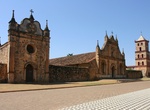
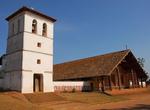
Visit San José de Chiquitos Mission, Bolivia (UNESCO site)
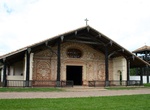
Founded in 1698 by the Jesuits Fr. Felipe Suárez and Fr. Dionosio Ávila, the mission of San José de Chiquitos was the third mission built of those of the World Heritage Site. At first, the mission was inhabited by the Penoca tribe. The church was built between 1745 and 1760 by an unknown architect. It is built of stone, unlike other mission church... -
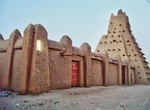
Visit Sankore Madrasah, Timbuktu, Mali (UNESCO Site)
Sankoré Madrasah (also called the University of Sankoré, or Sankore Masjid) is one of three ancient centers of learning located in Timbuktu, Mali. It is believed to be established by Mansa Musa, who was the ruler of the Mali Empire. The three mosques of Sankoré, Djinguereber and Sidi Yahya compose the University of Timbuktu. Madrasah (مدرسة) means... -
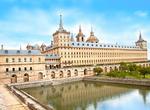
See San Lorenzo de El Escorial Monastery, Spain (UNESCO site)
San Lorenzo de El Escorial, also known as El Escorial de Arriba is a town and municipality in the Community of Madrid, Spain, located to the northwest of the region in the southeastern side of the Sierra de Guadarrama, at the foot of Mount Abantos and Las Machotas, 47 kilometres (29 mi) from Madrid. It is head of the same name judicial party. The settlement is popular... -
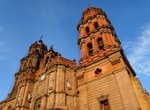
Visit San Luis Potosí Cathedral, San Luis Potosí City, Mexico
The St. Louis the King Cathedral (Spanish:Catedral Metropolitana de San Luis Rey) Also San Luis Potosí Cathedral Is a Catholic cathedral that functions as the seat of the archdiocese of San Luis Potosí in Mexico. It is located in the historic center of the state capital, on the eastern side of the main square. The building we currently know was built in ... -
Visit San Luis Potosí Historic Center, Mexico (UNESCO site)
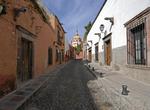
San Luis Potosí's historic center displays a great mixture of different artistic styles in many buildings and is a major example of colonial architecture in Mexico. In 2010, the historic center was listed as a UNESCO World Heritage Site within Camino Real de Tierra Adentro. -
Visit San Michele Oratory, Padua, Italy (UNESCO Site)
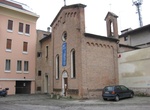
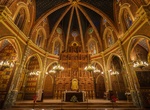
The San Michele Oratory or Oratory of San Michele (Italian -Oratorio di San Michele) is an oratory chapel in Padova, Italy. The interior is painted with a cycle of frescoes on the life of the Virgin Mary by Jacopo da Verona. It first arose near the Torlonga del Castello Carrarese, outside the ancient Roman walls of the city. It was built in 1397 over the ruins of the ... -
Visit San Miguel Concá Mission, Arroyo Seco, Querétaro, Mexico
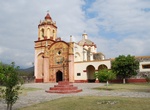
San Miguel Concá mission is located forty km from Jalpan on Highway 69 to Río Verde. The church is in the center of the community on one side of Guerrero Street. It is oriented to the south and dedicated to the Archangel Michael. It is the smallest of the mission churches and was probably finished in 1754, according to an inscription located in... -
Visit San Miguel de Allende, Mexico (UNESCO site)
The arts thrive in San Miguel De Allende, Mexico. This mountain town in central Mexico has become a magnet for painters, sculptors and musicians since the end of World War II and the many local events and festivals give testament to the vibrant local scene. The city is home to important art and cultural institutes such as the Escuela de Bellas Artes and the Instituto ... -
Visit San Miguel Mission de Velasco, Bolivia (UNESCO site)
The fifth mission in the World Heritage Site, that of San Miguel de Velasco, was established by the Jesuits Fr. Felipe Suarez and Fr. Francisco Hervás in 1721. San Miguel was an offshoot of the mission of San Rafael de Velasco, where the population had grown too large. The mission church was built between 1752 and 1759, probably by Fr. Johann Messner, a collabo... -
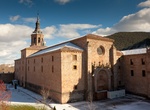
See San Millán Yuso and Suso Monasteries, Spain (UNESCO site)
The monasteries of San Millán de Suso and San Millán de Yuso are two monasteries situated in the village of San Millán de la Cogolla, La Rioja, Spain. They have been designated a World Heritage Site by UNESCO. The two monasteries' names Suso and Yuso mean the "upper" and the "lower" in archaic Castilian , respectively. Suso is the older build... -
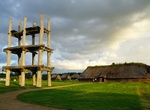
Visit Sannai-Maruyama Site, Aomori Prefecture, Japan (UNESCO Site)
The Sannai-Maruyama Site (三内丸山遺跡,Sannai-Maruyama iseki) is an archaeological site and museum located in the Maruyama and Yasuta neighborhoods to the southwest of central Aomori in Aomori Prefecture in northern Japan, containing the ruins of a very large Jōmon period settlement. The ruins of a 40-hectare (400,000 m2; 99-acre) settlement were discovered in 1992, when Ao... -
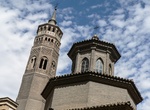
See San Pablo Church (Zaragoza), Aragon, Spain (UNESCO site)
San Pablo is a church in Zaragoza, Spain. Its original Gothic-Mudéjar building dates to the late 13th/early 14th-century; later it was enlarged and modified several times. The Gothic portal (15th century) has a varied sculptural decoration, featuring images of Saint Peter and Saint Paul on the jambs, and of Christ seated between the Virgin, Saint John and Saint... -
See San Pedro Church, Teruel, Aragon, Spain (UNESCO site)
San Pedro Church (Iglesia de San Pedro) is a 14th-century church and 13th century bell tower in Teruel, located in the Province of Teruel in the Aragon region of northeastern Spain. The church and tower are part of the UNESCO Mudéjar Architecture of Aragon World Heritage Site. They are also Bienes de Interés Cultural landmarks in the Province of Teruel. ... -
Visit San Pedro de la Roca Castle, Cuba (UNESCO site)
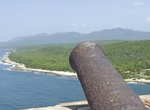
The Castillo de San Pedro de la Roca (also known by the less formal title of Castillo del Morro or as San Pedro de la Roca Castle) is a fortress on the coast of the Cuban city of Santiago de Cuba. About 6 miles (10 km) southwest of the city centre, it overlooks the bay. It was designed in 1637 by Giovanni Battista Antonelli (also known as Juan Battista Antonelli), a m... -
Visit San Rafael de Velasco Mission, Bolivia (UNESCO site)
The mission of San Rafael de Velasco was the second mission built out of the six inscribed the World Heritage Site. Founded in 1695 by the Jesuits Fr. Juan Bautista Zea and Fr. Francisco Hervás, it was moved several times. The mission had to be moved in 1701 and 1705 because of epidemics in the region. In 1719 the mission was moved once more due to fire. Fr. Ma...