Give us feedback!
Our philosophy is simple. We want to encourage you to dream. BIG! Then we help you plan your trip, get the most out of it while you're traveling and help you share your experience with friends.
Join Now It's FREE
Related Categories
Dreams Still To Do
Checked-Off Dreams
Dreams Still To Do
Checked-Off Dreams
Advertisement
Explore UNESCO Sites
-
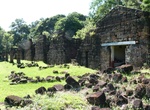
See Santa María la Mayor, Argentina (UNESCO site)
Reducción de Santa María la Mayor (Reduction of Holy Maria Major), located in the Santa María Department of the Misiones Province, Argentina, was one of the missions or reductions founded in the 17th century by the Jesuits in the Americas during the Spanish colonial period. The ruins of the reduction were declared World Heritage Site by UNESC... -
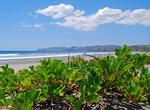
Explore Santa Rosa National Park, Costa Rica (UNESCO site)
Santa Rosa National Park, in Spanish the Parque Nacional Santa Rosa, is a national park, part of the Area de Conservación Guanacaste World Heritage site, in the northern western part of Costa Rica, originally created to protect the scene of the Battle of Santa Rosa, at its eastern edge lies the Interamerican Highway where it is adjacent to the Guanacaste Nation... -
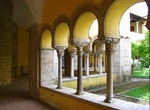
Visit Santa Sofia, Benevento, Italy (UNESCO Site)
Santa Sofia is a church in Benevento, southern Italy, one of the main surviving examples of Lombard architecture. In 2011, it became a UNESCO World Heritage Site as part of a group of seven inscribed as Longobards in Italy. Places of the power (568-774 A.D.). The church is on a central plan, with a diameter of 23.5 m, inspired to that of Hagia Sofia. In the center the... -
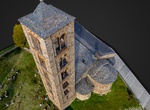
See Sant Climent de Taüll Church, Vall de Boí, Spain (UNESCO site)
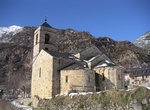
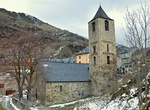
Sant Climent de Taüll (Catalan pronunciation: [ˈsaŋ kliˈmɛn də təˈuʎ]), also known as the Church of St. Clement of Tahull, is a Roman Catholic church in Catalonia, Spain. It is an example of Romanesque architecture. Other influences include the Lombard and Byzantine styles, which can be seen throughout the exterior and interior of the building. The church is a ba... -
See Sant Feliu de Barruera Church, Vall de Boí, Spain (UNESCO site)
First appears documented in the late 13th century but little is known of its history. Located in the municipality of Barruera, is a building with a single nave with a barrel vault. The nave is headed by a semicircular apse. -
Visit Santiago de Compostela, Spain (UNESCO site)
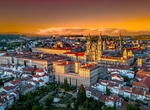
Santiago de Compostela is the capital of the autonomous community of Galicia, Spain. The city's Cathedral is the destination today, as it has been throughout history, of the important 9th century medieval pilgrimage route, the Way of St. James. In 1985 the city's Old Town was designated a UNESCO World Heritage Site The cathedral borders the main plaza of the old and w... -
Visit Santiago de Jalpan Mission, Jalpan de Serra, Querétaro, Mexico
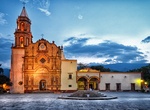
The Santiago de Jalpan mission was established before the arrival of Junípero Serra in 1744, but Serra was in charge of building the mission complex that stands today from 1751 to 1758, the first to be built. It is dedicated to James the Greater, the first evangelist. This complex is situated in the center of the modern town in front of the main plaza and forme... -
Visit Santiago de Querétaro, Mexico (UNESCO site)
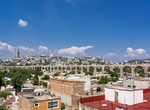
Santiago de Querétaro is the capital and largest city of the state of Querétaro, located in central Mexico. The founding date of the city is given as 25 July 1531, when during a battle between the Spanish and the natives of the area, an eclipse occurred during which Saint James on a white horse carrying a pink cross supposedly appeared, causing the nativ... -
Visit Santimamiñe Cave, Spain (UNESCO site)
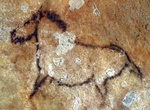
Santimamiñe cave, Kortezubi, Biscay, Basque Country is one of the most important archaeological sites of the Basque Country, including a nearly complete sequence from the Middle Paleolithic to the Iron Age. Its complete sequence includes the following cultures: Mousterian Chatelperronian Aurignacian Gravettian Solutrean Magdalenian Azilian Plus unc... -
Stroll Santiniketan, West Bengal (UNESCO Site)
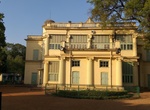
Shantiniketan is a neighbourhood of Bolpur town in the Bolpur subdivision of Birbhum district in West Bengal, India, approximately 152 km north of Kolkata. It was established by Maharshi Devendranath Tagore, and later expanded by his son, Rabindranath Tagore whose vision became what is now a university town with the creation of Visva-Bharati. It inscribed on the UNESC... -
See Sant Joan de Boí Church, Vall de Boí, Spain (UNESCO site)
Sant Joan de Boí is a Romanesque church situated in the territory of Vall de Boí, a commune in the valley of the same name, in the Province of Lleida in the autonomous community of Catalonia in Spain. Like Sant Climent, Taüll, Sant Feliu de Barruera, Santa Eulàlia d'Erill la Vall or Santa Maria de Taüll, the date of construction of Sant Joan ... -
See Sant Quirc de Durro Church, Vall de Boí, Spain (UNESCO site)
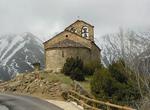
Sant Quirc de Durro is an isolated chapel situated in the village of Durro, in the territory of Vall de Boí, a commune in the valley with the same name and in Comarca of Alta Ribagorça in the north of Province of Lleida and the autonomous communities of Catalonia in Spain. It is one of the best known places of Roman art in the valley and since November 2000... -
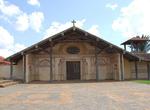
Visit San Xavier Mission, Bolivia (UNESCO site)
Initially established in 1691, the mission of San Xavier was the first of the missions listed in the World Heritage Site. In 1696, due to the incursion of Paulistas from Brazil in the east, the mission was relocated toward the San Miguel River. In 1698, it was relocated closer to Santa Cruz, but in 1708 was moved away to protect the Indians from the Spaniards. The ori... -
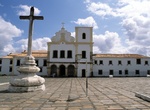
See São Francisco Square, São Cristóvão, Brazil (UNESCO site)
São Francisco Square, in the town of São Cristovão, is a quadrilateral open space surrounded by substantial early buildings such as São Francisco Church and convent, the Church and Santa Casa da Misericórdia, the Provincial Palace and the associated houses of different historical periods surrounding the Square. This monumental e... -
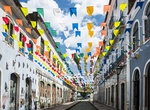
Visit São Luís, Brazil (UNESCO site)
Historic Centre of São Luís is the capital of the Brazilian state of Maranhão. The city is located on São Luís island in the Baía de São Marcos (St Marcus Bay), an extension of the Atlantic Ocean which forms the estuary of Pindaré, Mearim, Itapecuru and other rivers. São Luís is the only Brazil...