Give us feedback!
Our philosophy is simple. We want to encourage you to dream. BIG! Then we help you plan your trip, get the most out of it while you're traveling and help you share your experience with friends.
Join Now It's FREE
Related Categories
Dreams Still To Do
Checked-Off Dreams
Dreams Still To Do
Checked-Off Dreams
Advertisement
Explore UNESCO Sites
-
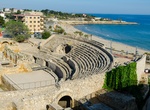
Visit Tárraco, Spain (UNESCO site)
Tarraco is the ancient name of the current city of Tarragona (Catalonia, Spain). During the Roman Empire was one of the major cities of the Iberian Peninsula and capital of the Roman province called Hispania Citerior or Hispania Tarraconensis. The full name of the city at the time of the Roman Republic was Colonia Iulia Urbs Triumphalis Tarraco. In 2000, the archaeolo... -
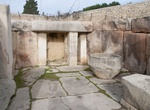
Visit Tarxien Temples, Malta (UNESCO site)
The Tarxien Temples are an archaeological complex in Tarxien, Malta. They date back to approximately 3150 BC. The site was accepted as a UNESCO World Heritage Site in 1980 along with the other Megalithic temples on the island of Malta. The Tarxien consist of three separate, but attached, temple structures. The main entrance is a reconstruction dating from 1956, w... -
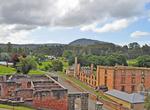
Visit Tasmanian Convict Sites, Australia (UNESCO site)
"Australian Convict Sites” is a set of UNESCO World Heritage sites that consisting of 11 remnant penal sites throughout Australia. Originally built within the British Empire during the 18th and 19th centuries on fertile Australian coastal strips at Sydney, Tasmania, Norfolk Island, and Fremantle. UNESCO states that these are "the best surviving examples of large... -
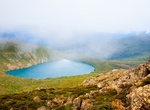
Explore Tasmanian Wilderness, Australia (UNESCO site)
The Tasmanian Wilderness is a term that is used for a range of areas in Tasmania, Australia. The World Heritage Areas in South West, Western and Central are the most well known. However, there are also other areas in Tasmania that have the elements of being known as wilderness areas, the Tarkine and the Cradle mountain wilderness. There is also an organisation that ha... -
See Ta Som Temple, Angkor, Cambodia
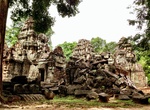
Ta Som is a small temple at Angkor, Cambodia, built at the end of the 12th century for King Jayavarman VII. It is located north east of Angkor Thom and just east of Neak Pean. The King dedicated the temple to his father Dharanindravarman II (Paramanishkalapada) who was King of the Khmer Empire from 1150 to 1160. The temple consists of a single shrine located on one l... -
Explore Tassili n'Ajjer, Algeria (UNESCO site)
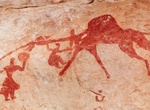
Tassili n'Ajjer (Berber for "Plateau of the Rivers") is a mountain range in the Sahara desert. It is a vast plateau in south-east Algeria at the borders of Libya, Niger and Mali, covering an area of 72,000 sq. km. The exceptional density of paintings and engravings, and the presence of many prehistoric vestiges, are remarkable testimonies to Prehistory. From 10,0... -
Explore Tatshenshini–Alsek Provincial Park, Canada (UNESCO site)
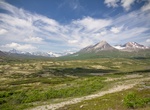
Tatshenshini-Alsek Park or Tatshenshini-Alsek Provincial Wilderness Park is a provincial park in British Columbia, Canada (9,580 km²). It was established in 1993 after an intensive campaign by Canadian and American conservation organizations to halt mining exploration and development in the area and protect the area for its strong natural heritage and biodiversit... -
Visit Tauric Chersonese, Ukraine (UNESCO site)
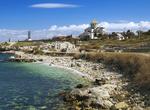
Tauric Chersonese was a Greeks and Romans city and territory located on the Crimean Peninsula on the Black Sea in Ukraine. The city was initially a small trading post around the harbour installations in Quarantinnaya Bay, but developed by the early 4th century BC into a classic ancient Greek polis, a democratic republic with a slavery system. Apart from the city itsel... -
Visit Taxila, Pakistan (UNESCO site)
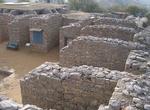
Taxila is a Tehsil in the Rawalpindi District of Punjab province of Pakistan. It is an important archaeological site. Taxila is situated about 32 km (20 mi) northwest of Islamabad Capital Territory and Rawalpindi in Panjab; just off the Grand Trunk Road. Taxila lies 549 metres (1,801 ft) above sea level. The city dates back to the Gandhara period and contains the ruin... -
See Tchogha Zanbil (Chogha Zanbil), Iran (UNESCO site)
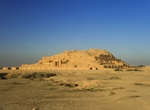
Chogha Zanbil is an ancient Elamite complex in the Khuzestan province of Iran. It is one of the few existent ziggurats outside of Mesopotamia. It lies approximately 42 kilometeres South Southwest of Dezfoul, 30 kilometres West of Susa and 80 kilometres North of Ahvaz. Choga Zambil means 'basket mound. It was built about 1250 BC by the king Untash-Napirisha, mainl... -
Visit Te Henua Enata, Marquesas Islands, France
Located in the South Pacific Ocean, this mixed serial property bears an exceptional testimony to the territorial occupation of the Marquesas archipelago by a human civilisation that arrived by sea around the year 1000 CE and developed on these isolated islands between the 10th and the 19th centuries. It is also a hotspot of biodiversity that combines irreplaceable and... -
Explore Tehuacán-Cuicatlán Biosphere Reserve , Oaxaca, and Puebla, Mexico (UNESCO Site)
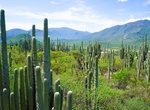
The Tehuacán-Cuicatlán biosphere reserve is a protected natural area located in southeastern Mexico. Its name derives from its two main locations: Cuicatlán and Tehuacán, in the latter are their administrative offices, covers 490,186 hectares distributed among 21 municipalities in the state of Puebla and Oaxaca. On July 2, 2018, the site wa... -
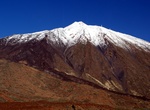
Explore Teide National Park, Canary Islands, Spain (UNESCO site)
Teide National Park (Parque Nacional del Teide in Spanish) is a national park located in Tenerife (Canary Islands, Spain). It is centered around 3718m Mount Teide, the highest mountain of Spain and the islands of the Atlantic (it is the third largest volcano in the world from its base). It was declared a National Park on 22 January 1954, making it one of the olde... -
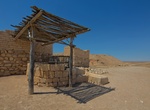
Visit Tel Be'er Sheva National Park, Israel (UNESCO site)
Tel Sheva (in academic contexts) and Tel Be'er Sheva (in popular contexts) are the Hebrew names, and Tell es-Seba the Arabic name of an archaeological site in southern Israel believed to be the remains of the biblical town of Beersheba. It lies east of the modern city of Beersheba and west of the new Bedouin town of Tel Sheva/Tell as-Sabi. Tel Sheva has been preserved... -
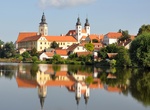
Visit Telč, Czech Republic (UNESCO site)
Telč is a town in southern Moravia, near Jihlava, in the Czech Republic. The town was founded in 13th century as a royal water fort on the crossroads of busy merchant routes between Bohemia, Moravia and Austria. Besides the monumental 17th century Renaissance chateau with an English-style park (a rebuilding of original Gothic castle), the most significant sight i...