Give us feedback!
Our philosophy is simple. We want to encourage you to dream. BIG! Then we help you plan your trip, get the most out of it while you're traveling and help you share your experience with friends.
Join Now It's FREE
Related Categories
Dreams Still To Do
Checked-Off Dreams
Dreams Still To Do
Checked-Off Dreams
Advertisement
Explore UNESCO Sites
-
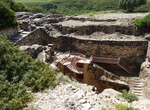
Visit Tel Hazor National Park, Israel (UNESCO site)
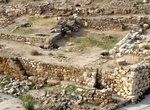
Tel Hazor, also Hatzor and Tell el-Qedah, is an archaeological tell at the site of ancient Hazor, located in Israel, Upper Galilee, north of the Sea of Galilee, in the northern Korazim Plateau. In the Middle Bronze Age (around 1750 BC) and the Israelite period (ninth century BC), Hazor was the largest fortified city in the country and one of the most important in the ... -
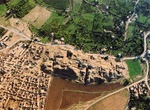
Visit Tell es-Sultan (Ancient Jericho), Jericho, Palestine (UNESCO site)
Tell es-Sultan (Sultan's Hill), also known as Tel Jericho (Hebrew: תל יריחו) or Ancient Jericho, is an archaeological site and a UNESCO World Heritage Site in the State of Palestine, in the city of Jericho, consisting of the remains of the oldest fortified city in the world. It is located adjacent to the Ein as-Sultan refugee camp, two kilometres north of the centre o... -
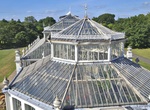
Visit Temperate House, Kew Gardens, England
The Temperate House, opened in 1862, is a Grade I-listed showhouse for the largest plants in Kew Royal Botanic Gardens. Rectangular, with pitched roofs, its pillars support wrought-iron ribs. Decimus Burton, the designer, gave the House a mix of decorative motifs, finials, pediments, acanthus leaf capitals, Coade stone urns and statues. According to Greg Redwood, Kew'... -
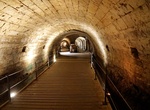
Visit Templar Tunnel (Acre), Israel
The Templars were a military monastic order who aided pilgrims who came from Europe to visit the holy sites. They did their work in the name of the pope. It was the western edge of the tunnel where the main fortress of the Templar order was built. The tunnel was a strategic underground passageway, 350 meters (1,148ft) long and it extends from the Templars fortress t... -
Visit Temple of Agriculture, Beijing, China
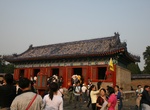
Temple of Agriculture or Altar of Agriculture is a historic site in Xuanwu District of Beijing, China, and located near the Temple of Heaven. The Temple of Agriculture was built in the 15th century. It was used by Ming and Qing emperors to perform sacrifices. The temple's Jufu Hall was included in the 1998 World Monuments Watch by the World Monuments Fund (WMF) when i... -
Visit Temple of Apollo (Delphi), Greece
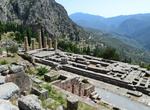
The Temple of Apollo, god of music, harmony, light, healing, and oracles occupied the most important and prominent position in the Delphic Panhellenic Sanctuary. The edifice with the partially restored colonnade visible today dates to the 20th century BC and, according to ancient accounts, five different temples were built throughout history. The famous oracle, the Py... -
Visit Temple of Apollo (Pompeii), Italy
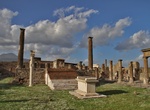
The Temple of Apollo, also known as the Sanctuary of Apollo, is a Roman temple built in 120 BC and dedicated to the Greek and Roman god Apollo in the ancient Roman town of Pompeii, southern Italy. The sanctuary was a public space influenced by Roman colonists to be dedicated to Greco-Roman religion and culture. Located in the forum (market place) and facing the northe... -
Visit Temple of Awwam, Yemen
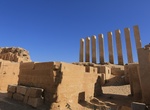
The Temple of Awwam or "Mahram Bilqis" ("Sanctuary of the Queen of Sheba") is a Sabaean temple dedicated to the principal deity of Saba, Almaqah (frequently called "Lord of ʾAwwām"), near Ma'rib in what is now Yemen. The temple is situated 7 kilometres (4.3 mi) southeast of ancient Marib, and was built in the outskirts of the city. Although usually major Sabaean sanct... -
Visit Temple of Baalat Gebal, Byblos, Lebanon
The Temple of Baalat Gebal was an important Bronze Age temple structure in the World Heritage Site of Byblos. The temple was dedicated to Ba'alat Gebal, the goddess of the city of Byblos, known later to the Greeks as Atargatis. Built in 2800 BCE, it was the largest and most important sanctuary in ancient Byblos, and is considered to be "one of the first monumental str... -
See Temple of Bacchus, Baalbek (Heliopolis), Lebanon
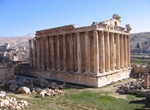
The Temple of Bacchus is part of the Baalbek archaeological site, in Beqaa Valley region of Lebanon. The temple complex is considered an outstanding archaeological and artistic site of Imperial Roman Architecture and was inscribed as a UNESCO World Heritage Site in 1984. This monument to Bacchus is one of the best preserved and grandest Roman temple ruins; its age is ... -
See Temple of Clitumnus, Umbria, Italy, (UNESCO Site)
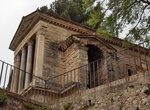
The Tempietto del Clitunno (Temple of Clitumnus) is a small paleochristian church that sits along the banks of the Clitunno River near the town of Campello sul Clitunno between Spoleto and Trevi, Umbria, Italy. In 2011, it became a UNESCO World Heritage Site as part of a group of seven inscribed as Longobards in Italy. Places of the power (568-774 A.D.). There was ori... -
See Temple of Concordia, Agrigento, Sicily, Italy
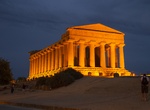
The Temple of Concordia (Tempio della Concordia) is an ancient Greek temple in the Valle dei Templi (Valley of the Temples) in Agrigento (Greek: Akragas) on the south coast of Sicily, Italy. It is the largest and best-preserved Doric temple in Sicily and one of the best-preserved Greek temples in general, especially of the Doric order. The temple was built c. 4... -
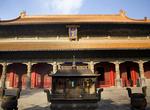
Visit Temple of Confucius, Qufu, China (UNESCO site)
The Temple of Confucius in Qufu, Shandong Province of China, is the "original", largest and most famous of the temples of Confucius in China and East Asia. Since 1994, the Temple of Confucius has been part of the UNESCO World Heritage Site "Temple and Cemetery of Confucius and the Kong Family Mansion in Qufu". The two other parts of the site are the nearby Kong Fam... -
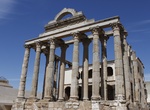
Visit Temple of Diana, Mérida, Spain (UNESCO site)
This temple is a municipal building belonging to the city forum. It is one of the few buildings of religious character preserved in a satisfactory state. Despite its name, wrongly assigned on its discovery, the building was dedicated to the Imperial cult. It was built in the late 1st century BC or early in the Augustan era. In the sixteenth ce... -
See Temple of Heaven in Beijing, China (UNESCO site)
The Temple of Heaven, literally the Altar of Heaven is a complex of Taoist buildings situated in the southeastern part of central Beijing. The complex was visited by the Emperors of the Ming and Qing dynasties for annual ceremonies of prayer to Heaven for good harvest. It is regarded as a Taoist temple, although Chinese Heaven worship, especially by the reigning ...