Give us feedback!
Our philosophy is simple. We want to encourage you to dream. BIG! Then we help you plan your trip, get the most out of it while you're traveling and help you share your experience with friends.
Join Now It's FREE
Related Categories
Dreams Still To Do
Checked-Off Dreams
Dreams Still To Do
Checked-Off Dreams
Advertisement
Explore UNESCO Sites
-
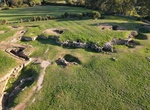
Explore The Domus de Janas in Sardinia, Italy
This serial property is an ensemble of hypogean burials and necropolises located in Sardinia, created between the 5th and 3rd millennia BCE. These sites reflect the daily life and funerary practices of prehistoric Sardinian communities. The domus de janas, locally known as “fairy houses,” are rock-cut tombs that reflect the funerary practices, spiritual ... -
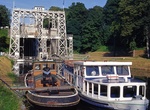
See The Four Lifts on the Canal du Centre, Belgium (UNESCO site)
The lifts on the old Canal du Centre are a series of four hydraulic boat lifts near the town of La Louvière in the Sillon industriel of Wallonia, classified both asWallonia's Major Heritage and as a World Heritage Site (province of Hainaut). Along a particular 7 km stretch of the Canal du Centre, which connects the river basins of the Meuse and the Scheldt, the... -
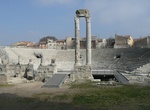
Visit The Gallo-Roman Theatre, Arles, France (UNESCO site)
The Gallo-Roman Theatre in Arles, France, was classified a UNESCO World Heritage Site, as part of the Arles, Roman and Romanesque Monuments group in 1981. -
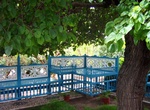
Visit The Garden of Ridván (Akka), Acre, Israel
The Garden of Ridván (lit. garden of paradise) is a Bahá'í holy place situated just outside Acre within modern Israel. Originally known as the 'garden of Na‘mayn', it was rented by `Abdu'l-Bahá for Bahá'u'lláh where he enjoyed spending the later part of his life, after years in a desolate prison cell. Although it shares ... -
Explore The Gedeo Cultural Landscape, Ethiopia (UNESCO site)
The property lies along the eastern edge of the Main Ethiopian Rift, on the steep escarpments of the Ethiopian highlands. An area of agroforestry, it utilizes multilayer cultivation with large trees sheltering indigenous enset, the main food crop, under which grow coffee and other shrubs. The area is densely populated by the Gedeo people whose traditional knowledge su... -
Visit The Great Place at Mqhekezweni, South Africa
Mqhekezweni is a very significant early great place of the Abathembu nation under King Dalindyebo, it was the home of the regent King Jongintaba Mtirara who took responsibility in grooming the young Nelson Mandela after the death of his father. Nelson Mandela's mother took him to the "Great Place" palace at Mqhekezweni, where he was entrusted to the guardianship of t... -
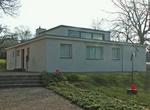
See The “Haus am Horn” in Weimar, Germany (UNESCO site)
The Haus am Horn was built for the Weimar Bauhaus's exhibition of July through September 1923. It was designed by Georg Muche, a painter and a teacher at the Bauhaus. Other Bauhaus instructors, such as Adolf Meyer and Walter Gropius, assisted with the technical aspects of the house's design. Gropius stated that the goal of the house's construction was "the greatest c... -
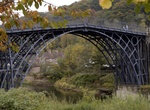
Visit The Iron Bridge (Shropshire), England
The Iron Bridge is a bridge that crosses the River Severn in Shropshire, England. Opened in 1781, it was the first major bridge in the world to be made of cast iron, and was greatly celebrated after construction owing to its use of the new material. In 1934 it was designated a Scheduled Ancient Monument and closed to vehicular traffic. Tolls for pedestrians were colle... -
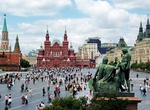
Visit The Kremlin and Red Square, Moscow, Russia (UNESCO site)
The Moscow Kremlin, sometimes referred to as simply The Kremlin, is a historic fortified complex at the heart of Moscow, overlooking the Moskva River (to the south), Saint Basil's Cathedral and Red Square (to the east) and the Alexander Garden (to the west). It is the best known of kremlins (Russian citadels) and includes four palaces, four cathedrals and the enclosin... -
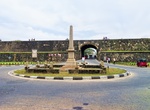
Visit The Main Gate to Galle Fort, Galle, Sri Lanka
The Main Gate, sometimes called the British Gate, is situated directly to the south of the Galle International Cricket Stadium and is heavily fortified, flanked by the Star, Moon and Sun Bastions. -
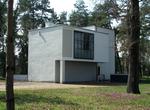
See The Masters’ Houses in Dessau, Germany (UNESCO site)
Even before the The Masters' Houses and the Bauhaus building itself were included on the UNESCO World Heritage List because of their unique cultural heritage there had been a world wide interest in the buildings designed by Walter Gropius. Now the restoration and rebuilding of the historical buildings has been completed it is possible once again to get a complete i... -
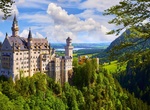
Visit The Palaces of King Ludwig II of Bavaria, Germany (UNESCO Sites)
This serial property consists of four grand palace complexes in Bavaria’s alpine region, built under King Ludwig II between 1864 and 1886. Designed as personal retreats and imaginative escapes, they reflect the romantic and eclectic spirit of the era. Drawing inspiration from the Wartburg Castle, Versailles, German fairy tales, and Wagner’s operas, the pal... -
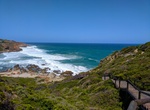
Visit The Pleistocene Occupation Sites of South Africa, (UNESCO sites)
This serial property contributes to the understanding of the origin of behaviourally modern humans, their cognitive abilities and cultures, and the climatic transitions that they survived. It is composed of three dispersed archaeological sites, Diepkloof Rock Shelter, Pinnacle Point Site Complex, and Sibhudu Cave, located in the Western Cape and KwaZulu-Natal province... -
Visit The Rotunda (University of Virginia), Charlottesville, Virginia (UNESCO site)
The Rotunda is a building located on The Lawn on the original grounds of the University of Virginia. It was designed by Thomas Jefferson to represent the "authority of nature and power of reason" and was inspired by the Pantheon in Rome. Construction began in 1822 and was completed shortly after Jefferson's death in 1826. The grounds of the new university were unique ... -
Visit The Ruins of the Desert Cities in the Negev Desert, Israel (UNESCO site)
Incense Route – Desert Cities in the Negev is a World Heritage-designated area near the end of the Incense Route in the Negev, southern Israel, which connected Arabia to the Mediterranean in the Hellenistic-Roman period, proclaimed as being of outstanding universal value by UNESCO in 2005. The trade led to the development of ancient towns, forts and caravanserai...