Give us feedback!
Our philosophy is simple. We want to encourage you to dream. BIG! Then we help you plan your trip, get the most out of it while you're traveling and help you share your experience with friends.
Join Now It's FREE
Related Categories
Dreams Still To Do
Checked-Off Dreams
Dreams Still To Do
Checked-Off Dreams
Advertisement
Explore UNESCO Sites
-
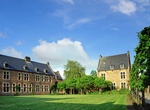
See Flemish Béguinages, Belgium (UNESCO site)
A béguinage (French) or begijnhof (Dutch) is a collection of small buildings used by Beguines. These were various lay sisterhoods of the Roman Catholic Church, founded in the 13th century in the Low Countries, comprising religious women who sought to serve God without retiring from the world. -
Visit Florence, Italy (UNESCO sites)
Florence, Italy is the capital of the Italian region of Tuscany. Adjacent to the River Arno, Florence has a rich history of art and architecture. Established in 80BC by the Romans, the city was an important cog in the wheel of European trade in the middle ages as well as during the Renaissance (considered the birthplace of the cultural movement) and one of the richest... -
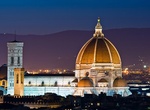
See Florence Cathedral, Italy (UNESCO site)
The Basilica di Santa Maria del Fiore is the cathedral church of Florence, Italy, begun in 1296 in the Gothic style to the design of Arnolfo di Cambio and completed structurally in 1436 with the dome engineered by Filippo Brunelleschi. The exterior of the basilica is faced with polychrome marble panels in various shades of green and pink bordered by white and has an e... -
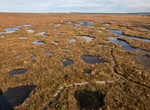
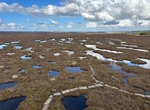
Explore Flow Country, Scotland (UNESCO sites)
The Flow Country is a vast area of bog peatland in Caithness and Sutherland, northern Scotland. It is the largest blanket bog in Europe, and covers about 4,000 km2 (1,500 sq mi). It is an area of deep peat, dotted with bog pools and a very important habitat for wildlife, as well as climate change mitigation. As peat is largely made up of the remains of plants, which a... -
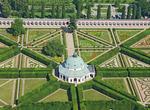
Visit Flower Garden & Kroměříž Palace, Czechia (UNESCO site)
The Kroměříž Palace in Kroměříž, Czech Republic, used to be the principal residence of the bishops and (since 1777) archbishops of Olomouc. The first residence on the site was founded by bishop Stanislas Thurzo in 1497. The building was in a Late Gothic style, with a modicum of Renaissance detail. During the Thirty Years' War, the castle was sacked by th... -
See Font de Gaume Cave, Vézère Valley, France (UNESCO site)
Font-de-Gaume is a cave near Les Eyzies-de-Tayac-Sireuil in the Dordogne départment of south-west France. The cave contains prehistoric polychrome cave paintings and engravings. The paintings were discovered by Denis Peyrony, a local schoolmaster, on 12 September 1901. The cave had been known to the general public before this, but the significance of the painti... -
Visit Fontevraud Abbey, Loire Valley, France
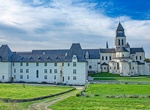
The Royal Abbey of Our Lady of Fontevraud or Fontevrault (in French:abbaye de Fontevraud) was a monastery in the village of Fontevraud-l'Abbaye, near Chinon, in the former French Duchy of Anjou. It was founded in 1101 by the itinerant preacher Robert of Arbrissel. The foundation flourished and became the centre of a new monastic Order, the Order of Fontevraud. This or... -
See Forbidden City, Beijing, China (UNESCO site)
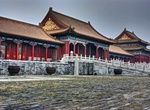
The Forbidden City was the Chinese imperial palace from the Ming Dynasty to the end of the Qing Dynasty. It is located in the middle of Beijing, China, and now houses the Palace Museum. For almost five hundred years, it served as the home of emperors and their households, as well as the ceremonial and political center of Chinese government. Built in 1406 to 1420, the ... -
Visit Forest Research Institute Malaysia (FRIM), Kepong, Selangor, Malaysia
The Forest Research Institute Malaysia (FRIM; Malay: Institut Penyelidikan Perhutanan Malaysia) is a statutory agency of the Government of Malaysia, under the Natural Resources and Environmental Sustainability (NRES). It is a UNESCO World Heritage Site that promotes sustainable management and optimal use of forest resources in Malaysia by generating knowledge and tech... -
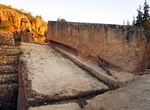
See Forgotten Stone (Third Monolith), Baalbek (Heliopolis), Lebanon
The Forgotten Stone, also called the Third Monolith, was discovered in the same quarry in 2014 by archaeologists from the German Archaeological Institute. The Third Monolith is located just beside the Stone of the Pregnant Woman Its weight is estimated at around 1500 tonnes (1650 Tons), making it the largest stone ever quarried. It is 19.6 metres (... -
Visit Former M-13 Prison Site, Kampong Chhnang, Cambodia
M-13 is and located in a rural area in central Kampong Chhnang province. It one of the most important prisons of the early Khmer Rouge, where its cadres “invented and tested various methods of interrogation, torture and killing”, functioning from July 1971 to April 1975. Today it's only a patch of derelict land. It was added to UNESCO’s World Heritag... -
Visit Forsinard Flows National Nature Reserve, Scotland
Forsinard Flows is a national nature reserve (NNR) covering much of the area surrounding Forsinard in the Highland council area of Scotland. It lies at the heart of the Flow Country, a large, rolling expanse of peatland and wetland area of Caithness and Sutherland that makes up almost 5% of the world's blanket bog. The reserve is managed by the Royal Society for the P... -
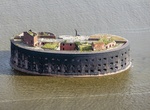
Visit Fort Alexander (Saint Petersburg), Russia (UNESCO site)
Fort Alexander, also Fort Alexander I, or Plague Fort is a naval fortress on an artificial island in the Gulf of Finland near St. Petersburg and Kronstadt. From 1899 to 1917, the fort housed a research laboratory on plague and other bacterial diseases. Since the formation of Saint Petersburg in 1703, the waterways in the Gulf of Finland were of strategic importance fo... -
Visit Fortaleza do Monte, Macau (UNESCO site)
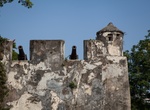
Fortaleza do Monte was built by the Jesuits, from 1617 to 1626, this was the Portuguese colony of Macau's (in the People's Republic of China) principal military defence structure and was crucial in successfully holding off the attempted Dutch invasion of Macau in 1622. It was built on top of Mount Hill, strategically located in the centre of the Macau Peninsula, watch... -
Visit Fortaleza Ozama, Santo Domingo, Dominican Republic (UNESCO site)
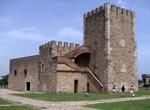
The Fortaleza Ozama (Ozama Fortress) is a sixteenth-century castle built by the Spanish at the entrance to Santo Domingo, Dominican Republic and overlooking the Ozama River. Named after this river, the castle, also referred to as "La Fortaleza" or "The Fortress", is the oldest formal military construction of European origin still standing in America. An impressive arc...