Give us feedback!
Our philosophy is simple. We want to encourage you to dream. BIG! Then we help you plan your trip, get the most out of it while you're traveling and help you share your experience with friends.
Join Now It's FREE
Related Categories
Dreams Still To Do
Checked-Off Dreams
Dreams Still To Do
Checked-Off Dreams
Advertisement
Explore UNESCO Sites
-
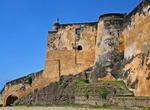
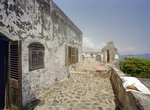
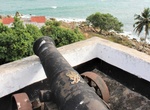
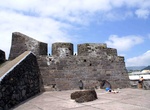
Visit Fort Jesus, Mombasa, Kenya (UNESCO site)
Fort Jesus (Forte Jesus de Mombaça) is a Portuguese fort built in 1593 by order of King Philip I of Portugal (King Philip II of Spain), then ruler of the joint Portuguese and Spanish Kingdoms, located on Mombasa Island to guard the Old Port of Mombasa, Kenya. It was built in the shape of a man (viewed from the air), and was given the name of Jesus. In 2011, the... -
See Fort Lijdzaamheid ('Patience'), Apam, Ghana (UNESCO site)
Fort Lijdzaamheid ('Patience') is a Dutch-built fort located in the township of Apam, in the Central Region of Ghana. Commenced as a stone trading lodge in 1697, the lodge was later fortified to secure the Dutch state of Acorn, which was tenuously held between the two British-held territories of Fante & Agona in the modern-day Central Region of Ghana. By 1721, the... -
See Fort Metal Cross, Ghana (UNESCO site)
Dixcove is a coastal town and the site of Fort Metal Cross, an English-built fort which was completed in 1698, which dominates the fishing harbour and town from a bluff located on the eastern side of the town. -
Visit Fort of Negrito, Terceira Island, Azores Islands
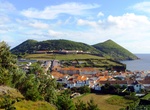
The Fort of Negrito (Portuguese:Forte de Negrito) is a 16th century maritime fort situated in the civil parish of São Mateus da Calheta, in the municipality of Angra do Heroísmo on the island of Terceira, Azores, Portugal. The fort was constructed in 1581, to support the defense of the island from an eminent Spanish invasion, brought on by the succession... -
Visit Fort of San José, Campeche, Mexico
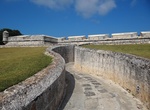
San José fort protected the Campeche from two nearby hills on each side, the forts of San José el Alto (built in 1762) and San Miguel. The fort gave long-range artillery coverage and served also as look-outs. They were built before the walls of the city. The fort of San José houses a collection of boats and weapons of the period. -
Visit Fort of San Miguel, Campeche, Mexico
The Fort of San Miguel was built to defend the town against the attack of pirates during the 17th and 18th centuries. The fort gave long-range artillery coverage and served also as look-outs. They were built before the walls of the city. The fort of San Miguel is used as a museum and houses a collection of pre-Hispanic items. -
Visit Fort of São João (São Mateus da Calheta), Terceira Island, Azores Islands
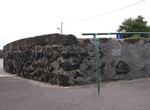
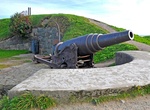
Fort of São João (Portuguese:Forte de São João), also known as Fort of Biscoitinho (for the lava rock formations along its coastal frontier), is a medieval fort, in the civil parish of São Mateus da Calheta, in the municipality of Angra do Heroísmo, on the Portuguese archipelago of the Azores. The redoubt was not identified in... -
Visit Fortresses Walls of Cartagena de Indias, Cartagena, Colombia (UNESCO site)
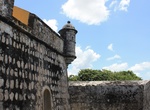
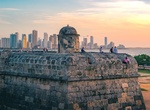
Of the twenty fortresses comprising the walls in the district of Getsemaní, today 16 are still standing, preserved in good condition. In 1586, was commissioned to the most famous military engineer of the Crown of Spain in that time, the Italian Battista Antonelli, the fortification of the city. The works of the project finally ended in the 17th century; Cartage... -
Visit Fortress of São João Baptista (Angra do Heroísmo), Terceira Island, Azores Islands
The Fortress of São João Baptista (Portuguese:Forte de São João Baptista), also known as theFort of São FilipeorFort of Monte Brasilis a historic fortress and defensive emplacement, located in the civil parish of Sé, municipality of Angra do Heroísmo in the Portuguese island of Terceira, archipelago of the Azores. A def... -
See Fortress of Suomenlinna, Helsinki, Finland (UNESCO site)
Suomenlinna, until 1918 Viapori (Finnish), or Sveaborg (Swedish), is an inhabited sea fortress built on six islands (Kustaanmiekka, Susisaari, Iso-Mustasaari, Pikku-Mustasaari, Länsi-Mustasaari and Långören), and which now forms part of the city of Helsinki, the capital of Finland. Suomenlinna is a UNESCO World Heritage site and popular with both touri... -
Visit Fort San Lorenzo, Colón, Panama (UNESCO Site)
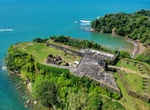
Chagres, once the chief Atlantic port on the isthmus of Panama, is now an abandoned village at the historical site of Fort San Lorenzo (Spanish:Fuerte de San Lorenzo). The fort's ruins and the village site are located about 8 miles (13 km) west of Colón, on a promontory overlooking the mouth of the Chagres River. In 1502, during his fourth and final voyage, Chr... -
See Fort San Sebastian, Shama, Ghana (UNESCO site)
Fort San Sebastian is a fort in Shama, Ghana. It was built by the Portuguese as a trading post in 1523 and captured by the Dutch West India Company in 1642. The first black European university professor, Anton Wilhelm Amo, lies interred in the fort's graveyard. The fort was ceded with the entire Dutch Gold Coast to Britain in 1872. -
See Fort Santo Antonio, Axim, Ghana (UNESCO site)
Fort Santo Antonio was a fort built by the Portuguese in 1515 near the town of Axim, in what is currently the West African country of Ghana. In 1642, the Dutch captured the fort and subsequently made it part of the Dutch Gold Coast. The Dutch expanded the fort considerably before they turned it over, with the rest of their colony, to the British in 1872. The fort is n... -
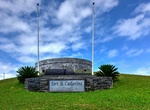
Visit Fort St. Catherine, St. George's Island, Bermuda
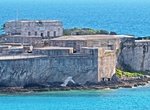
Fort St. Catherine, orFort St. Catherine's(as it is usually referred to), is a coastal artillery fort at the North-East tip of St. George's Island, Bermuda. Successively redeveloped, the fort was used first by Bermudian Militia and then by regular Royal Artillery units from 1612 into the 20th century. Today it houses a museum. The first fort was built on the site from... -
Visit Fort Victoria, St. George's Island, Bermuda
Fort Victoria is a disused British Army fort, built to house coastal artillery atop Retreat Hill at the North-East of St. George's Island, in the British colony of Bermuda. The fort shares its hilltop location with Fort Albert, and the pair were named after Her Majesty Queen Victoria and her husband, Prince Albert. Both forts were built in 1842, on the suggestion of C...