Give us feedback!
Our philosophy is simple. We want to encourage you to dream. BIG! Then we help you plan your trip, get the most out of it while you're traveling and help you share your experience with friends.
Join Now It's FREE
Related Categories
Dreams Still To Do
Checked-Off Dreams
Dreams Still To Do
Checked-Off Dreams
Advertisement
Explore United States Fish and Wildlife Service (USFWS)
-
Birding at Agassiz National Wildlife Refuge, Minnesota
Agassiz National Wildlife Refuge is located in northwest Minnesota. Packs of wolves, moose, waterfowl, and 294 species of birds make this refuge a wildlife wonderland. The refuge, originally named Mud Lake Migratory Waterfowl Refuge, was established in 1937 primarily for waterfowl production and maintenance. Located in eastern Marshall County, the contiguous 61,500 ac... -
Explore Alaska Peninsula National Wildlife Refuge
The Alaska Peninsula National Wildlife Refuge is a United States National Wildlife Refuge in southwestern Alaska whose use is regulated as an ecological-protection measure. It stretches along the southern coast of the Alaska Peninsula, between the Becharof National Wildlife Refuge on its east and the end of the peninsula at False Pass in the west. In between, however,... -
Explore Alligator River National Wildlife Refuge, North Carolina
The Alligator River National Wildlife Refuge is a 152,000-acre (620 km2) National Wildlife Refuge located in eastern North Carolina along the Atlantic Coast. It was established on March 14, 1984, to preserve and protect a unique wetland habitat type—the pocosin—and its associated wildlife species. The Refuge attracts visitors worldwide for its red wolf how... -
Birding at Anahuac National Wildlife Refuge, Texas
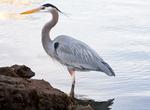
The Anahuac National Wildlife Refuge is a wildlife conservation area along the coast of Texas, west of the town of High Island, Texas. It borders East Bay, part of the Galveston Bay complex, behind Bolivar Peninsula at the Gulf of Mexico. Birdwatchers find the refuge an excellent place to observe neotropical migrants in the spring and the fall. Other species sought by... -
Birding at Aransas National Wildlife Refuge, Texas
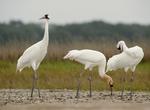
Aransas National Wildlife Refuge is a 114,657 acre protected area situated on the southwest side of San Antonio Bay along the Gulf Coast of Texas. Bird life includes ducks, herons, egrets, ibises, Roseate Spoonbills, and the endangered Whooping Crane, whose population has recovered significantly since the 1940s. Other fauna include American Alligators, Collared Pecca... -
Explore Arctic National Wildlife Refuge, Alaska
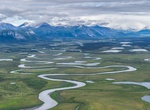
The Arctic National Wildlife Refuge (ANWR or Arctic Refuge) is one of the world's most remote natural areas. It's a national wildlife refuge in northeastern Alaska, United States that consists of 19,286,722 acres in the Alaska North Slope region. It is the largest National Wildlife Refuge in the country, slightly larger than the Yukon Delta National Wildlife Refuge. T... -
Explore Aroostook National Wildlife Refuge, Maine
Aroostook National Wildlife Refuge is located on part of the former Loring Air Force Base, in Aroostook County, Maine. It was established in 1998, when 4,700 acres (19 km2) were transferred from the United States Air Force to the United States Fish and Wildlife Service. The refuge also administers some 2,400 acres (970 ha) of wetland conservation easements throughout ... -
Explore Ash Meadows National Wildlife Refuge, Nevada
The Ash Meadows National Wildlife Refuge is a protected wildlife refuge, administered by the U.S. Fish and Wildlife Service, located 90 mi (140 km) west-northwest of Las Vegas, Nevada and 9 miles from Death Valley National Park. This 23,000-acre (9,300 ha) refuge is part of the larger Desert National Wildlife Refuge Complex, which also includes the Desert National Wil... -
Birding at Attwater Prairie Chicken National Wildlife Refuge, Texas
Attwater Prairie Chicken National Wildlife Refuge is one of the largest remnants of coastal prairie habitat remaining in southeast Texas, United States and home to one of the last populations of the critically endangered Attwater's Prairie Chicken, a ground-dwelling grouse of the coastal prairie ecosystem. The 10,528 acre (43 km²) refuge, located in eastern Color... -
Birding at Bear River Migratory Bird Refuge, Utah
Bear River Migratory Bird Refuge is a 74,000-acre (299 km2) National Wildlife Refuge in Utah, established in 1927. The refuge hosts millions of migratory birds each year including species such as bald eagle and tundra swan. The refuge encompasses the Bear River and its delta where it flows into the northern part of the Great Salt Lake in eastern Box Elder County. It i... -
Birding at Bear Valley National Wildlife Refuge, Oregon
The Bear Valley National Wildlife Refuge is located in the southwestern part of Klamath County, Oregon, near the California border. Bald Eagles congregate by the hundreds in the Klamath Basin during the late winter months (January and February). Wintering eagles roost in nearby wooded areas, including a night roost on Bear Valley National Wildlife Refuge and feed on r... -
Explore Becharof National Wildlife Refuge, Alaska
Becharof National Wildlife Refuge is a National Wildlife Refuge in the Aleutian Range of the Alaska Peninsula of southwestern Alaska. Becharof National Wildlife Refuge, which covers an area of 1,200,000 acres (4,900 km2), was established in 1980 to conserve major brown bears, salmon, migratory birds, caribou, marine birds, and mammals and to comply with treaty obligat... -
Explore Big Oaks National Wildlife Refuge, Indiana
Big Oaks National Wildlife Refuge is a 50,000-acre (202 km2) nature preserve in southeast Indiana near Madison, Indiana. The refuge was formed in 2000 after a 1989 order to gradually close the Jefferson Proving Ground, a World War II era munitions testing facility, which was completed by 1995. The refuge is located north of the historic firing line and surrounds a 1,... -
Visit Bill Williams River National Wildlife Refuge, Arizona
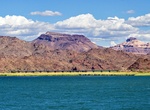
The Bill Williams River National Wildlife Refuge protects the lower course of the Bill Williams River, to its mouth at Lake Havasu reservoir, in western Arizona. It is located within eastern La Paz and Mohave Counties, in the Lower Colorado River Valley region. The federal wildlife refuge is managed by the United States Fish and Wildlife Service. Recreation activities... -
Birding at Bitter Creek National Wildlife Refuge, California
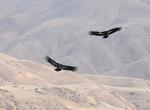
The Bitter Creek National Wildlife Refuge is located in the foothills of the southwestern San Joaquin Valley in California. Bitter Creek NWR was established to provide safe roosting and foraging habitat for use by California condors. The refuge is one of four units of the Hopper Mountain National Wildlife Refuge Complex for California condors. Elevations on the Refuge...