Give us feedback!
Our philosophy is simple. We want to encourage you to dream. BIG! Then we help you plan your trip, get the most out of it while you're traveling and help you share your experience with friends.
Join Now It's FREE
Related Categories
Dreams Still To Do
Checked-Off Dreams
Dreams Still To Do
Checked-Off Dreams
Advertisement
Explore United States Fish and Wildlife Service (USFWS)
-
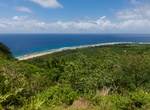
Explore Guam National Wildlife Refuge (Ritidian Point)
The Guam National Wildlife Refuge protects Ritidian Point and unused military land in the United States territory of Guam. The focus of much of the efforts involves the suppression of invasive exotics to protect endemic species. The reserve consists of eight mostly non-contiguous units. Ritidian Point is at the far northern point of Guam and is the only unit open to t... -
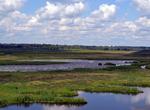
Explore Hackmatack National Wildlife Refuge, Illinois & Wisconsin
The Hackmatack National Wildlife Refuge is a United States national wildlife refuge that includes noncontiguous properties, especially tallgrass prairie patches, wetland properties, and oak savanna parcels, located in the northwestern region of the Chicago metropolitan area and the southern part of the Milwaukee area. The Hackmatack NWR was officially established when... -
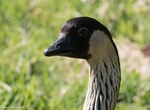
Birding at Hakalau Forest National Wildlife Refuge, Big Island, Hawaii
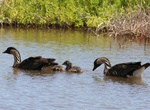
Some of the best birding in Hawaii can be found at Hakalau Forest National Wildlife Refuge, a protected area on the Big Island of Hawaii. Eight of the 14 native bird species occurring at Hakalau are endangered. Thirteen migratory bird species and 20 introduced species, including eight game birds, as well as the endangered ʻopeʻapeʻa (Hawaiian hoary bat, Lasiurus ... -
Explore Hanford Reach National Monument, Washington
The Hanford Reach National Monument is a national monument in the U.S. State of Washington. It was created in 2000, mostly from the former security buffer surrounding the Hanford Nuclear Reservation (Hanford Site). The area has been untouched by development or agriculture since 1943. The monument is named after the Hanford Reach, the last non-tidal, free-flowing secti... -
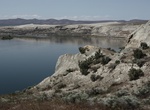
Explore Hart Mountain National Antelope Refuge, Oregon
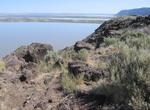
Hart Mountain National Antelope Refuge is a National Wildlife Refuge on Hart Mountain in southeastern Oregon, which protects more than 422 square miles (1,090 km2) and more than 300 species of wildlife, including pronghorn, bighorn sheep, mule deer, sage grouse, and redband trout. The refuge, created in 1936 as a range for remnant herds of pronghorn, spans habitats ra... -
Explore Havasu National Wildlife Refuge (Topock Gorge), Arizona & California
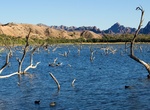
Havasu National Wildlife Refuge is a U.S. National Wildlife Refuge on the lower Colorado River in Arizona and California. It preserves habitat for desert bighorn sheep to the endangered southwestern willow flycatcher, birds and other animals. The refuge protects 30 river miles - 300 miles (480 km) of shoreline - from Needles, California, to Lake Havasu City, Arizona. ... -
Birding at Hopper Mountain National Wildlife Refuge, California
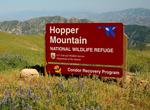
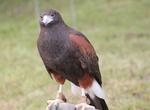
Hopper Mountain National Wildlife Refuge is located in Ventura County, in southern California. It is bordered by the Los Padres National Forest and the Sespe Condor Sanctuary to the north. The 2,471-acre (10.00 km2) refuge was established in 1974 to protect the endangered California condor, its habitat, and other wildlife resources. The refuge is in rugged, mountainou... -
Birding at Horicon National Wildlife Refuge, Wisconsin
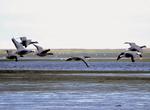
Horicon Marsh is a marsh located in northern Dodge and southern Fond du Lac counties of Wisconsin. It is the site of both a national and state wildlife refuge. The extinct glacial lake is the largest freshwater cattail marsh in the United States. The refuges are known for their many species of birds, especially ducks, great blue herons, and Canada geese (which have be... -
Bird Watching Hulēʻia National Wildlife Refuge, Kauai, Hawaii
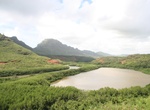
The Hulēʻia National Wildlife Refuge is a National Wildlife Refuge on the island of Kauaʻi in Hawaiʻi. It is adjacent to the Menehune Fish Pond, listed on the National Register of Historic Places, on the southeast side of the island. The Hulēʻia Refuge is approximately 241 acres (98 ha) of bottomlands and wooded slopes along the Hulēʻia River. It was established ... -
Explore Innoko National Wildlife Refuge, Alaska
The Innoko National Wildlife Refuge is a wildlife refuge in western Alaska in the United States. It consists of 3,850,481 acres of which 1,240,000 acres is designated a wilderness area. It is the fifth-largest National Wildlife Refuge in the United States. The refuge is administered from offices in McGrath. The wildlife refuge is in two parts. The northern part of the... -
Birding at Iroquois National Wildlife Refuge, New York
The Iroquois National Wildlife Refuge is a wildlife refuge located in Genesee and Orleans Counties in the western part of New York. The refuge comprises 10,828 acres (43.82 km2) consisting of several large pools (separated by dikes), swamps, meadows, fields, and woodlands. There are four overlooks, and four trails which are open year round. All areas of the refuge, ex... -
Birding at Izembek National Wildlife Refuge, Alaska
The Izembek National Wildlife Refuge is the smallest of the National Wildlife Refuges located in Alaska. It lies on the northwest (Bering Sea) coastal side of central Aleutians East Borough. Most of the refuge (300,000 acres) was designated as Wilderness in 1980 under the Alaska National Interest Lands Conservation Act. The refuge is administered from offices in Cold ... -
Explore James Campbell National Wildlife Refuge, Oahu, Hawaii
James Campbell National Wildlife Refuge is a National Wildlife Refuge on the island of Oʻahu, Hawaii. It was established in 1976, to permanently protect an ecologically-intact unit and to provide habitat for native and migratory fauna and native flora. It established critical habitat for Hawaii's four endangered waterbirds, theʻalae kea (Hawaiian coot, Fulica alai), k... -
Explore J. Clark Salyer National Wildlife Refuge, North Dakota
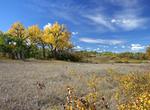
J. Clark Salyer National Wildlife Refuge is located along the Souris River in Bottineau and McHenry Counties in north-central North Dakota. The refuge of 58,693 acres (237.5 km2) extends from the Manitoba border southward for approximately 45 miles (72 km) in an area which was once Glacial Lake Souris. The area is old lake bottom and has extremely flat topography and ... -
Birding at J. N. "Ding" Darling National Wildlife Refuge, Florida
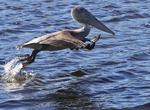
The J. N. "Ding" Darling National Wildlife Refuge is part of the United States National Wildlife Refuge System, located in southwestern Florida, on Sanibel Island in the Gulf of Mexico. It is named for the cartoonist Jay Norwood "Ding" Darling. The 5200 acre (21 km2) refuge was established in 1976, to protect one of the country's largest undeveloped mangrove ecosystem...