Give us feedback!
Our philosophy is simple. We want to encourage you to dream. BIG! Then we help you plan your trip, get the most out of it while you're traveling and help you share your experience with friends.
Join Now It's FREE
Related Categories
Dreams Still To Do
Checked-Off Dreams
Dreams Still To Do
Checked-Off Dreams
Advertisement
Explore United States Fish and Wildlife Service (USFWS)
-
Birding at Loxahatchee National Wildlife Refuge, Palm Beach County, Florida
The Arthur R. Marshall Loxahatchee National Wildlife Refuge includes the most northern remnant of the historic Everglades wetland ecosystem. It is home to American Alligator, the endangered Snail Kite, and as many as 257 species of birds. As such, it has been designated a 'gateway site' for the Great Florida Birding Trail. Located in Palm Beach County, Florida, west o... -
Birding at Malheur National Wildlife Refuge, Oregon
Malheur National Wildlife Refuge is located roughly 30 miles south of the town of Burns, Oregon. The refuge area is roughly T shaped with the southernmost base at Frenchglen, the left top at Malheur Lake and the right top at Harney Lake. Named for an early pioneer, the refuge is a hotspot for birding, fishing and hiking. Numerous wildlife occurs in the area, with as m... -
Explore Marianas Trench Marine National Monument, Northern Mariana Islands, Guam
The Marianas Trench Marine National Monument is a United States National Monument created by President George W. Bush by an presidential proclamation no. 8335 on January 6, 2009.. The monument includes no dry land area, but protects 95,216 square miles (60,938,240 acres) of submerged lands and waters in various places in the Mariana Archipelago. The lowest point on Ea... -
Birding at Mattamuskeet National Wildlife Refuge, North Carolina
The Mattamuskeet National Wildlife Refuge is a federally protected wildlife refuge located within Hyde County, North Carolina. Significant wintering populations of ducks, Canada geese, snow geese and tundra swans. Also, concentrations of bald eagles and other raptors, wading birds and shorebirds occur seasonally. Significant fishery resources including largemouth bass... -
Birding at McFaddin and Texas Point National Wildlife Refuges, Texas
The McFaddin and Texas Point National Wildlife Refuges are located in proximity in southern Jefferson County on the upper Texas coast at Sabine Pass. The refuges supply important feeding and resting habitat for migrating and wintering populations of waterfowl using the Central Flyway. Feeding flocks of Snow Geese have exceeded 70,000 birds at McFaddin. Dozens of migra... -
Birding at Merritt Island National Wildlife Refuge, Florida
Merritt Island National Wildlife Refuge is an important U.S. National Wildlife Refuge on the Atlantic coast of Florida. It is also a 'gateway site' for the Great Florida Birding Trail. Merritt Island National Wildlife Refuge is located due east of Titusville on Merritt Island in Brevard County, Florida, and occupies 140,000 acres (570 km2). To the north, it borders on... -
Birding at Minnesota Valley National Wildlife Refuge, Minnesota
The Minnesota Valley National Wildlife Refuge is a 14,000 acre (57 km2) National Wildlife Refuge in central Minnesota. There are eight refuge units strung along 34 miles (55 km) of the Minnesota River. Located just south of the city of Minneapolis, this is one of only four American national wildlife refuges in an urban area, and the largest. The list of the unites fro... -
Explore Moapa Valley National Wildlife Refuge, Nevada
The Moapa Valley National Wildlife Refuge (MVNWR) is a protected wildlife refuge administered by the U.S. Fish and Wildlife Service, located in the Warm Springs Natural Area in the Moapa Valley of Clark County, Nevada. The refuge is east of Death Valley and 60 miles (97 km) northwest of Las Vegas, Nevada. The refuge was established to provide and protect the habitat o... -
Explore Monomoy National Wildlife Refuge, Massachusetts
Monomoy Island National Wildlife Refuge is federal wildlife refuge located on Monomoy Island in Massachusetts. It was taken over by the US government just before World War II. The island was home to the Monomoy Island Gunnery Range until 1951 when the Monomoy National Wildlife Refuge was established. Its goal was to provide habitat for migratory birds. The size of the... -
Birding at Monte Vista National Wildlife Refuge, Colorado
Monte Vista National Wildlife Refuge is a United States National Wildlife Refuge located in southern Colorado. The refuge serves as a stopover point for cranes during their northward and southward migrations each year. The birds using the Refuge nest primarily in Montana, Idaho and Wyoming and spend winters in New Mexico, Arizona, and Mexico. However, some cranes that... -
Birding at Montezuma National Wildlife Refuge, New York
Montezuma National Wildlife Refuge encompassing part of the Montezuma Swamp at the north end of Cayuga Lake in New York state. A significant spot along the Atlantic Flyway, the Refuge provides crucial habitat for migratory waterfowl and other birds. The refuge lies between the cities of Rochester and Syracuse, New York (5 miles (8 km) east of Seneca Falls, and 10 mile... -
Bird Watch Muscatatuck National Wildlife Refuge, Seymour, Indiana
The Muscatatuck National Wildlife Refuge is a National Wildlife Refuge located 3 miles (5 kilometers) east of Seymour, Indiana, on U.S. Route 50. Established in 1966, it comprises 7,802 acres (3,157 hectares) in its main area of eastern Jackson and western Jennings counties, and an additional 78 acres (32 ha) in northwestern Monroe County, near Bloomington, Indiana, k... -
Explore National Key Deer Refuge, Florida
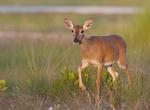
The National Key Deer Refuge is a 8,542-acre (34.57 km2) National Wildlife Refuge located on Big Pine Key and No Name Key in the Florida Keys in Monroe County, Florida. The refuge is home to the endangered Key Deer, a subspecies of the White-tailed deer that is endemic to the Florida Keys and has a current population of around 800 animals. 21 other threatened and enda... -
Explore Northeast Canyons and Seamounts Marine National Monument, USA
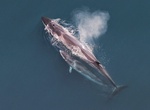
The Northeast Canyons and Seamounts Marine National Monument is a marine national monument of the United States off the coast of New England, on the edge of Georges Bank. It was created by President Barack Obama on September 15, 2016. It is the first U.S. national marine monument in the Atlantic Ocean. The area is home to rare and endangered species, including sperm w... -
Explore Nowitna National Wildlife Refuge, Alaska
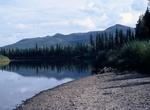
The heart of Nowitna National Wildlife Refuge is a lowland basin of forests and wetlands that forms the floodplain of the meandering Nowitna River. The Refuge's climate is typically marked by light precipitation, mild winds, long, hard winters and short, relatively warm, summers. The hills that circle the refuge lowlands are capped by alpine tundra. It takes a week in...