Give us feedback!
Our philosophy is simple. We want to encourage you to dream. BIG! Then we help you plan your trip, get the most out of it while you're traveling and help you share your experience with friends.
Join Now It's FREE
Related Categories
Dreams Still To Do
Checked-Off Dreams
Dreams Still To Do
Checked-Off Dreams
Advertisement
Explore United States Fish and Wildlife Service (USFWS)
-
Birding at Blackwater National Wildlife Refuge, Maryland
The Blackwater National Wildlife Refuge was established in 1933 as a waterfowl sanctuary for birds migrating along the critical migration highway called the Atlantic Flyway. Blackwater Refuge is a major feeding ground for migrating birds, most abundant being the Canadian goose. Swans, cranes, and more than 20 species of duck can be found in its waters. Also of note is... -
Birding at Bombay Hook National Wildlife Refuge, Delaware
The Bombay Hook National Wildlife Refuge is a 15,978 acre (64.66 km²) National Wildlife Refuge located along the eastern coast of Kent County, Delaware, on Delaware Bay. It was established on March 16, 1937 as a refuge and breeding ground for migratory and wintering waterfowl along the Atlantic Flyway. The Refuge was purchased from local land owners with federal ... -
Birding at Bosque del Apache National Wildlife Refuge, New Mexico
The Bosque del Apache National Wildlife Refuge is located in southern Socorro County, New Mexico. Some 377 species of birds have been observed on the refuge since 1940. The wetlands attract the huge flocks of wintering cranes and geese that are the refuge's most interesting feature. Many other species—notably waterfowl, shorebirds, and birds of prey—also w... -
Birding at Brazoria National Wildlife Refuge, Texas
The Brazoria National Wildlife Refuge is a 44,414-acre (179.74 km2) wildlife conservation area along the coast of Texas. In winter, more than 100,000 snow geese, Canada geese, pintail, northern shoveler, teal, gadwall, American wigeon, mottled ducks, and Sandhill cranes fill the numerous ponds and sloughs to capacity. In summer, birds which nest on the refuge include ... -
Explore Buenos Aires National Wildlife Refuge, Arizona
Buenos Aires National Wildlife Refuge provides 117,107 acres (473.92 km2) of habitat for threatened and endangered plants and animals. The semidesert grassland supports the reintroduction of masked bobwhite quail and pronghorns. Prescribed and natural fires play a major role in maintaining and restoring the sea of grass that once filled the Altar Valley. Riparian (wet... -
Explore Cabeza Prieta National Wildlife Refuge, Arizona
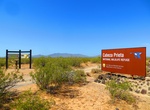
The Cabeza Prieta National Wildlife Refuge is located in the Sonoran Desert in southwestern Arizona in the United States. The refuge, established in 1939 to protect Desert Bighorn Sheep, is located along 56 miles (90 km) of the U.S.-Mexico border, and covers 860,010 acres (3,480 km²) — larger than the land area of the state of Rhode Island. Spanish for "dar... -
Birding at Cabo Rojo National Wildlife Refuge, Puerto Rico
Cabo Rojo National Wildlife Refuge is located on the southwestern side of Puerto Rico in the municipio of Cabo Rojo. It was established in 1974, when 587 acres of land were obtained by the U.S. Fish and Wildlife Service from the Central Intelligence Agency which had operated the Caribbean Bureau of the Foreign Broadcast Information Service there for a number of years.... -
Birding at Cache River National Wildlife Refuge, Arkansas
The Cache River National Wildlife Refuge is a 55,000 acre (223 km²) wildlife refuge in the state of Arkansas managed by the United States Fish and Wildlife Service. The refuge is one of the Ramsar wetlands of international importance under the Ramsar Convention signed in 1971. It is also the most important wintering area for ducks and the largest remaining tract ... -
Birding at Canaan Valley National Wildlife Refuge, West Virginia
The Canaan Valley National Wildlife Refuge in Tucker County, West Virginia is the 500th National Wildlife Refuge (NWR) to be established in the USA. The refuge preserves a moist valley with unique wetlands and uplands at a relatively high elevation in the Allegheny Mountains. Prominent game birds include woodcock, wild turkey and ruffed grouse. The area is also an imp... -
Birding at Cape May National Wildlife Refuge, New Jersey
The Cape May National Wildlife Refuge is a protected area on the Cape May Peninsula in Cape May County, New Jersey. It provides habitat for large numbers of migratory birds. The Cape May area is world-famous for the observation of migrating birds. Every spring and fall, thousands of migrating birds pass through the area. Subsequently, birders from all over the world h... -
Birding at Cape Romain National Wildlife Refuge, South Carolina
The Cape Romain National Wildlife Refuge is a 66,287 acre (267 km²) refuge in southeastern South Carolina. Established in 1932 as a haven for migratory birds, Cape Romain National Wildlife Refuge is additionally managed for the protection of threatened and endangered species such as the loggerhead sea turtle, wood stork, and piping plover. Every year loggerhead s... -
Explore Charles M. Russell National Wildlife Refuge, Montana
The Charles M. Russell National Wildlife Refuge is located in Montana. The largest population of Rocky Mountain bighorn sheep outside the Rocky Mountains exist in the refuge. Significant populations of American bison, beaver, bighorn sheep, cougars, coyotes, mule deer, prairie dogs, porcupines, pronghorn, Rocky Mountain elk, and white-tailed deer exist within the refu... -
Birding at Chase Lake National Wildlife Refuge, North Dakota
Chase Lake National Wildlife Refuge is located in North Dakota. The majority of the land area of the refuge has been designated as wilderness and is known as the Chase Lake Wilderness. The refuge is one of the oldest in the U.S., having been set aside in 1908. The refuge has more breeding pairs of white pelicans than any other protected area in the U.S. Home to as man... -
Explore Chincoteague National Wildlife Refuge, Virginia & Maryland
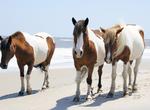
The Chincoteague National Wildlife Refuge is a 14,000-acre (57 km2) wildlife preserve operated by the U.S. Fish & Wildlife Service. Chincoteague is best known for its wild ponies who descended from horses presumed to have swum ashore from Spanish galleons that sank off the coast in the 15th and 16th centuries. The National Audubon Society named it a top 10 birding... -
Visit Cibola National Wildlife Refuge, Arizona & California
Cibola National Wildlife Refuge is a U.S. National Wildlife Refuge in the floodplain of the lower Colorado River between Arizona and California and surrounded by a fringe of desert ridges and washes. The refuge encompasses both the historic Colorado River channel as well as a channelized portion constructed in the late 1960s. Along with these main waterbodies, several...