Give us feedback!
Our philosophy is simple. We want to encourage you to dream. BIG! Then we help you plan your trip, get the most out of it while you're traveling and help you share your experience with friends.
Join Now It's FREE
Related Categories
Dreams Still To Do
Checked-Off Dreams
Dreams Still To Do
Checked-Off Dreams
Advertisement
Explore United States Fish and Wildlife Service (USFWS)
-
Birding at Tetlin National Wildlife Refuge, Alaska
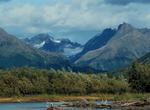
Tetlin National Wildlife Refuge is a dynamic landscape made up of forests, wetlands, tundra, lakes, mountains and glacial rivers bounded by the snowy peaks of the Alaska Range. This upper Tanana River valley has been called the "Tetlin Passage," because it serves as a major migratory route for birds traveling to and from Canada, the lower 48 and both Central and South... -
Birding at Three Arch Rocks National Wildlife Refuge, Oregon
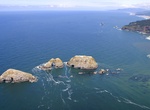
Three Arch Rocks National Wildlife Refuge is a U.S. National Wildlife Refuge off the northern Oregon Coast. It is located on the central coast of Tillamook County, in the northwestern part of Oregon. It is one of six National Wildlife Refuges within the Oregon Coast National Wildlife Refuge Complex and was the first National Wildlife Refuge west of the Mississippi Riv... -
Birding at Tijuana Slough National Wildlife Refuge, California
Tijuana Slough National Wildlife Refuge is located in the most southwestern corner of the contiguous United States and is a major bird sanctuary. It's also one of California's last fragments of coastal estuaries and is one of 27 National Estuarine Research Reserves in the country, managed jointly by the Service, California State Parks and the U.S. Navy. It is part of ... -
Explore Togiak National Wildlife Refuge, Alaska
Dominated by the Ahklun Mountains in the north and the cold waters of Bristol Bay to the south, Togiak National Wildlife Refuge confronts the traveler with a kaleidoscope of landscapes. The natural forces that have shaped this land range from the violent and powerful to the geologically patient. Earthquakes and volcanoes filled the former role, and their marks can sti... -
Explore Trempealeau National Wildlife Refuge, Wisconsin
Trempealeau National Wildlife Refuge is a 6,226-acre (25.20 km2) National Wildlife Refuge located along the Upper Mississippi River in Wisconsin. It is in part a wetland, and is a significant element of the Mississippi Flyway. Consisting of backwaters away from the Mississippi and Trempealeau River. It is part of the Driftless Area, a portion of North American which r... -
Birding at Tule Lake National Wildlife Refuge, Oregon
The Tule Lake National Wildlife Refuge is a wildlife preserve operated by the United States Fish and Wildlife Service located in the Klamath Basin in northern California near the Oregon border south of Klamath Falls, Oregon. Tule Lake NWR, established in 1928, consists of 39,116 acres (158 km2) of mostly open water and croplands. Approximately 17,000 acres (69 km2) ar... -
Explore UL Bend National Wildlife Refuge, Montana
UL Bend National Wildlife Refuge is a 56,048 acres protected area that is located in central Montana. This refuge is remote, requiring travel by gravel and dirt roads that can be difficult to navigate during inclement weather. A large population of bighorn sheep, elk, pronghorn and mule deer inhabit the refuge. Prairie dogs are abundant and are the primary food sourc... -
Birding at Upper Klamath National Wildlife Refuge, Oregon
The Upper Klamath National Wildlife Refuge is a wildlife refuge located in southwestern Klamath County on the shores of Upper Klamath Lake in Oregon. The refuge is only accessible by boat and boasts a year-round marked canoe trail. Hundreds of thousands of waterfowl visit the area during migration. Som of the birds include: American bald eagle, American white pelican... -
Explore Upper Mississippi River National Wildlife and Fish Refuge, Illinois, Iowa, Minnesota & Wisconsin
The Upper Mississippi River National Wildlife and Fish Refuge is a 240,000-acre (970 km2), 261-mile long (420 km) National Wildlife Refuge located in and along the Upper Mississippi River. It runs from Wabasha, Minnesota in the north to Rock Island, Illinois in the south. In its northern portion, it is in the Driftless Area, a region of North America that escaped bein... -
Birding at Valentine National Wildlife Refuge, Nebraska
Valentine National Wildlife Refuge is located in Nebraska and includes 19,131 acres (77.42 km2). 260 species of birds have been identified over the years on the refuge, and during migratory periods in the spring and fall, 150,000 birds pass through the protected area. White-tailed and Mule deer are commonly found and muskrat and beaver inhabit the wetlands and streams... -
Explore Vieques National Wildlife Refuge, Puerto Rico
The Vieques National Wildlife Refuge is a National Wildlife Refuge on the island of Vieques in the Puerto Rico archipelago. It is part of the Caribbean Islands National Wildlife Refuge Complex. The refuge contains several ecologically distinct habitats including; beaches, coastal lagoons, mangrove wetlands, and upland forested areas. Some of the best examples of sub-t... -
Birding at White River National Wildlife Refuge, Arkansas
The White River National Wildlife Refuge is a 160,000 acres wildlife refuge located in Arkansas. The refuge has the largest concentration of wintering mallard ducks in the Mississippi Flyway. It also has large concentrations of snow and Canada geese. The refuge is home to a population of black bears and four active bald eagle nests. It is believed by some to host one ... -
Explore Wichita Mountains Wildlife Refuge, Oklahoma
Wichita Mountains Wildlife Refuge, located in southwestern Oklahoma near Lawton, has protected unique wildlife habitats since 1901 and is the oldest managed wildlife facility in the United States Fish and Wildlife Service system. Measuring about 59,020 acres (238.8 km2), the Refuge hosts a great diversity of species: 806 plant species, 240 species of birds, 36 fish, a... -
Birding at William L. Finley National Wildlife Refuge, Oregon
William L. Finley National Wildlife Refuge is a natural area in the Willamette Valley in Oregon, United States. It was created to provide wintering habitat for Dusky Canada Geese. Unlike other Canada Geese, Dusky Canada Geese have limited summer and winter ranges. They nest on Alaska's Copper River Delta and winter almost exclusively in the Willamette Valley. Habitat ... -
Visit World War II Valor in the Pacific National Monuments Sites (9 sites)
The World War II Valor in the Pacific National Monument is a United States national monument honoring several aspects of American engagement in World War II. It encompasses 9 sites in 3 states totaling 6,310 acres (2,550 ha). In Hawaii: USS Arizona Memorial and Visitor Center USS Utah Memorial USS Oklahoma Memorial Six Chief Petty Officer Bungalows on Ford Island Moo...