Give us feedback!
Our philosophy is simple. We want to encourage you to dream. BIG! Then we help you plan your trip, get the most out of it while you're traveling and help you share your experience with friends.
Join Now It's FREE
Related Categories
Dreams Still To Do
Checked-Off Dreams
Dreams Still To Do
Checked-Off Dreams
Advertisement
Explore United States Fish and Wildlife Service (USFWS)
-
Birding at Sand Lake National Wildlife Refuge, South Dakota
Sand Lake National Wildlife Refuge is located in the northeastern part of South Dakota. Home to more than 266 species of birds, 40 mammal species, and a variety of fish, reptiles, and amphibians the refuge is a mosaic of wildlife and the wild places they need. Famed for its spectacular concentrations of wildlife, Sand Lake National Wildlife Refuge has received many aw... -
Explore Sandy Point National Wildlife Refuge, St. Croix, USVI
Sandy Point National Wildlife Refuge preserves habitat for threatened and endangered species, with particular emphasis on the Leatherback Sea Turtle (Dermochelys coriacea). Its two miles (3 km) of sandy beaches on the southwest corner of Saint Croix, U.S. Virgin Islands is an ideal nesting place for leatherbacks. The National Wildlife Refuge is open to the public for ... -
Birding at San Pablo Bay National Wildlife Refuge, California
San Pablo Bay National Wildlife Refuge is a 13,190-acre (53.4 km2) National Wildlife Refuge in California established in 1970. It extends along the northern shore of San Pablo Bay from the mouth of the Petaluma River to Tolay Creek, Sonoma Creek and ends at Mare Island. The refuge encompasses the largest remaining continuous patch of pickleweed-dominated tidal marsh i... -
Birding at Santa Ana National Wildlife Refuge, Texas
Santa Ana National Wildlife Refuge is a 2,088-acre (8.45 km2) refuge situated along the banks of the Rio Grande in Texas. 397 bird species have been documented within the parks borders. Many of those are migratory species on their way to and from Central and South America. A few species to be found here are Black-bellied and Fulvous Whistling Duck, Mottled Duck, Blue-... -
Explore Selawik National Wildlife Refuge, Alaska
Selawik National Wildlife Refuge in northwest Alaska in the Waring Mountains was officially established in 1980 with the passage of the Alaska National Interest Lands Conservation Act (ANILCA). The 3,400 square mile refuge is situated on the Arctic Circle to the east of Kotzebue Sound. It is bounded on the north by the Waring Mountains and Kobuk Valley National Park; ... -
Birding at Seney National Wildlife Refuge, Michigan
The Seney National Wildlife Refuge is a managed wetland in Michigan. While the refuge is oriented towards maintaining living space for bird life, North American river otters, beavers, moose, black bears and gray wolves also live in the refuge. 211 separate species of birds have been logged at Seney, including ducks, bald eagles, trumpeter swans, osprey, sandhill crane... -
Birding at Sevilleta National Wildlife Refuge, New Mexico
The Sevilleta National Wildlife Refuge located in the Chihuahuan desert 20 miles north of Socorro, New Mexico. The Rio Salado flows through the refuge. The endangered Southwestern Willow Flycatcher migrates to the refuge from Mexico and Central America from May to September. The area that is now the Sevilleta National Wildlife Refuge was inhabited by the Piro Pueblo p... -
Explore Sheldon National Wildlife Refuge, Nevada
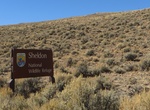
The Sheldon National Wildlife Refuge is a 57,304-acre national wildlife refuge located on the northern border of Nevada (a very small part extends northward into Oregon). The Sheldon Refuge is noted for its population of wild horses. It is managed by the United States Fish and Wildlife Service as the Nevada component of the Sheldon-Hart Mountain National Wildlife Refu... -
Bird Watch Sherburne National Wildlife Refuge, Sherburne County, Minnesota
Sherburne National Wildlife Refuge is a National Wildlife Refuge of the United States in Sherburne County, Minnesota. The 30,700-acre (124 km2) refuge protects mixed habitat types including oak savanna, Big Woods, and wetlands. The St. Francis River flows through the eastern side of the park. Over 230 species of birds, 58 species of mammals, and 25 species of reptiles... -
Birding at Squaw Creek National Wildlife Refuge, Missouri
Squaw Creek National Wildlife Refuge is located in northwestern Missouri and was established in 1935 by President Franklin D. Roosevelt as a refuge and breeding ground for migratory birds and other wildlife. The most dramatic moments at the refuge occur during the spring and fall migrations when hundreds of thousands of ducks and geese (particularly snow geese) on the... -
Birding at Stillwater National Wildlife Refuge, Nevada
Stillwater National Wildlife Refuge is located in the Lahontan Valley, near the community of Fallon, Nevada, sixty miles east of Reno. The Stillwater wetlands are well-known to birders, as this area has been designated a site of international importance by the Western Hemispheric Shorebird Reserve Network because of the hundreds of thousands of shorebirds, such as lon... -
Birding at St. Marks National Wildlife Refuge, Florida
St. Marks National Wildlife Refuge is one of the oldest wildlife refuges in the United States. Established in 1931 as a wintering ground for migratory birds, it encompasses 68,000 acres (280 km²) spread between Wakulla, Jefferson, and Taylor Counties in the state of Florida. The refuge includes several Gulf of Mexico coastal habitats, such as saltwater marshes, i... -
Explore Tennessee National Wildlife Refuge
Tennessee National Wildlife Refuge is a National Wildlife Refuge established in 1945 and located along the shores of the Tennessee River in West Tennessee where the empoundment of Kentucky Lake by the Tennessee Valley Authority has created a more-or-less permanent wetlands environment favored by many species of waterfowl. The entire refuge area is 51,359.46 acres (207... -
Birding at Tensas River National Wildlife Refuge, Louisiana
The Tensas River National Wildlife Refuge is located in the upper basin of the Tensas River in northeast Louisiana which was the last documented home of the ivory-billed woodpecker. Concentrations of ducks, geese, raptors, wading birds and shorebirds are present. Several rookeries are in the reserve. The refuge is home to one of the last concentrations of the threaten... -
Explore Ten Thousand Islands National Wildlife Refuge, Florida
The Ten Thousand Islands are a chain of islands and mangrove islets off the coast of southwest Florida, between Cape Romano (at the southern end of Marco Island) and the mouth of Lostman's River. Some of the islands are high spots on a drowned shoreline. Others were produced by mangroves growing on oyster bars. Despite the name, the islets in the chain only number in ...