Give us feedback!
Our philosophy is simple. We want to encourage you to dream. BIG! Then we help you plan your trip, get the most out of it while you're traveling and help you share your experience with friends.
Join Now It's FREE
Related Categories
Dreams Still To Do
Checked-Off Dreams
Dreams Still To Do
Checked-Off Dreams
Advertisement
Explore UNESCO Sites
-
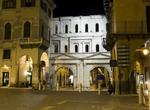
See Porta Borsari, Verona, Italy (UNESCO site)
Porta Borsari is an ancient Roman gate in Verona, northern Italy. It dates to the 1st century AD, though it was most likely built over a pre-existing gate from the 1st century BC. An inscription dating from emperor Gallienus' reign reports another reconstruction in 265 AD. The Via Postumia (which here became thedecumanus maximus) passed through the gate, which was the... -
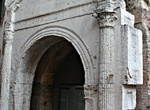
See Porta Leoni, Verona, Italy (UNESCO site)
Porta Leoni is an ancient Roman gate in Verona, Italy. The gate was built during the Roman Republic by P. Valerius, Q. Caecilius, Q. Servilius and P. Cornelius, and restructured in imperial times. It was connected to the road which led to Bologna and Aquileia. The original Roman name is unknown. During the Middle Ages it was calledPorta San Fermo, due to the nearby ch... -
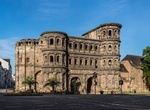
See Porta Nigra, Trier, Germany (UNESCO Site)
The Porta Nigra is a large Roman city gate in Trier, Germany. It is today the largest Roman city gate north of the Alps. It is designated as part of the Roman Monuments, Cathedral of St. Peter and Church of Our Lady in Trier UNESCO World Heritage Site. The name Porta Nigra originated in the Middle Ages due to the darkened colour of its stone; the original Roman name h... -
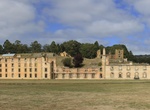
Visit Port Arthur, Tasmania, Australia (UNESCO site)
Port Arthur is a small town and former convict settlement on the Tasman Peninsula, in Tasmania, Australia. Port Arthur is one of Australia's most significant heritage areas and an open-air museum. The site forms part of the Australian Convict Sites, a World Heritage property consisting of 11 remnant penal sites originally built within the British Empire during the 18t... -
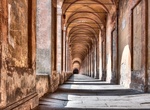
Visit Porticoes of Bologna, Italy (UNESCO Site)
The Porticoes of Bologna are an important cultural and architectural heritage of Bologna, Italy and represent a symbol of the city together with the numerous towers. No other city in the world has as many porticoes as Bologna: all together, they cover more than 38 kilometres (24 mi) only in the historic center, but can reach up to 53 kilometres (33 mi) if those outsid... -
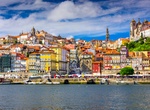
Visit Porto, Portugal (UNESCO site)
Porto (also known as Oporto), is the second largest city in Portugal and one of the major urban areas in the Iberian Peninsula. Located along the Douro river estuary in northern Portugal, Porto is one of the oldest European centres, and registered as a World Heritage Site by UNESCO in 1996. Its settlement dates back many centuries, when it was an outpost of the Roman ... -
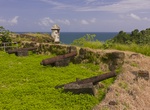
Visit Portobelo-San Lorenzo, Panama (UNESCO site)
Portobelo is a port city in Colón Province, Panama. It is located on the northern part of the Isthmus of Panama. Portobelo was founded in 1597 by Spanish explorer Francisco Velarde y Mercado. After Francis Drake died of dysentery in 1596 at sea, he was buried in a lead coffin near Portobelo Bay. From the 16th to the 18th centuries, it was an important silver-ex... -
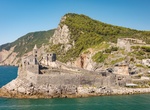
Visit Porto Venere (Portovenere), Italy
Porto Venere (Italian pronunciation: [ˈpɔrto ˈvɛːnere]; until 1991 Portovenere; Ligurian: Pòrtivene) is a town and comune (municipality) located on the Ligurian coast of Italy in the province of La Spezia. It comprises the three villages of Fezzano, Le Grazie and Porto Venere, and the three islands of Palmaria, Tino and Tinetto. In 1997 Porto Venere and the vil... -
Visit Port Royal Sites, Kingston, Jamaica (UNESCO sites)
Port Royal (Jamaican Patois: Puot Rayal) was a town located at the end of the Palisadoes, at the mouth of Kingston Harbour, in southeastern Jamaica. Founded in 1494 by the Spanish, it was once the largest and most prosperous city in the Caribbean, functioning as the centre of shipping and commerce in the Caribbean Sea by the latter half of the 17th century. It was des... -
Visit Portuguese Military Cemetery, Richebourg, France
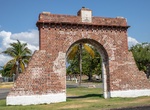
The Portuguese Military Cemetery in Richebourg, Pas-de-Calais, France, is the burial site of 1,831 casualties of the Portuguese Expeditionary Corps in World War I. It is the only Portuguese military cemetery in France. The cemetery was built between 1924 and 1928 and a great number of its dead were killed in the Battle of the Lys in April 1918. A total of 238 are unid... -
Snorkel Posidonia Seagrass Meadows, Ibiza, Spain
The sea around Illa des Penjats and in the straight ofEs Freushas been designated a UNESCO World Heritage Site on account of the Neptune Grass or Mediterranean tapeweed meadows (Posidonia oceanica) which can be found here. The clarity and purity of the waters surrounding the islands of Ibiza and Formentera derives largely from this vast meadow of seagrass and the fact... -
Visit Post of Italy (Del Carretto Bastion), Rhodes, Greece
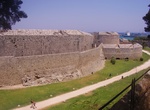
Post of Italy or Del Carretto Bastion is the place where the troops of Mehmed II breached the walls and were then repelled by the knights during the siege of 1481. Grand Master Fabrizio del Carretto had it armoured with a chemin de ronde to hold cannon emplacements. -
Visit Potaissa Roman Fort, Turda, Romania
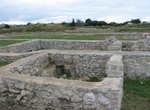
Potaissa (Patavissa) was a Dacian settlement, and during Roman rule a vicus (village), then a municipium and colony (on the territory of the present-day city of Turda, Cluj County), at the foot of the "Fortress Hill" on which the important Roman fort Potaissa was located . The archaeological site co... -
Visit Potala Palace, Lhasa, Tibet (UNESCO site)
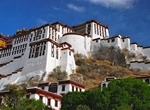
Construction of the Potala Palace complex, the Tibetan winter home of the Dalai Lamas, was begun in the 7th century AD. The Palace is an iconic symbol of Tibetan Buddhism and plays a key role in the administration of Tibet. Built on Red Mountain in the center of the Lhasa Valley (the highest elevation of any ancient palace), Potala Palace is the oldest building in a c... -
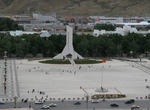
Visit Potala Palace Square, Lhasa, Tibet (UNESCO site)
Potala Palace Square is a large square in the center of Lhasa, Tibet Autonomous Region, China, located in the south side of the Potala Palace, formerly known as the Working People's Cultural Palace Square. In 1995, the Potala Palace Square was built on the basis of the original Tibetan Working People's Cultural Palace Square, and in August 1995, the Potala Palace Squa...