Give us feedback!
Our philosophy is simple. We want to encourage you to dream. BIG! Then we help you plan your trip, get the most out of it while you're traveling and help you share your experience with friends.
Join Now It's FREE
Related Categories
Dreams Still To Do
Checked-Off Dreams
Dreams Still To Do
Checked-Off Dreams
Advertisement
Explore UNESCO Sites
-
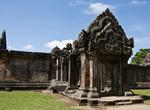
See Preah Vihear Temple, Cambodia (UNESCO site)
Preah Vihear Temple or Prasat Preah Vihear is a Hindu temple built during the reign of Khmer Empire, that is situated atop a 525-metre (1,722 ft) cliff in the Dângrêk Mountains, in the Preah Vihear province, Cambodia. In 1962, following a lengthy dispute between Thailand and Cambodia over ownership, a majority of the International Court of Justice (ICJ) in... -
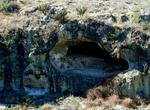
See Prehistoric Caves of Yagul and Mitla, Mexico (UNESCO site)
Yagual and Mitla are it the central valley of Oaxaca Mexico. These two locations are known for the pre-Hispanic archaeological sites and a series of pre-historic caves and rock shelters which have paintings and show human habitation for 80,000 years. Some of these shelters provide archaeological and rock-art evidence for the progress of nomadic hunter-gathers to incip... -
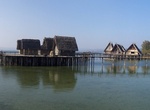
Visit Prehistoric Pile Dwellings around the Alps, (UNESCO Site)
Prehistoric pile dwellings around the Alps is a series of prehistoric pile-dwelling (or stilt house) settlements in and around the Alps built from around 5000 to 500 B.C. on the edges of lakes, rivers or wetlands. 111 sites, located in Austria (5 sites), France (11), Germany (18), Italy (19), Slovenia (2), and Switzerland (56), were added to UNESCO World Heritage Site... -
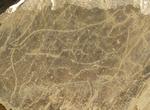
See Prehistoric Rock Art Sites in the Côa Valley, Portugal (UNESCO site)
The Côa Valley Paleolithic Art site is an open air sites of Paleolithic art in northeastern Portugal. In the late 1980s, the engravings were discovered in Vila Nova de Foz Côa. The site in situated in the valley of the Côa River, and comprises thousands of engraved drawings of horses, bovines and other animal, human and abstract figures, dated from 2... -
See Prehistoric Sites & Caves of the Vézère Valley, France (UNESCO site)
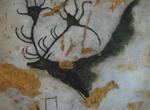
The Vézère Valley is famed for its cave systems, containing numerous cave paintings and hominid remains. UNESCO collectively designated these a World Heritage Site in 1979. Among the sites included is Lascaux. Lascaux is the setting of a complex of caves in southwestern France famous for its Paleolithic cave paintings. The original caves are located near... -
Visit Prehistoric Sites of the Khorramabad Valley, Iran (UNESCO Sites)
The prehistoric sites of the Khorramabad Valley include five caves and one rock shelter within a narrow ecological corridor rich in water, flora, and fauna. Human occupation dates back 63,000 years, with evidence from the Middle to Upper Palaeolithic periods. These sites reveal Mousterian and Baradostian cultures, offering insights into early human evolution and migra... -
Visit Prejmer Fortified Church, Prejmer, Romania (UNESCO Site)
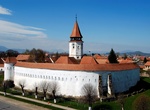
The Prejmer fortified church is a Lutheran fortified church in Prejmer (Tartlau), Brașov County, in the Transylvania region of Romania and the ethnographic area of the Burzenland. The church was founded by the Germanic Teutonic Knights, and then was eventually taken over by the Transylvanian Saxon community. Initially Roman Catholic, it became Lutheran following the R... -
See Primeval Beech Forests of the Carpathians, Slovakia & Ukraine (UNESCO site)
Primeval Beech Forests of the Carpathians is a transnational composite nature site that includes 10 separate massifs located along the 185 km (115 mi) long axis from the Rakhiv mountains and Chornohora ridge in Ukraine over the Poloniny Ridge (Slovakia) to the Vihorlat Mountains in Slovakia. The site covers a total area of 77,971.6 ha (192,672 acres), out of which onl... -
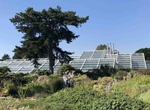
Visit Princess of Wales Conservatory, Kew Gardens, England
Kew's third major conservatory, the Princess of Wales Conservatory, designed by architect Gordon Wilson, was opened in 1987 by Diana, Princess of Walesin commemoration of her predecessor Augusta's associations with Kew. In 1989 the conservatory received the Europa Nostra award for conservation.The conservatory houses ten computer-controlled micro-climatic zones, with ... -
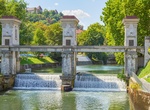
Stroll Promenade along the Embankments and Bridges of the Ljubljanica River, Slovenia (UNESCO Site)
The Ljubljanica has become a popular site for archaeologists and treasure hunters to dive for lost relics and artifacts. Locations in the river between Ljubljana and Vrhnika have offered up pieces of history from the Stone Age to the Renaissance, belonging to a variety of groups, from local ancient cultures to more well-known groups like the Romans and the Celts.[4]On... -
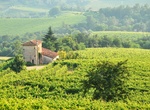
Wine Tasting in Prosecco Hills of Conegliano, Italy (UNESCO site)
Prosecco is an Italian wine controlled by DOC or DOCG. Under these wine laws, Prosecco can bespumante("sparkling wine"),frizzante("semi-sparkling wine"), ortranquillo("still wine"). It is made from Glera grapes, (formerly known also as Prosecco), but other authorised grape varieties may be included up to a maximum of 15%. Those varieties that can be included with Gler... -
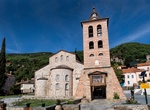
See Protaton, Karyes, Greece
Built in the middle of the 10th century CE [bell tower not added until 1534 CE], the Protaton—the seat of the ‘protos’ or head monk elected to lead the Athonite monastic community—is located in Karyes, the small town in the middle of Mount Athos that is the central meeting point for governance and commerce. The church is dedicated to the Dormit... -
Visit Provins, France (UNESCO site)
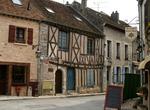
Provins is a commune in the Seine-et-Marne department in the Île-de-France region in north-central France. Provins, a town of medieval fairs, became a UNESCO World Heritage Site in 2001. Provins is well-known for its medieval fortifications, such as the Tour César (the Caesar Tower) and well-preserved city walls. The Saint Quiriace Collegiate Church is lo... -
Visit Prowse Point Military Cemetery, Ypres Salient, Belgium
Prowse Point Military Cemetery is a Commonwealth War Graves Commission (CWGC) burial ground for the dead of the First World War located in the Ypres Salient on the Western Front in Belgium. The cemetery grounds were assigned to the United Kingdom in perpetuity by King Albert I of Belgium in recognition of the sacrifices made by the British Empire in the defence and li... -
Explore Psiloritis Geopark, Crete
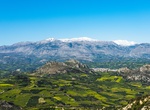
Psiloritis Natural Park is located in the island of Crete in southern Greece. Since 2001 the park is member of the European Geoparks Network and UNESCO Global Geoparks Network. It is a local authorities' initiative managed by the geopark's management committee under the AKOMM Psiloritis S.A.. The Natural History Museum of the University of Crete is the scientific coor...