Give us feedback!

Our philosophy is simple. We want to encourage you to dream. BIG! Then we help you plan your trip, get the most out of it while you're traveling and help you share your experience with friends.
Join Now It's FREE
Related Categories
Dreams Still To Do
Checked-Off Dreams
Dreams Still To Do
Checked-Off Dreams
Advertisement
Explore Eat & Drink Like a Local
-
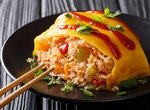
Eat Omurice
Omurice or omu-rice (オムライス,Omu-raisu) is an example ofyōshoku(a Western-influenced style of Japanese cuisine) consisting of an omelette made with fried rice and thin, fried scrambled eggs, usually topped with ketchup. It is a popular dish both commonly cooked at home and often found at western style diners in Japan. Children in particular enjoyomurice. It is often fea... -
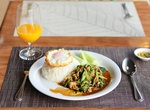
Eat at One Chun Restaurant, Phuket, Thailand
One Chun Restaurant, located in Phuket town, serves southern Thai dishes. Food is authentic, reasonably priced and loved by locals. -
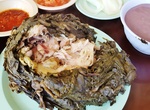
Eat Hawaiian Plate at Ono Hawaiian Foods, Honolulu, Hawaii
No-frills, family-owned eatery draws locals with a menu of traditional Hawaiian plates. -
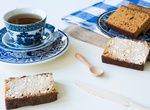
Eat Ontbijtkoek
Anontbijtkoekis a Dutch and Flemish spiced cake. Rye is its most important ingredient, coloring the cake light brown. It is often spiced with cloves, cinnamon, ginger, succade and nutmeg. Several parts of the Netherlands have their own local recipe, of which the most famous isoudewijvenkoek(old woman's cake), which is mostly eaten in the northern regions, and is flavo... -
Try Oporto Restaurant
Oporto is an Australian-based fast-food franchise with a Portuguese-theme. Oporto specialises in Portuguese style chicken. Oporto has more than 100 'eat in' or 'take-away' restaurants in Australia, New Zealand, the United States, and the United Kingdom, although a large majority of these are located in New South Wales, Australia. Oporto’s chilli sauce is a Portu... -
Eat at Organique Josper Bar, Tbilisi, Georgia
Organique Josper Bar is a place with organic food and decor. They're known for amazing charcoal-grilled burgers and steaks and also outstanding wines. -
Have Drinks at O'Riadas Bar , Kerry, Ireland
Local friendly crowd in a neighborhood Pub. -
Eat Oscypek Smoked Cheese
Oscypek or Oszczypek is a smoked cheese made of salted sheep milk exclusively in the Tatra Mountains region of Poland. Since 2007Oscypekis a protected trade name under the EU's Protected Designation of Origin geographical indication. A similar cheese is made in the Slovak Tatra Mountains under the name oštiepok. The cheeses differ in the ratio of their ingredie... -
Get Gelato at Otaleg, Rome, Italy
Ice Cream Shop -
Eat Ovos moles, Aveiro, Portugal
Ovos moles de Aveiro ("soft eggs from Aveiro", literally) is a local delicacy from Aveiro District, Portugal, made of egg yolks and sugar. This mixture is often put inside of small rice paper casings in nautical shapes, such as shells, or into communion wafers. In 2008, it was designated a product with Protected Geographical Indication by the European Union. -
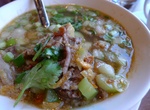
Eat Oxtail soup
Oxtail soup is made with beef tails. The use of the word "ox" in this context is a legacy of nomenclature; no specialized stock of beef animals are used and tails may come from bovines other than oxen. It is believed by some that oxtail soup was invented in Spitalfields in London in the seventeenth century by French Huguenot and Flemish immigrants, from the tails of a... -
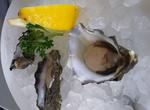
Eat Oyster's
The word oyster is used as a common name for a number of distinct groups of bivalve molluscs which live in marine or brackish habitats. The valves are highly calcified. Some kinds of oyster are commonly consumed, cooked or raw, by humans as a delicacy. Other kinds such as pearl oysters, generally not eaten by humans, are harvested for the pearl produced within the man... -
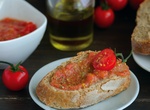
Eat Pa amb tomàquet
Pa amb tomàquetis a traditional food of Valencian, Aragonese, Balearic, Catalan and Murcian cuisines in Spain.Pa amb tomàquetis considered a staple of Catalan cuisine and identity. It consists of bread, which may or may not be toasted, with tomato rubbed over and seasoned with olive oil and salt. Sometimes, garlic is rubbed on the bread before rubbing in... -
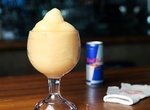
Drink Vodka Red Bull Slushie at Pacific Beach Shore Club, San Diego, California
Buzzy upstairs bungalow for revered fish tacos & pub grub with an action-sports decor & beach views. -
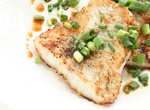
Eat Pacific Cod
These three groundfish species (only one is a true “cod”) are denizens of the deep ocean off Alaska’s coast. Pacific cod and sablefish will make appearances on restaurant menus, and are usually taken by commercial boats operating far offshore. Lincod—ferocious predators that are fun to catch—are a favorite target by anglers, often while p...