Give us feedback!

Our philosophy is simple. We want to encourage you to dream. BIG! Then we help you plan your trip, get the most out of it while you're traveling and help you share your experience with friends.
Join Now It's FREE

Related Categories
Dreams Still To Do
Checked-Off Dreams
Dreams Still To Do
Checked-Off Dreams
Advertisement
Explore Eats
-
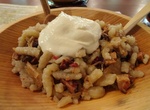
Eat Halušky
Halušky are a traditional variety of thick, soft noodles or dumplings cooked in the Central and Eastern European cuisines (Slovakia, Czech Republic, Poland, Serbia, Ukraine, Lithuania, Romania and Hungary). Halušky can refer to the dumplings themselves, or to the complete dish. The dumplings can be made from dough spread in a thin layer on a wooden cutti... -
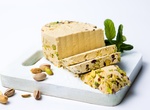
Eat Halva
Halva (also halvah, halwa, and other spellings) is any of various dense, sweet confections made in the West Asia, Central and South Asia and the United States. It is also served in the Balkans, the Caucasus, Eastern Europe, Malta, North Africa, the Horn of Africa, and in the Jewish diaspora. In some Indian cultures, the dish is known as a soup-based sweet. Identical s... -
Eat a Hamburger in Hamburg, Germany
A hamburger is a sandwich consisting of one or more cooked patties of ground meat (usually beef) usually placed inside a sliced hamburger bun. Hamburgers are often served with lettuce, bacon, tomato, onion, pickles, cheese and condiments such as mustard, mayonnaise, ketchup and relish. The term hamburger originally derives from Hamburg, Germany's second largest city, ... -
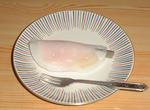
Eat Hanabiramochi
Hanabiramochi is a Japanese sweet (wagashi), usually eaten at the beginning of the year. Hanabiramochi are also served at the first tea ceremony of the new year. The name "hanabiramochi" literally means "flower petal mochi". The original form of Hanabiramochi is Hishihanabira, a dessert that was eaten by the Imperial family at special events coinciding with the beginn... -
Try Hāngi
Hāngi is a traditional New Zealand Māori method of cooking food using heated rocks buried in a pit oven still used for special occasions. To "lay a hāngi" or "put down a hāngi" involves digging a pit in the ground, heating stones in the pit with a large fire, placing baskets of food on top of the stones, and covering everything with earth for several hours before unco... -
Eat Hangikjöt
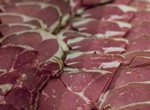
Hangikjöt ("hung meat") is a traditional festive food in Iceland, served at Christmas. This Icelandic smoked lamb, mutton, or horse meat is usually boiled and served either hot or cold in slices, traditionally with potatoes inbéchamel sauce and green peas, or in thin slices on bread such as flatkaka or rúgbrauð or Laufabrauð. It takes its na... -
Try Hangtown Fry
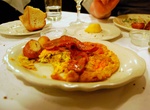
Hangtown fry is a type of omelette made famous during the California Gold Rush in the 1850s. The most common version includes bacon and oysters combined with eggs, and fried together. The dish was invented in Placerville, California, then known as Hangtown. According to most accounts, the dish was invented when a gold prospector struck it rich, headed to the Cary Hous... -
Eat Harðfiskur
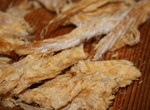
Harðfiskur, what's basically fish jerky, is wind-dried fish (often cod, haddock or seawolf), served with butter that is a traditional Icelandic food. It comes in various forms: as thin chips, feathery-soft strips, or brittle crunchy pieces. A word of caution about harðfiskur: this stuff is really fishy. -
Eat Har Gow
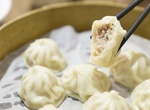
Har gow is a traditional Cantonese dumpling served in dim sum. The dumpling is sometimes called a shrimp bonnet for its pleated shape. This dish is often served together withsiumaai; when served in such a manner the two items are collectively referred to ashagaau-siumaai(Chinese: 蝦餃燒賣; pinyin:xiājiǎo shāomài; Cantonese Yale:hāgáau sīumáai). These ... -
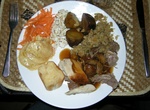
Try Hawaiian Plate
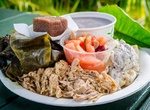
The plate lunch is a quintessentially Hawaiian meal, roughly analogous to Southern U.S. meat-and-threes. However, the pan-Asian influence on Hawaiian cuisine, and its roots in the Japanese bento, make the plate lunch unique to Hawaii. Standard plate lunches consist of two scoops of white rice, macaroni salad, and an entrée. A plate lunch with more than one entr... -
Try Hokey Pokey
Hokey pokey is a flavour of ice cream in Australia and New Zealand, consisting of plain vanilla ice cream with small, solid lumps of honeycomb toffee. Hokey pokey is a New Zealand term for honeycomb toffee. The original recipe until around 1980 consisted of solid toffee, but in a marketing change Tip-Top decided to use small balls of honeycomb toffee instead. It is th... -
Try Hokkien Mee
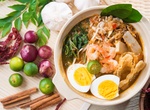
Hokkien mee is a dish in Malaysian and Singaporean cuisine that has its origins in the cuisine of China's Fujian (Hokkien) province. In its most common form, the dish consists of egg noodles and rice noodles stir-fried with egg, slices of pork, prawns and squid, and served and garnished with vegetables, small pieces of lard, sambal sauce and lime (for adding the lime ... -
Eat Hot Pot
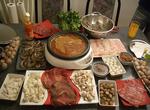
Hot pot less commonly Chinese fondue or steamboat, refers to several East Asian varieties of stew, consisting of a simmering metal pot of stock at the center of the dining table. While the hot pot is kept simmering, ingredients are placed into the pot and are cooked at the table. Typical hot pot dishes include thinly sliced meat, leafy vegetables, mushrooms, wontons, ... -
Eat Htamanè, Yangon, Myanmar
Htamanè is a glutinous rice-based savory snack, and a seasonal festive delicacy in Myanmar. The traditional delicacy is ceremonially prepared around and on the full moon day of Tabodwe, the 11th lunar month on the traditional Burmese calendar (roughly in February), just as the cool season ends. Some pagodas and monasteries, including the Shwedagon Pagoda, hold ... -
Eat Htamin gyaw
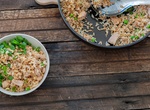
Fried rice is a dish of cooked rice that has been stir-fried in a wok or a frying pan and is usually mixed with other ingredients such as eggs, vegetables, seafood, or meat. It is often eaten by itself or as an accompaniment to another dish. Fried rice is a popular component of East Asian, Southeast Asian and certain South Asian cuisines. As a homemade dish, fried ric...


Price: $197.03